

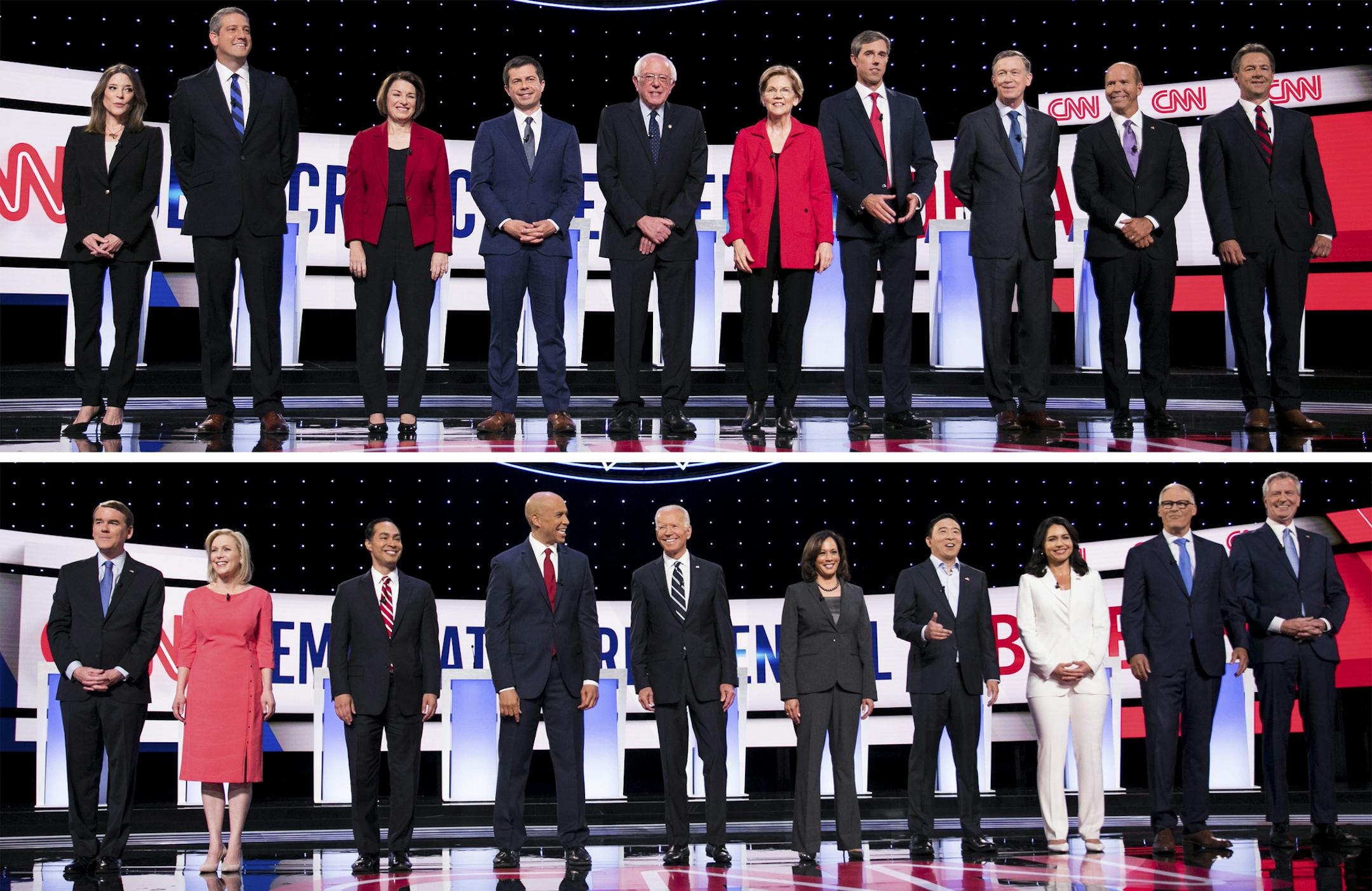
CNN wanted conflict.
But it didn't seem as interested in armed conflict, or global diplomacy or in international issues in general during the two Democratic debates it moderated this week. In fact, foreign policy seemed, well, foreign, even though it may ultimately be the most profound presidential responsibility.
Instead, after the news network introduced the presidential prospects like prize fighters, they were spurred to spar on domestic issues before foreign policy was raised deep into the debate.
And even then, questions were disproportionally asked of Tulsi Gabbard and Pete Buttigieg, who served in Iraq and Afghanistan, respectively. Not every candidate — including front-runners who soon could become commander-in-chief — had a chance to answer, depriving both viewers and voters.
That's a loss for the country, considering how much a president presides over, or at least significantly influences, international matters — and even how to consider them, as evidenced by a new Pew Research Center poll released on Tuesday, the first day of the debates.
Headlined "Climate Change and Russia are Partisan Flashpoints in Public's Views of Global Threats," the poll reflects how in today's deeply divided society, politics often starts, not stops, at the water's edge.
For instance, climate change is viewed as "a major threat to the well-being of the United States" by 84% of Democrats or Democratic-leaning voters. Conservatives, conversely, aren't convinced: Only 27% of Republicans and Republican-leaning voters agree.
The debate drilled down on differences between Democratic approaches to the problem, including some good give-and-take on the Green New Deal between Elizabeth Warren and John Delaney. But the discussion could have included questions on how to convince congressional Republicans representing the doubters and deniers on the threat's alacrity.


