

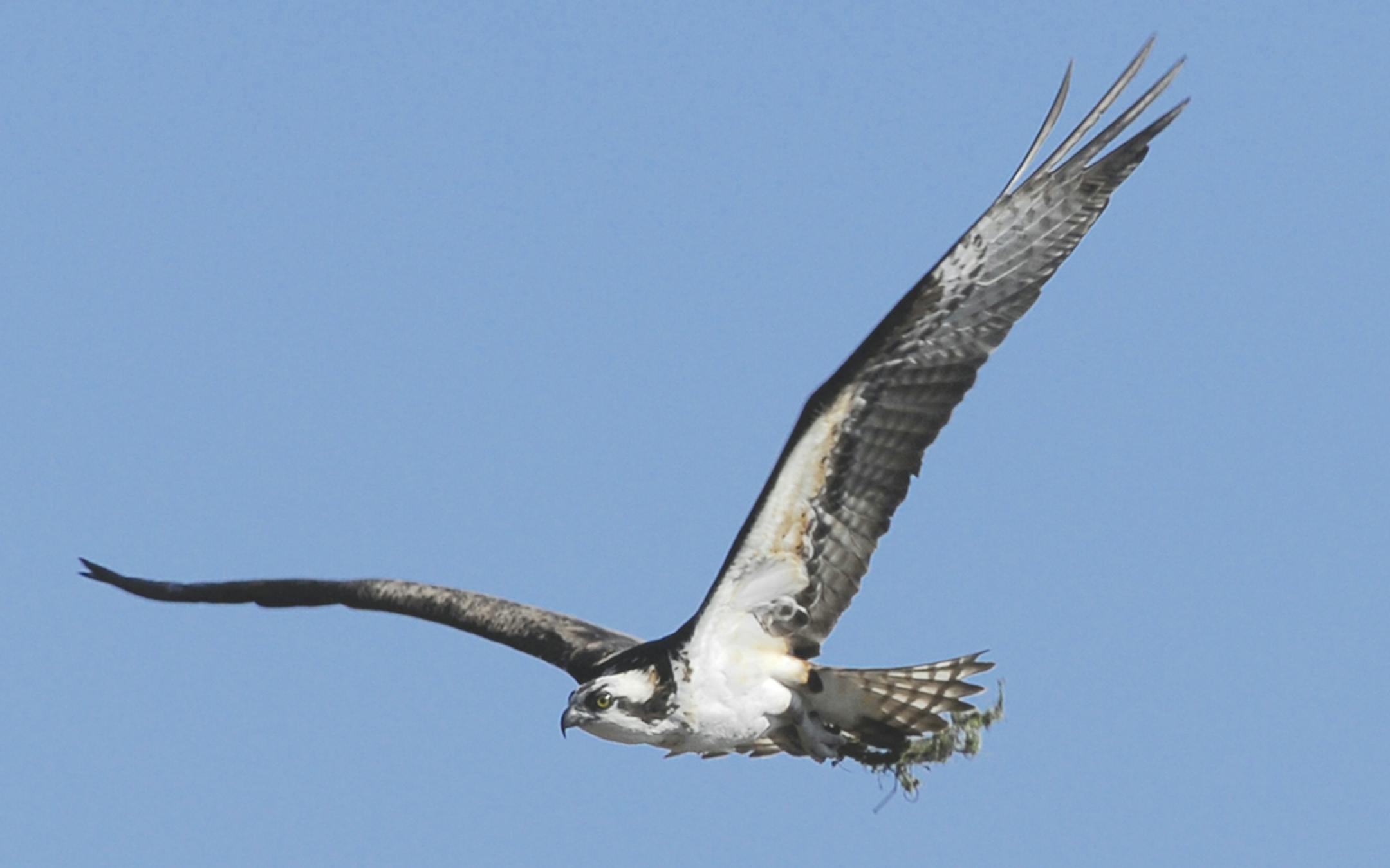
Urban raptors? Sounds oxymoronish, but it isn't.
Large winged hunters do very well in our cities. Urban habitat — cities and towns — works well for birds of prey.
There are nesting opportunities, many of them man-made, and ample food. Our yards, parks, lakes and rivers hold a feast of prey species — songbirds, mammals and fish.
Ospreys are a fine example of urban raptors. Found worldwide, ospreys are almost exclusively fish eaters. Research shows the birds usually nest no farther than 12 miles from fishable water. (How could we miss?)
In 2017 there were at least 132 active osprey nests in the greater metro area. The number comes from Vanessa Greene of Minnetonka, a volunteer who runs the Twin Cities Metro Osprey Watch.
Greene told me there were 74 nests on nesting platforms, 20 on cell or radio towers, 18 on athletic-field light standards, 17 on power poles or transmission towers, and three on other man-made structures.
Ospreys once built their stick nests in trees. Trees are so yesterday.
Last year was very successful for the birds, said Greene, who listed 13 new nesting territories. "The population continues to grow," she said.

