

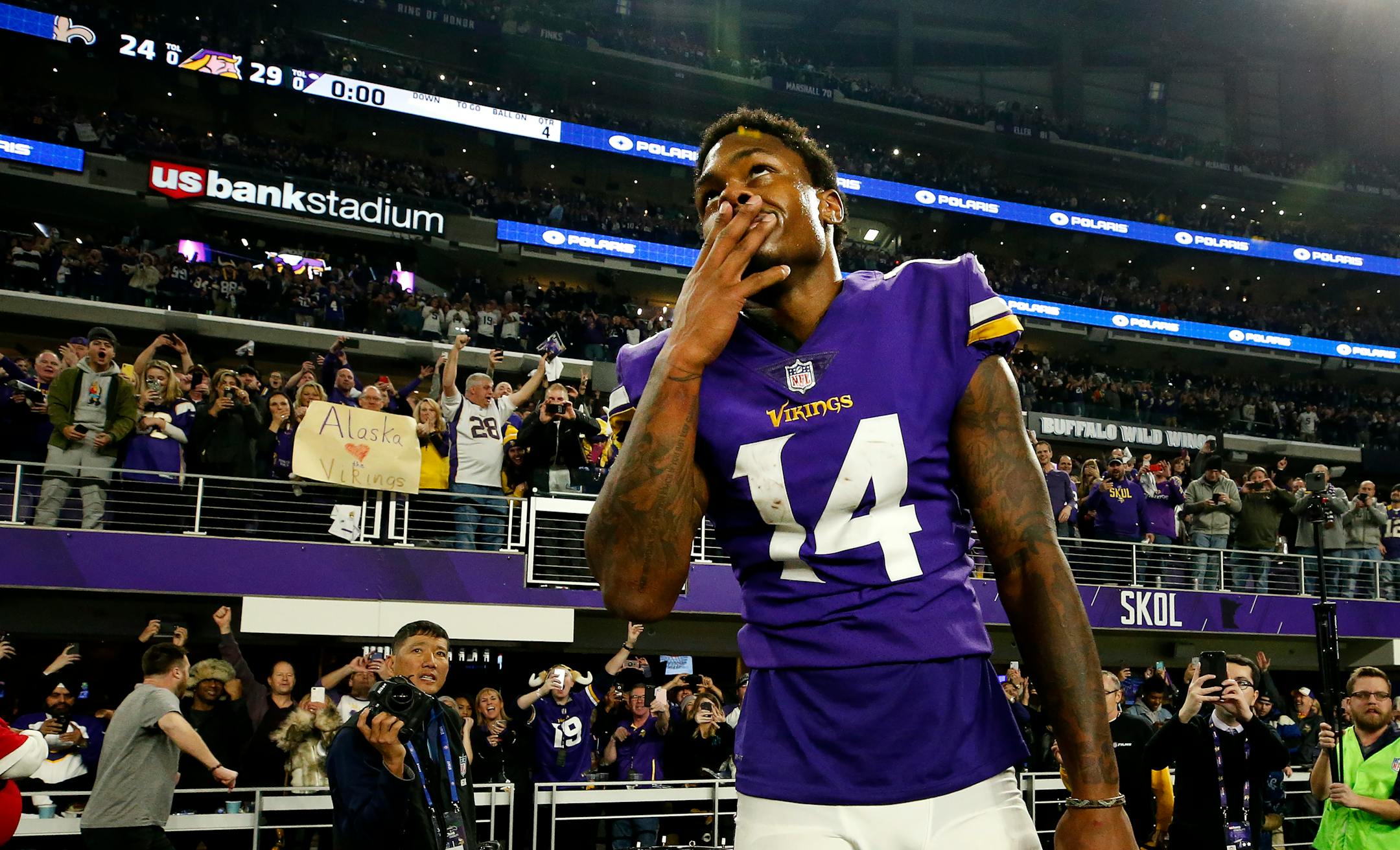
Remember that play that couldn't possibly have happened?
It shouldn't have happened.
Not in a rational universe. That play occurs only in bad movies and in the sublime world of sports, where Prince's ghost throws a key block, the opposing coach mocks the hometown cheer right before the most gut-wrenching play of his career, a defensive back whose primary job is tackling decides not to, and a skinny fifth-round draft pick finds himself alone in the end zone surrounded by 67,000 new best friends.
Case Keenum's 61-yard touchdown pass to Stefon Diggs as time expired gave the Vikings a victory in the divisional playoffs and was made possible by the thoughts occupying the minds of two opposing players who were then shocked by what they had just done.
If Saints safety Marcus Williams had tackled Diggs inbounds on that play, the Vikings would have lost and the game would have been added to the tales of franchise misery, like a body on a cart during the Plague.
If Williams had played cautiously, allowing Diggs to catch the ball then step out of bounds, the Vikings would have attempted a long field goal to win the game with three or four seconds remaining. Kai Forbath had just kicked a 53-yard field goal to give the Vikings a lead, but to presume he would have made good on the encore is to ignore team history. Diggs leapt to catch the pass, which was thrown high because the Vikings had flooded the sideline with three receivers and Keenum had to ensure the ball would clear Saints cornerback Ken Crawley.
The sight of a receiver in the air, stretching to make the catch, is what NFL safeties dream about. Williams could have contested the pass, which would have meant risking a penalty. He could have waited for Diggs to land and bear-hugged him, which would have ended the game.
Or he could have aimed himself better. Williams decided to undercut Diggs but launched himself, head down, to the outside of Diggs' left leg.


