

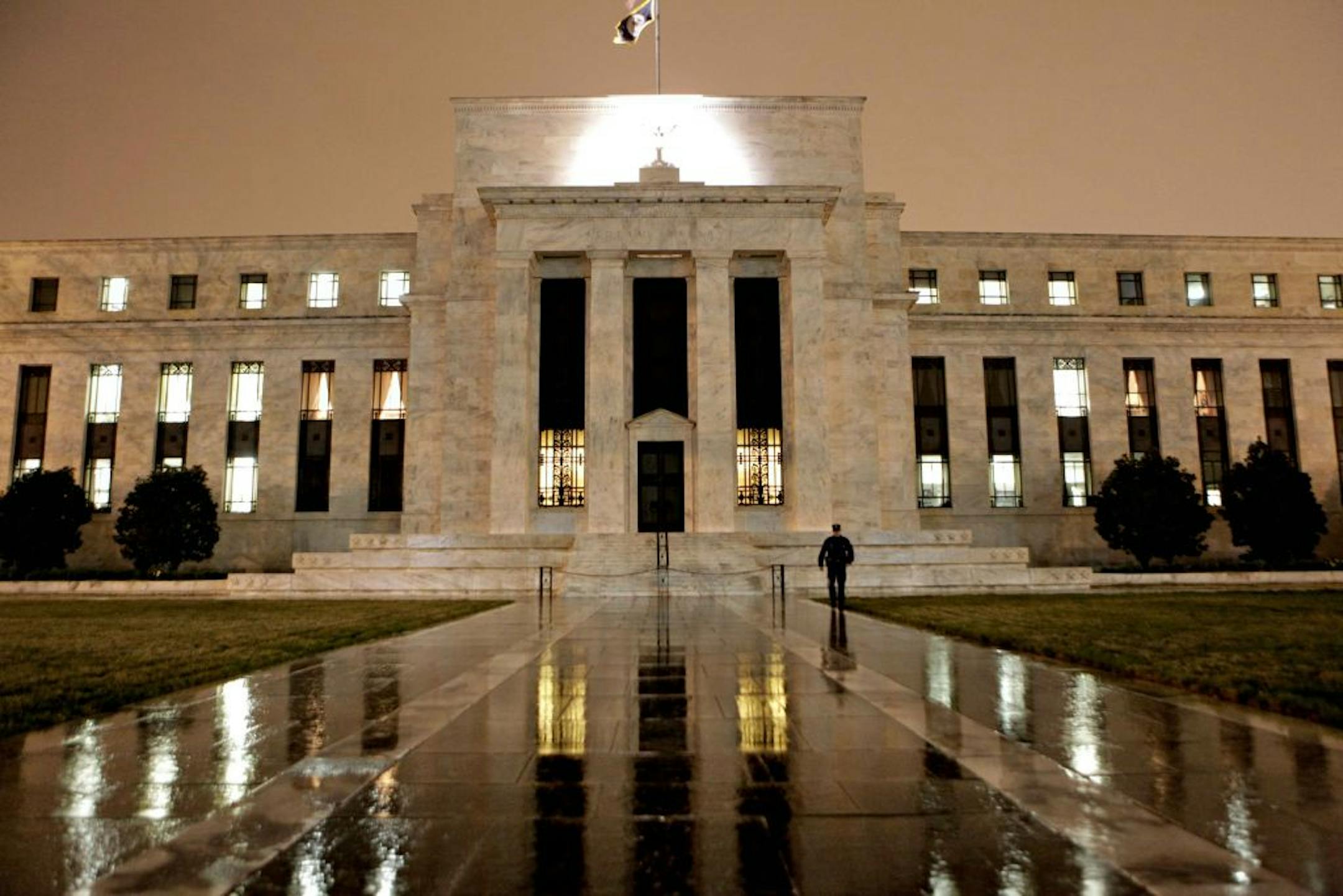
A third round of quantitative easing, a set of asset purchases designed to increase the money supply, has been announced by the Federal Reserve. It said it would keep easing until job growth accelerates, and continue a "highly accommodative" monetary policy "for a considerable time after the economic recovery strengthens."
Stocks jumped on the news, but conservatives gave it a much more hostile reception. For those trying to make up their minds, here are a few questions one often hears about what the Fed is doing, along with my answers:
1) What's the rationale for QE3? One argument for it starts with the two goals that Congress has set for the Fed: to keep unemployment low and prices stable. The Fed defines stable prices as a steady 2 percent inflation rate. Core inflation, headline inflation and market expectations of inflation are all below 2 percent. Right now unemployment is high. Looser Fed policy would bring us closer to both targets.
2) Hasn't the Fed already been keeping money extremely loose? It says it has been "highly accommodative," and it has been if you use interest rates or the size of the monetary base to measure monetary policy. But those are the wrong measures, as the great monetary economist Milton Friedman pointed out. A better measure is provided by the growth rate of total spending in the economy. Before the boom, Fed policy kept that number fairly steady at 5 percent a year. During the crisis of 2008 and 2009, however, the Fed let nominal spending drop at the fastest rate since 1938. The Fed was tight during the crash, and its tightness may even have caused the crash. Nominal spending hasn't recovered since.
3) Will looser money hurt savers? The reason Friedman said interest rates are a bad gauge of monetary policy is that tight money can depress the economy and thus lower returns on investment. The weak economy, not excessive money creation, has been keeping interest rates low. If the Fed's action increases economic growth, then it will help savers. Long-term interest rates rose after its announcement.
4) Is QE3 a favor to Wall Street? Looser money is boosting stocks because it is raising expectations of economic growth and thus of future profits. That's a good thing. In the 1970s, when we really did have loose money, easing by the Fed didn't help stocks because market participants didn't expect it to strengthen the economy. The market reaction is a sign that this time loosening was warranted.
5) Won't QE3 hurt consumers by raising prices, especially for food and gas? There are two ways the Fed's move might increase consumer prices. The first is by boosting the price level generally. But that effect should raise wages, too, leaving the real price of goods unchanged. The second is by strengthening the economy and thus encouraging people to consume more. One small example: More economic activity leads to more business trips, which leads to higher demand for gas. In that case, the real price of gas would increase, but as a side effect of healthy economic developments.
6) Is the Fed trying to encourage consumption? Not especially. It is trying to increase the economy's total level of spending, but it can't control how that spending gets divided between consumption and investment.


