

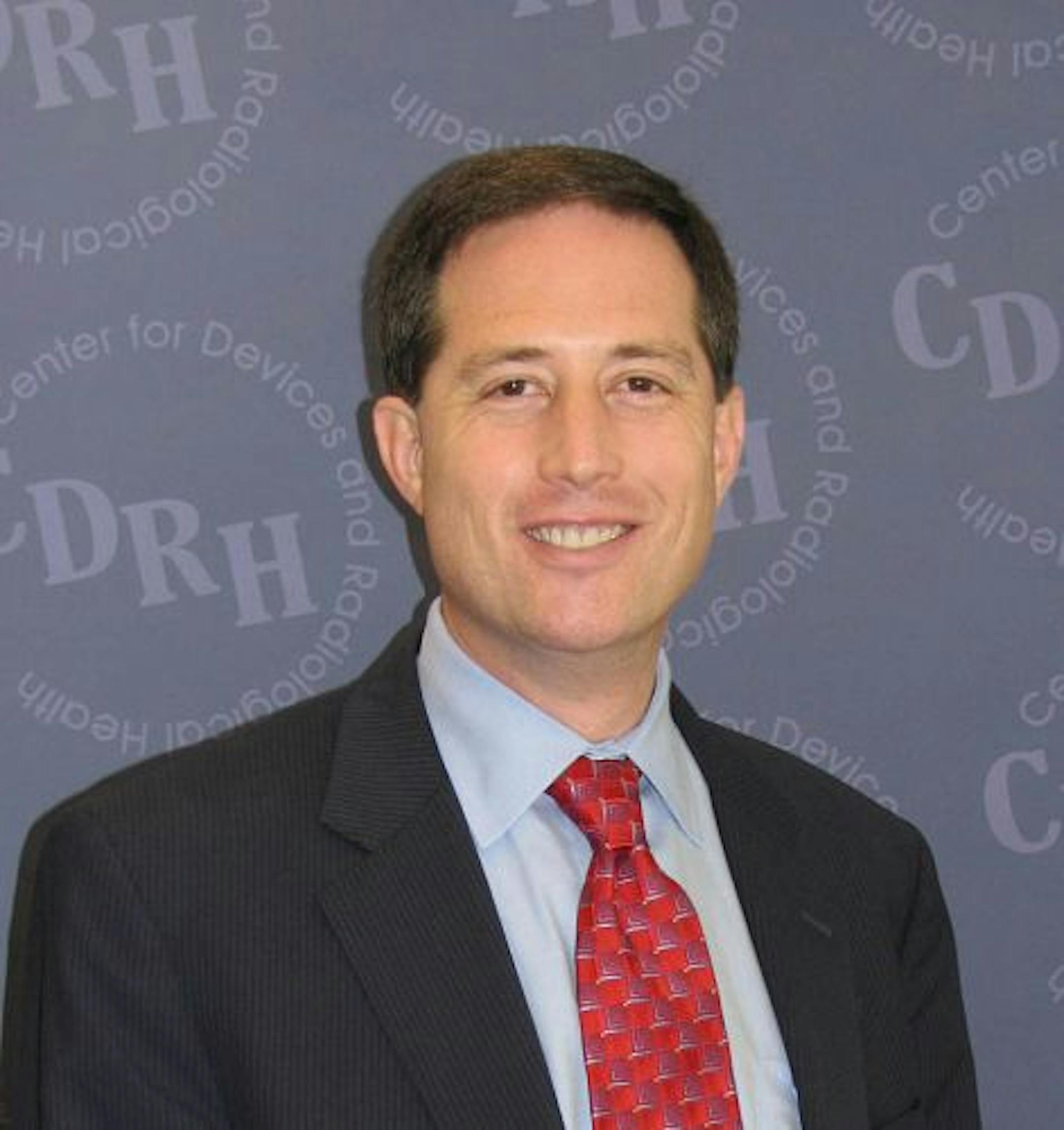
Here is a transcript of an interview conducted Friday between Dr. Jeffrey Shuren, head of the Food and Drug Administration's Center for Devices and Radiological Health and Star Tribune medical technology reporter Janet Moore.
What can we expect at the meeting in Minneapolis next week?
This is one of three town hall meetings we're going to be holding this year. The first is in Minneapolis, then Boston in June, then Los Angeles in October. We wanted to get out to hear what issues, concerns, topics are on the public's mind. I'll give an update on some of our strategic priorities, then we'll open it up to anyone who wants to make comments about anything they want. Then we'll open it up for questions and answers. We're hoping to have a back-and-forth dialogue. It will be informal. It's an opportunity for folks in the Minneapolis area and in that region to weigh in and provide their thoughts.
Certainly rumored changes to the 510k approval process will be discussed. (The 510k process requires companies to prove their device is "substantially equivalent" to one already on the market, and in most cases, clinical evidence is not required. However, that has been changing. The vast majority of medical devices are approved through the 510k process.)
We're taking two steps to review the 510k program. One, we asked the Institute of Medicine to look at it longer term. Their report won't be out until the summer of 2011.
We also felt we needed to do our own assessment. We had an open meeting in February. We received comments on the docket, and our plan is to finish that report in the coming weeks and then put it out for public comment. The intent there is if there are particular [changes] that are no-brainers, and people uniformly say, 'This is worth doing,' we can start working on them now. Then, any of the recommendations that we don't adopt, if we think they require greater vetting, or if there's a lot of difference of opinion, we'd leave them out there for the Institute of Medicine process to consider. Then any of the recommendations that the IOM makes, we'll follow up on, probably not until 2011.
Overall, there's been a very intense and very good dialogue that's going out about the program. We undertook the review in light of questions and concerns that were raised -- by industry, patient groups, the health care community and our own staff. We felt the best way to address concerns is to undertake a more comprehensive assessment of the process and do it in a very public way.
People here claim changes to the 510k process could hamper innovation of new medical devices.


