

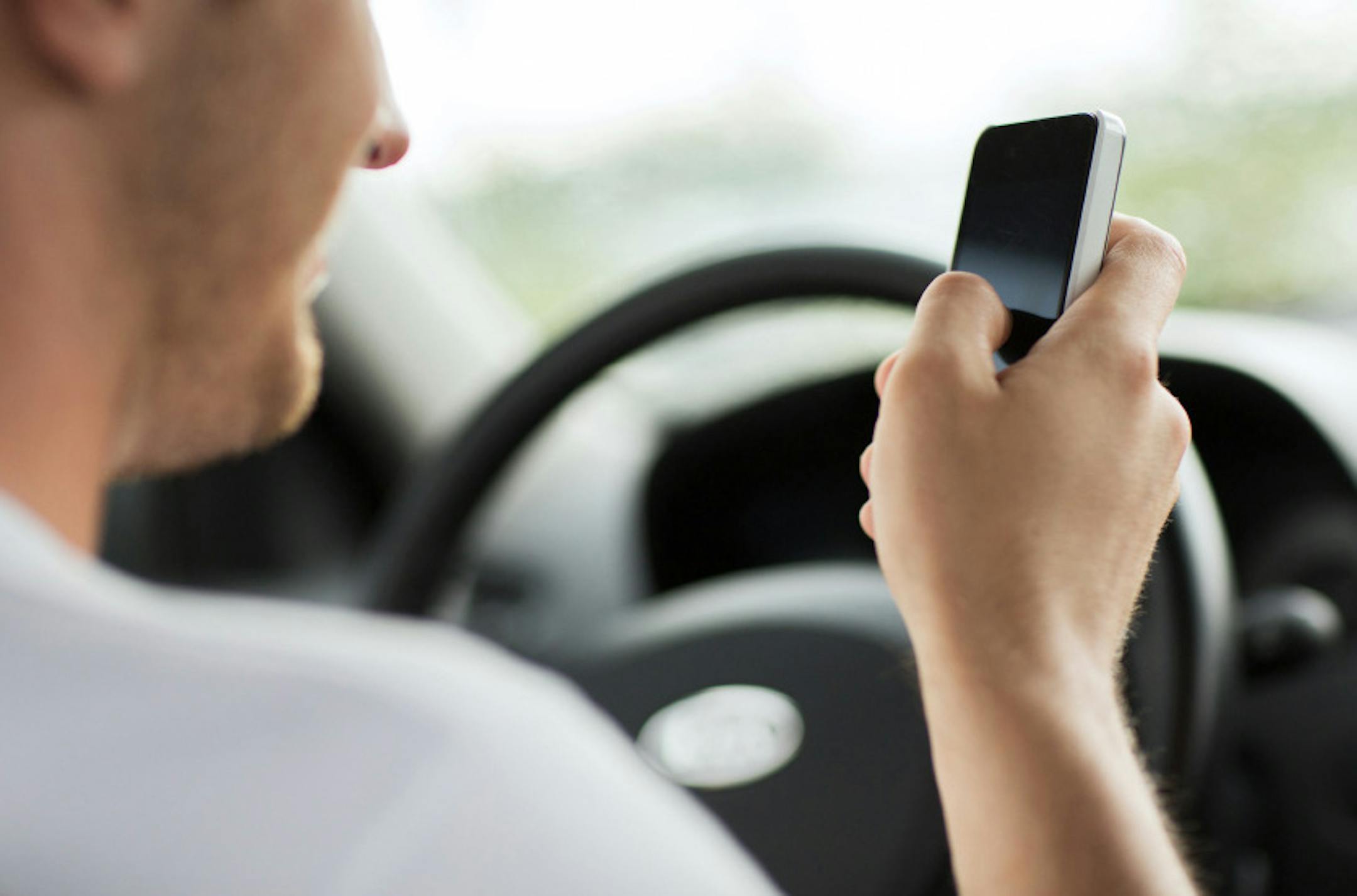
If you're regularly on our streets and highways, you've likely been an eyewitness. The driver in the vehicle next to you at a stop light is reading something propped against the steering wheel. A young driver sporting earbuds bounces down the freeway, clearly out of tune with his surroundings. Then there's the all-too-common driver who swerves from lane to lane while doing 65 miles per hour to get to work while chatting on a cellphone and drinking coffee.
And if we're brutally honest, most of us have been guilty of some level of distracted driving ourselves. Fiddling with the radio, rifling through a purse or a briefcase — even paying attention to another driver who is doing something stupid can take our eyes and attention away from the road. Accident statistics clearly indicate that more needs to be done to educate motorists.
To that end, earlier this week Minnesota Sen. Amy Klobuchar announced the Improving Driver Safety Act to help more states have access to federal funds to combat distracted driving. She developed the legislation, which has bipartisan support, with Sen. John Hoeven, R-N.D.
Their bill would expand access to an existing federal grant program. Minnesota received about $1 million from that fund in 2013, but the state became ineligible for 2014 because requirements for the grants were strengthened and Minnesota laws didn't change fast enough.
One criterion for the grants is a state ban on texting while driving, which Minnesota passed and began in 2008. But the National Highway Administration wants states to take additional steps, including increased fines for repeat violators.
Under current Minnesota law, it's illegal for anyone to text or access the Web while driving — whether in traffic or stopped at a signal. It's also illegal for bus drivers to use hand-held cellphones, and drivers younger than 18 are prohibited from using a cellphone at all while driving. Still, citations for these offenses increased from 388 in 2008 to 2,189 in 2013.
Texting while driving diverts attention from the road an average of 4.6 out of every 6 seconds, officials say. That's on par with traveling the length of a football field at 55 mph without looking up, according to the state Department of Public Safety (DPS). And using a cellphone while on the road delays driver reaction time as much as having a .08 blood alcohol level.
The Klobuchar/Hoeven bill would retain strong requirements, but give states more time to phase them in. Because of the stiffer rules, 74 percent of the federal funds went unused in 2014. The bill would assure that states that are taking steps to curb distracted driving aren't out of luck.


