

Weary, bearded, anti-authoritarian author Aleksandr Solzhenitsyn was the very definition of dissident during the Soviet era.
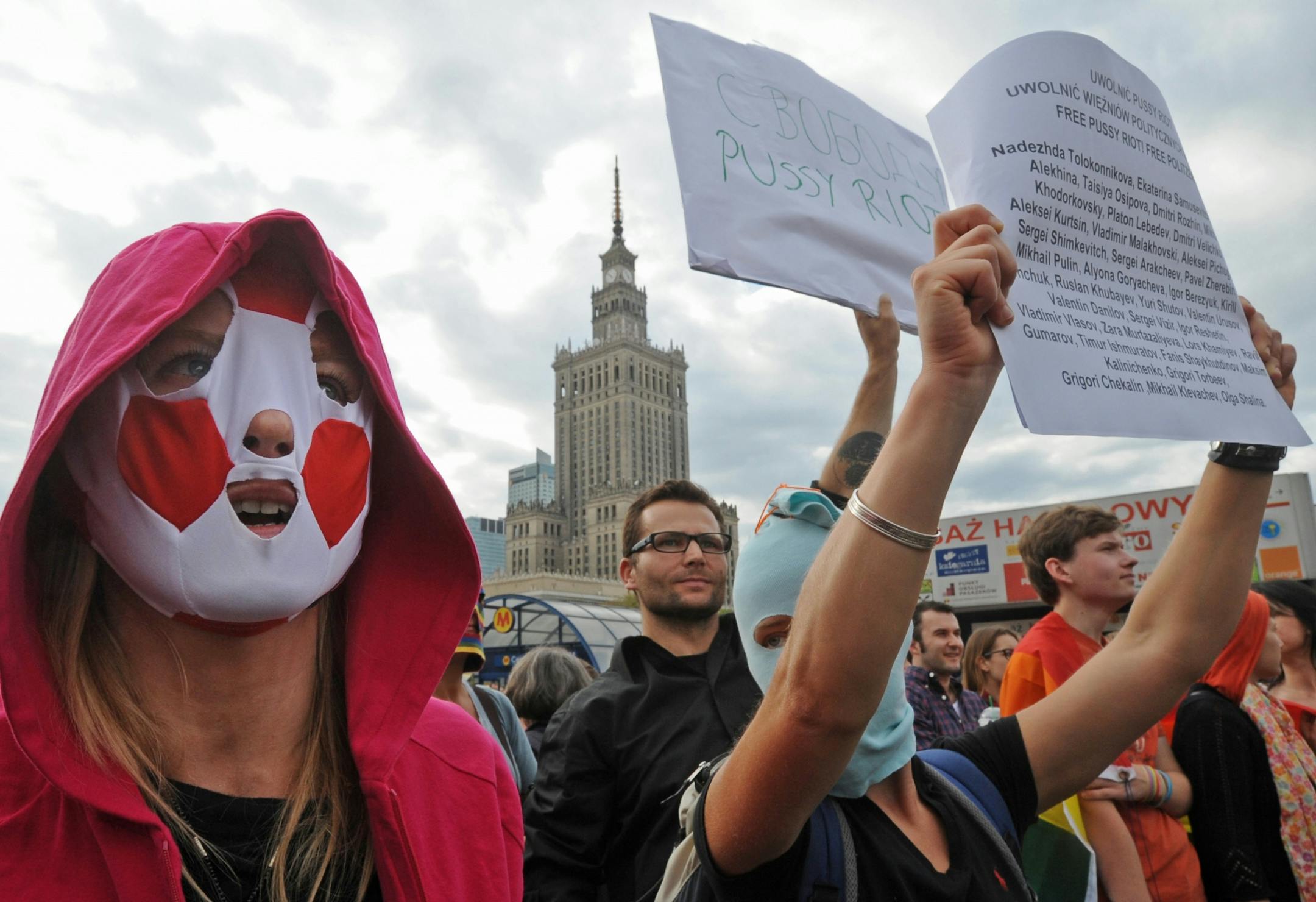
Today's high-profile protesters in Vladimir Putin's Russia look different. At least when you can see them. Usually, Pussy Riot, the punk rockers recently convicted for filming a provocative, profane, anti-Putin prayer to the Virgin Mary in Moscow's main Orthodox cathedral, conceal their faces with balaclavas.
Unmasked, however, the three women (two of them mothers of young children) were more relatable -- at least in Western eyes. Their case is now a cause for Western governments, human-rights groups and artists, which all rightly decried the musicians' severe two-year sentence for "hooliganism motivated by religious hatred."
But reactions in Russia, where many were profoundly offended by what the church called "blasphemy and sacrilege," have been sharply different -- especially in the context of countrymen like Solzhenitsyn.
"As a dissident, Solzhenitsyn was more serious. He chose the medium of the traditional novel, so he did not exasperate or irritate or antagonize regular, educated people," said Dr. Masha Zavialova, curator at the Museum of Russian Art in Minneapolis.
Zavialova was one of those educated people, and almost paid for it: In a case of life imitating art, she faced five to seven years in a prison camp after the KGB caught her translating "The Gulag Archipelago," Solzhenitsyn's opus of oppressive Soviet rule.
Solzhenitsyn himself might have seen it differently, too, according to two professors steeped in Soviet and Russian history.
"Solzhenitsyn would be appalled," said Nick Hayes, professor of history at St. John's University. Solzhenitsyn opposed the Soviet Union, but deeply believed in Russia, and especially the church, Hayes said.


