

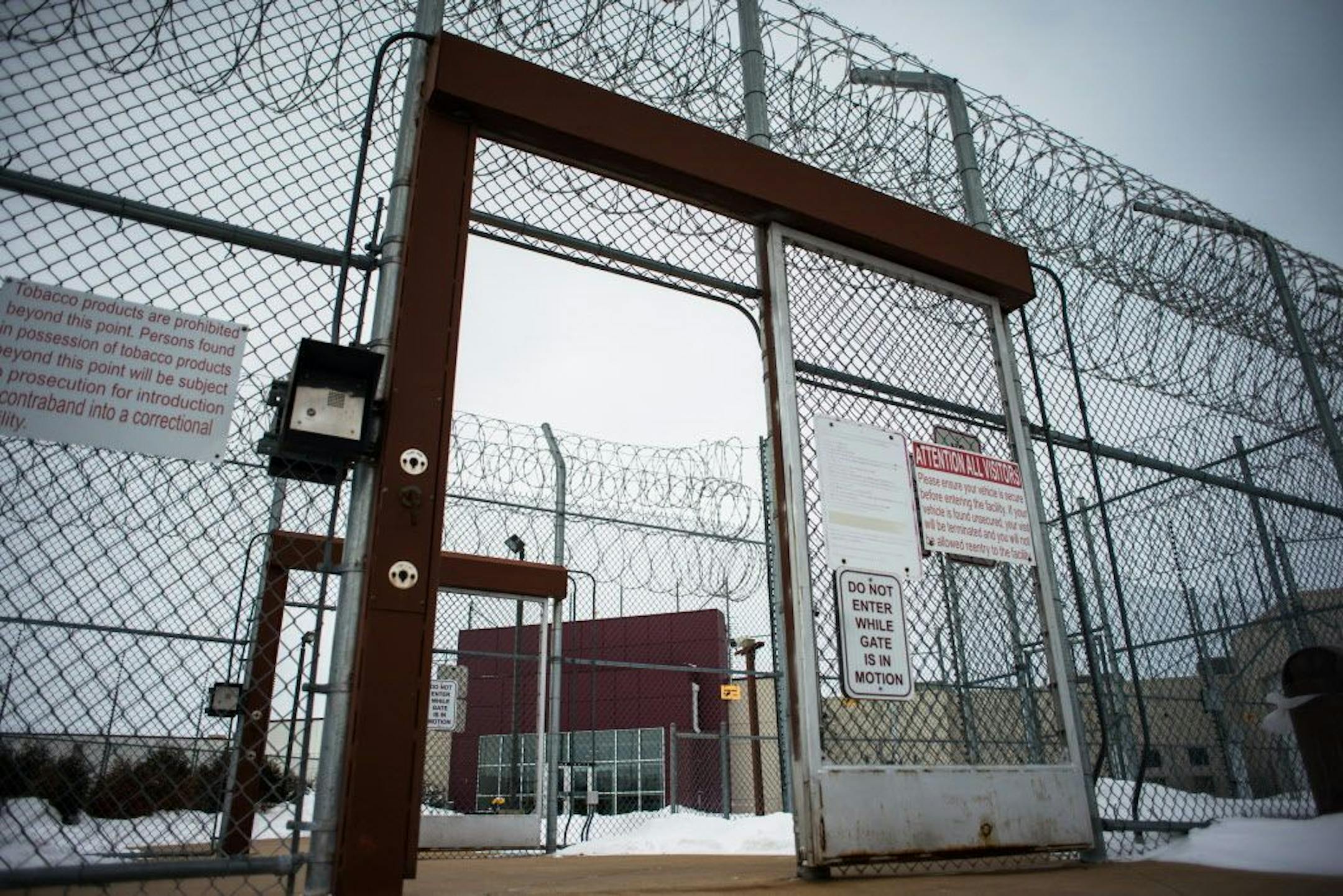
The outlook is bleak for a proposal to reopen the Prairie Correctional Facility, a private prison in Minnesota's Swift County.
Over the past month, a protest temporarily shut down a legislative hearing on the bill, the state's top prison commissioner called it "the antithesis of America" and Gov. Mark Dayton vowed to veto if it passed. Last Friday, the bill missed a critical deadline in the state Senate, making even sponsor Sen. Lyle Koenen, DFL-Clara City, cautiously pessimistic that it would succeed this year.
"I could be wrong," added Koenen. "Things change fast here."
When Koenen introduced the bill, which would direct the state to lease and operate the private facility, supporters marketed it as common-sense arithmetic: Minnesota's prisons are bloated beyond capacity, leading the Department of Corrections to house hundreds of overflow inmates in county jails. At the same time, there's a 1,600-bed facility sitting vacant in Appleton, and backers said the bill would buoy a depressed economy in the state's west-central region.
But the political debate has proved much more complicated. For critics in the Legislature and a vocal coalition of religious and civil rights groups, reopening Prairie Correctional has brought home long-standing frustrations with the U.S. criminal justice system: the rise of mass incarceration, the use of for-profit prisons and the disparate imprisonment of people of color.
These issues reach beyond the Appleton bill and, in recent months, Minnesota has become a melting pot of justice reform issues being debated across the nation, said Lauren-Brooke Eisen, senior counsel for the New York University School of Law's Brennan Center for Justice, who is writing a book on private prisons.
It's indisputable that Minnesota's prisons are overcrowded. But the difficult conversations over where to go next — reopening the Appleton prison or, on the flip side of the debate, reforming sentencing laws and reducing the prison population — mark a significant moment for the state, said Eisen. "What's happening in Minnesota is reflective on so many levels of the larger conversation that the country is having on criminal justice reform," she said.
Skepticism over CCA
Much of the criticism over the proposal has been directed toward the facility's owner, Corrections Corporation of America (CCA).
![Most inmates would share a cell with two bunks, a toilet and sink, desk and a storage tub for their personal affects. ] Mark Vancleave - mark.vancleave@startribune.com * Prairie Correctional Facility in Appleton, Minn. has been vacant for six years. CCA staff gave the Star Tribune a tour of the facility on Feb. 9, 2016.](https://arc.stimg.co/startribunemedia/GKYGKL2EIC25DLAJXEJQF7VMY4.jpg?&w=1080)
![A block of cells included common space, telephones and showers. ] Mark Vancleave - mark.vancleave@startribune.com * Prairie Correctional Facility in Appleton, Minn. has been vacant for six years. CCA staff gave the Star Tribune a tour of the facility on Feb. 9, 2016.](https://arc.stimg.co/startribunemedia/AU23YE2XUNVKXO2WESTOOSGANU.jpg?&w=1080)


