

Our political theater in Minnesota over the next 11 weeks will offer distracting scenes focusing on a new State Capitol office building, glitches in the rollout of MNsure, and other little sideshows that remind us of the fallibility of all our institutions, public and private.
Concerns about tax rates and the size and effectiveness of our state and local governments will be aired, too, and they are always valid. Taxes are the price we should happily pay for a civilized community in a thriving free-market democracy. Keeping those costs reasonable also makes sense.
But let's try our best as voters to think about the whole show — and the moral of the story — and to keep three overarching perspectives in mind:
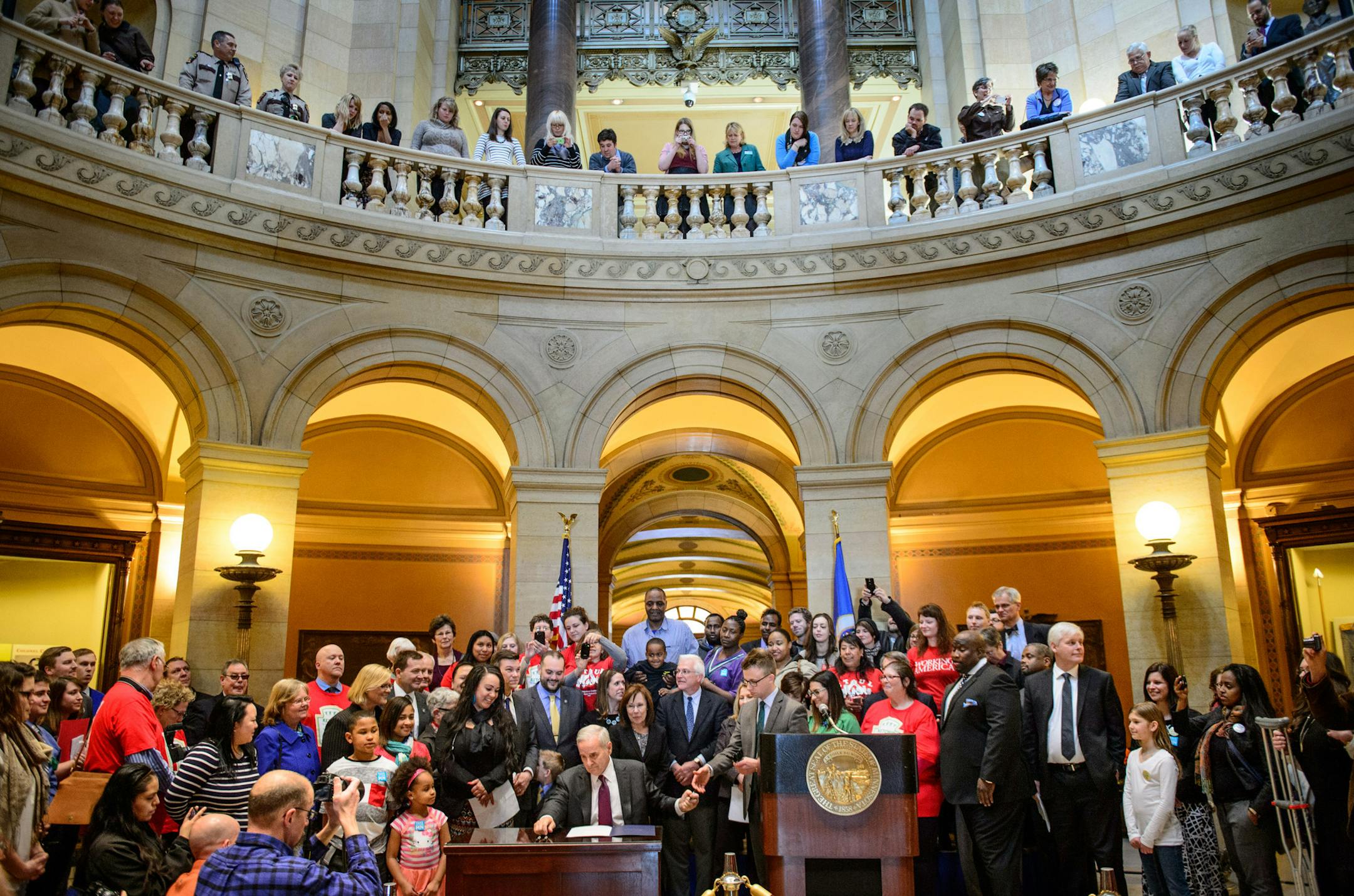
First, the overall legislative product of the last two years produced perhaps the most momentous shift in 40 years toward reducing economic, racial and social inequalities, while investing anew in the human potential of all Minnesota's people. Not since the bipartisan Minnesota Miracle of 1971, and ensuing sessions of the reform-minded 1970s, has so much been done to lift up so many people in the middle and at the bottom.
Second, this breakthrough has not appreciably enlarged the size of state and local government relative to the economy. Nor has it prevented Minnesota from actually gaining competitive advantage on other states, and achieving improved rankings in business growth and vitality.
Third, these policies were not foisted on an unwilling majority by a small ideological faction. The main pieces of the policy package were pushed through by a broad consensus that included some business support, our largest mainstream religious faiths, our most respected philanthropies, and nonprofits, and by broad coalitions of labor and social-justice groups. Moreover, many of the major pieces of legislation also enjoyed clear majority support in Minnesota public opinion polling.
In other words, this equity agenda was very much a "we" thing.
By the way, the word "equity'' is increasingly favored by justice advocates over "equality.'' Equity captures the idea of investment in human potential, affording more people a larger ownership in our economy, as opposed to seeking perfect equality in wealth and income.


