

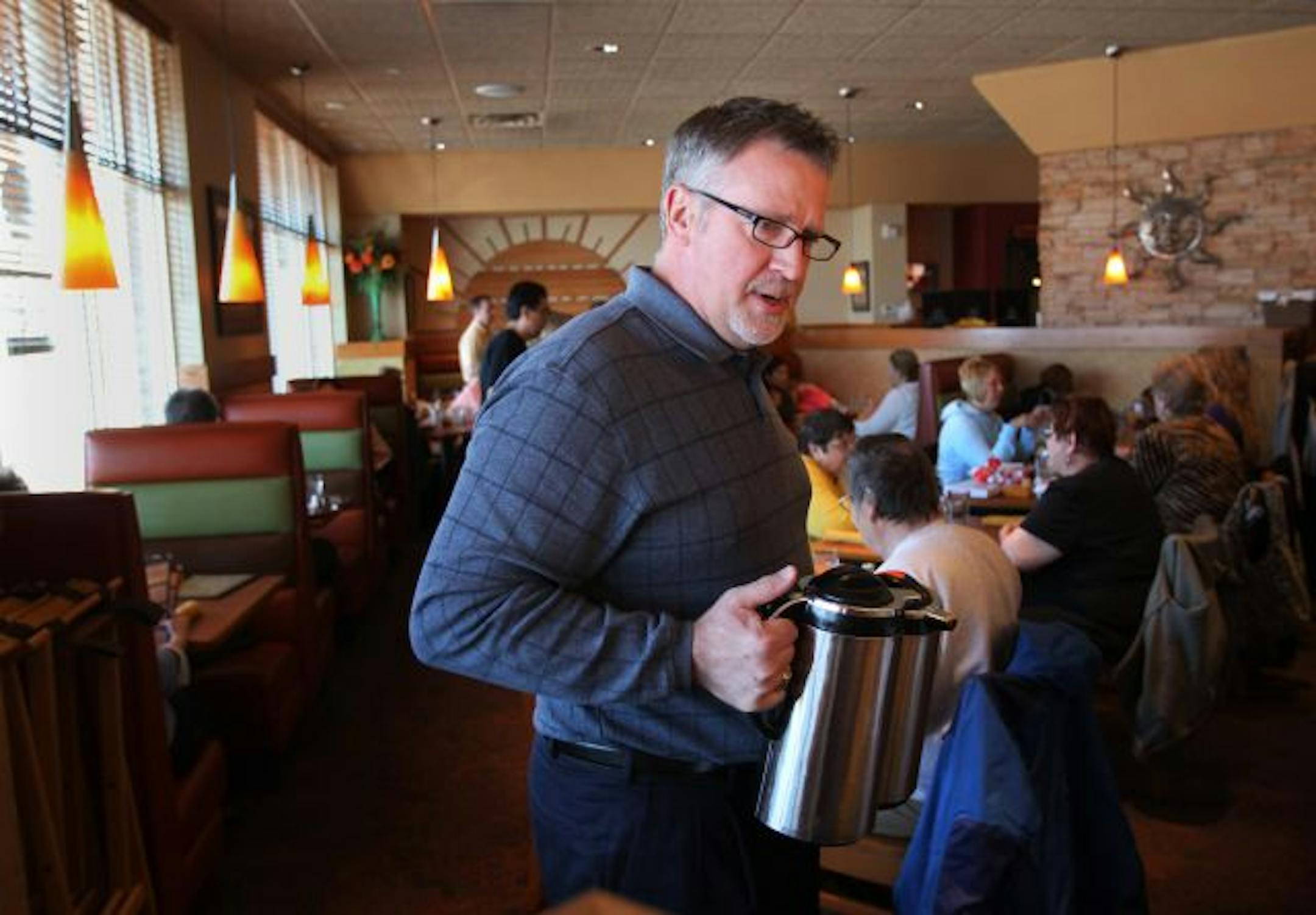
Doron Jensen gets a little rattled whenever he hears public employees grousing about possible wage freezes, or that taxpayers might be forced to bailout government worker pensions.
When the economy tanked in 2008, Jensen's Supper Club in Eagan lost $500,000, leading to his wrenching decision to lay off workers and reduce contributions to employee health care.
Several recession-rocked states have taken similar steps: slicing government rosters, cutting salaries and imposing furloughs. Not Minnesota.
Now long-simmering tensions over public worker costs, coupled with renewed fears over their multibillion-dollar unfunded pension obligations, are colliding with the state's projected $6.2 billion deficit.
Suddenly, deeply held beliefs about public workers, the kind of benefits they deserve and the unions that represent them are being thrust into a searing new glare.
"In my world, in the real world, we had a huge downturn," Jensen said. "But here, government just keeps on keeping on."
Minnesota has long been a bastion of robust government payrolls and generous benefits. Powerful unions curried strong favor in the halls of power.
When the economy slipped into free-fall, it exposed a gulf dividing Minnesota public employees' wages, job security and retirement benefits compared with their private sector counterparts.


