


Two (admittedly unrelated) news bites have me wondering about the evolution and future of the Internet this week. The Web is a wild place, but will it stay that way?
Consider Exhibit A: Kickstarter potato salad.
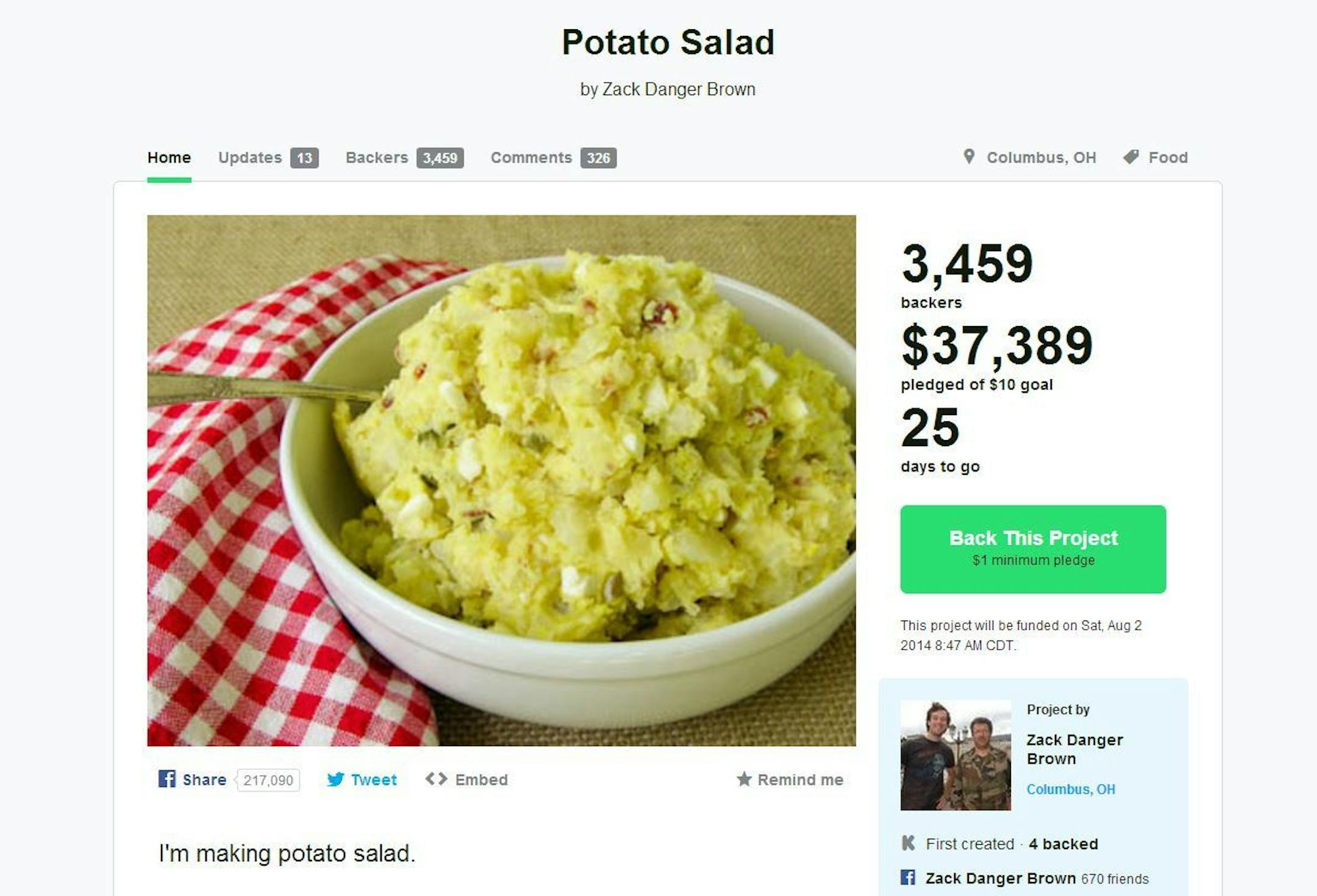
A guy in Ohio has been wildly successful in his Kickstarter campaign to raise funds to make potato salad. He asked for $10; as of Tuesday morning, backers have pledged more than $37,000. People seem to be divided into two camps -- one praising his genius, the other fuming because more charitable causes could use some cash.
Whether you're a potato salad fan or not, it's a head-scratcher and one that I'm sure early Internet builders never imagined. What's next?
And Exhibit B: A new Pew Research study in which experts worry about the Internet's future.
What are they worried about? Segmentation and balkanization of the Internet, evaporating trust amid government and corporate surveillance, commercial pressures squashing the flow of information and overreaction to oversharing that thwarts useful sharing.
David Weinberger, senior researcher at Harvard's Berkman Center for Internet and Society put it this way: "The future challenge: The Internet gets owned and packaged as a set of content and we treat it like cable TV. The future opportunity: Free culture becomes ever more lively, and people are enjoying content that they recognize was created by people like them."
Pew canvassed more than 1,400 experts to compile the report, the third in a series being released this year to mark the 25th anniversary of the Web's invention.


