

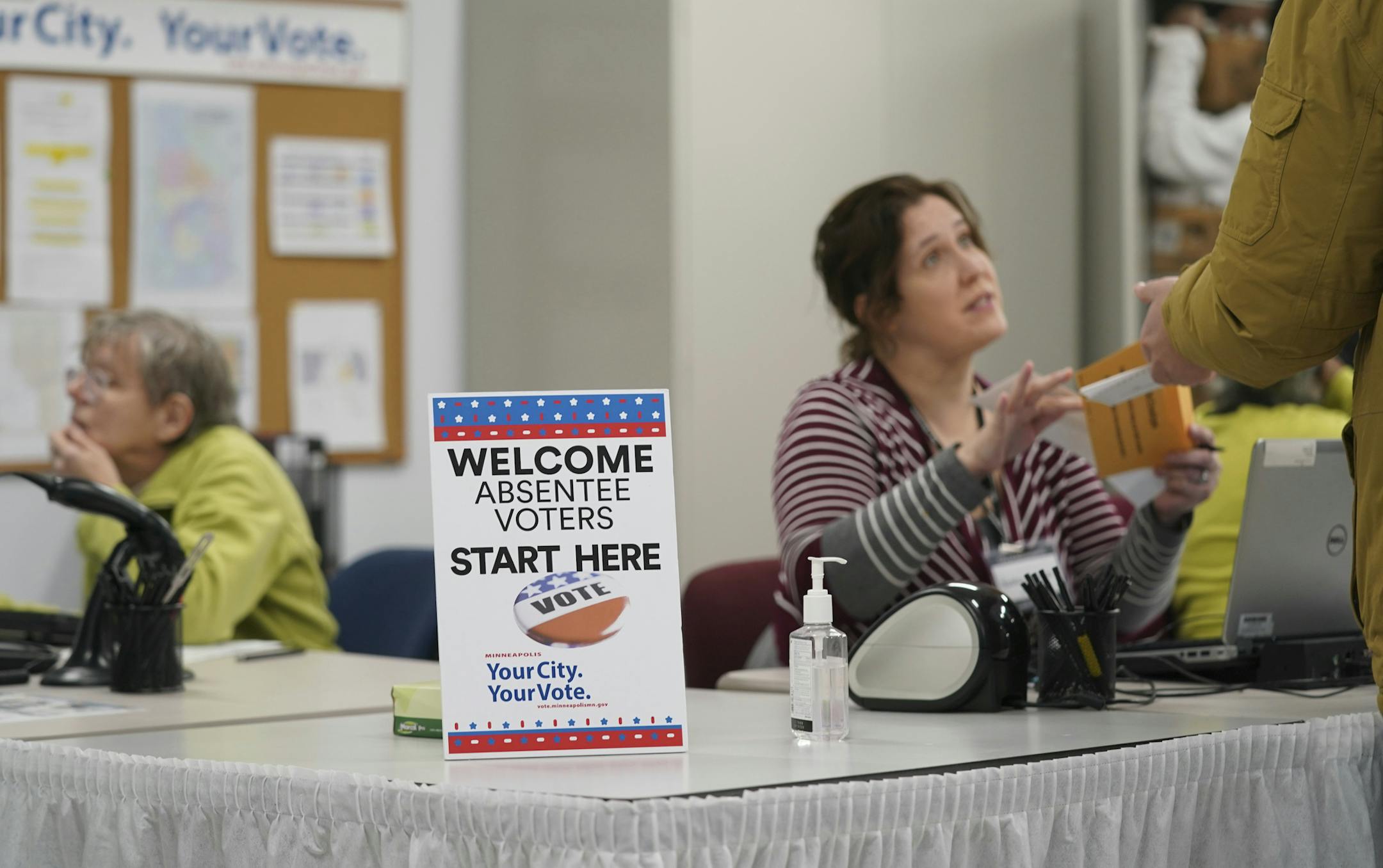
The state's top election official and the Minnesota DFL Party want to further limit access to information about voters' political preferences in the presidential primary. But it appeared unlikely Thursday that legislators would do so, with early voting already underway and the primary set for March 3.
The Legislature previously determined that the state's four major political parties can get information about voters' party affiliation in the primary. That means the DFL, Republican and two different marijuana legalization party chairs would receive the data and could share it without legal ramifications.
Minnesotans are worried that information about their political affiliations could become public and affect their careers, Secretary of State Steve Simon, a Democrat, wrote to party leaders this month. He suggested changing the law ahead of the primary, including additional restrictions on who gets the data and allowing voters to keep their names off party lists altogether. "Our office is hearing from a lot of people in the business community, the nonprofit community, the clergy, and those in local government, that they are concerned about every major political party getting their party preference information," Simon wrote.
However, Sen. Mary Kiffmeyer, the Republican chairwoman of the Senate committee focused on election legislation, said the state shouldn't rush to alter the law this year. Early voting in the primary began Jan. 17.
"With the voting process already underway, let's see how this works in 2020," Kiffmeyer, of Big Lake, said in a statement Thursday. "If we need to make changes, there is plenty of time to do so before 2024."
House Democrats are worried about people's party affiliation becoming public but have not had a chance to look through Simon's proposals, said House Majority Leader Ryan Winkler, DFL-Golden Valley.
Even if the House did try to expedite the changes, without the cooperation of the GOP-dominated Senate they are not going to meet the March 3 deadline, he said.
Minnesota Republican Party Chairwoman Jennifer Carnahan argued Thursday that the state should not alter the rules at this point and emphasized that both Democrats and Republicans signed off on the legislation guiding the presidential primary.
![Minnesota Secretary of State Steve Simon toured the Ramsey County elections office with elections manager Joe Mansky. This is the last day of early voting. ] GLEN STUBBE * gstubbe@startribune.com Monday, November 7, 2016 Spending part of the day before election day with the guy who has to ensure it all runs properly: Secretary of State Steve Simon. We'll see what it looks like behind the scenes as elections officials prepare for the end of an election that could have record turnout in Minnesota.](https://arc.stimg.co/startribunemedia/EDBAKF7TZGLPE66PNGCUUVF76E.jpg?&w=1080)
![Senator Mary Kiffmeyer, R-Big Lake, spoke about her Omnibus State Government Bill before the Senate Finance Committee. ] GLEN STUBBE • glen.stubbe@startribune.com Tuesday, April 23, 2019 The Minnesota Legislature came back into session today after the Easter/Passover break. With a month out until the end of the session, what are legislators getting done?](https://arc.stimg.co/startribunemedia/627Y4V7ZQGPZYAKYKYB6MYT5FU.jpg?&w=1080)


