

A bipartisan effort to retool how judges are elected in Minnesota is facing a fresh test as several Republican lawmakers are pulling back their support for the idea, revealing the latest partisan rift at the State Capitol.
A group with broad support in the legal community — and the strong backing of a former Republican governor — is pushing a constitutional amendment that would change the way judges face voters.
Judges would still stand for re-election, but would face no challengers. Instead, voters would opt to keep judges or toss them out. If an incumbent lost, a nonpartisan review committee would assemble a new pool of potential replacements and the governor would select a new one.
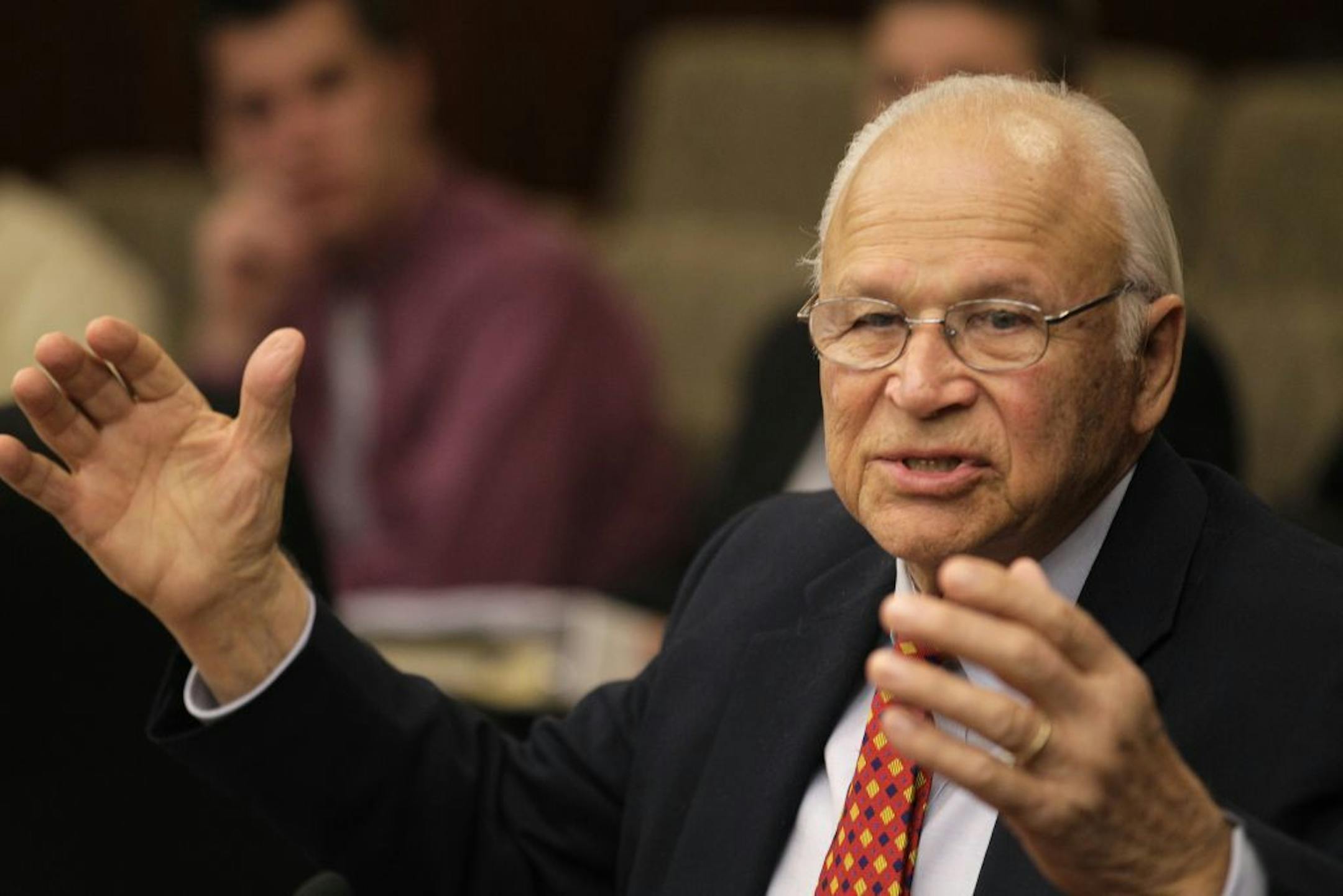
"This is one of the most important issues facing the state," said former GOP Gov. Al Quie, a board member with Coalition for Impartial Justice, a nonprofit group that has been pressing the issue for several years. "When something goes wrong, you have to be confident that you are being heard by someone who is fair and impartial. To lose that, you lose so much."
"I think it's the worst fricking idea ever," said attorney Greg Wersal, a conservative activist who has unsuccessfully challenged Supreme Court justices dating back to 1998. "They want to take away people's right to vote. The only people who like it are the judges."
Former Minnesota Supreme Court Chief Justice Eric Magnuson said the changes would help ensure that judges are of the highest caliber and tamp down the chances for hugely expensive and bitterly partisan judicial elections that have sprung up in other states, including Wisconsin.
"Everything I have heard from the opponents of this proposal seems to be intended to insert politics more strongly into the judicial selection process so they can pick judges who would be biased," said Magnuson, who was appointed by former GOP Gov. Tim Pawlenty.
About 20 other states use such judicial retention elections, but Minnesota's system would join a handful of other states that require a nonpartisan panel to select a pool of qualified judges and requires an independent assessment of a judge's tenure that would serve as a guide for voters.


