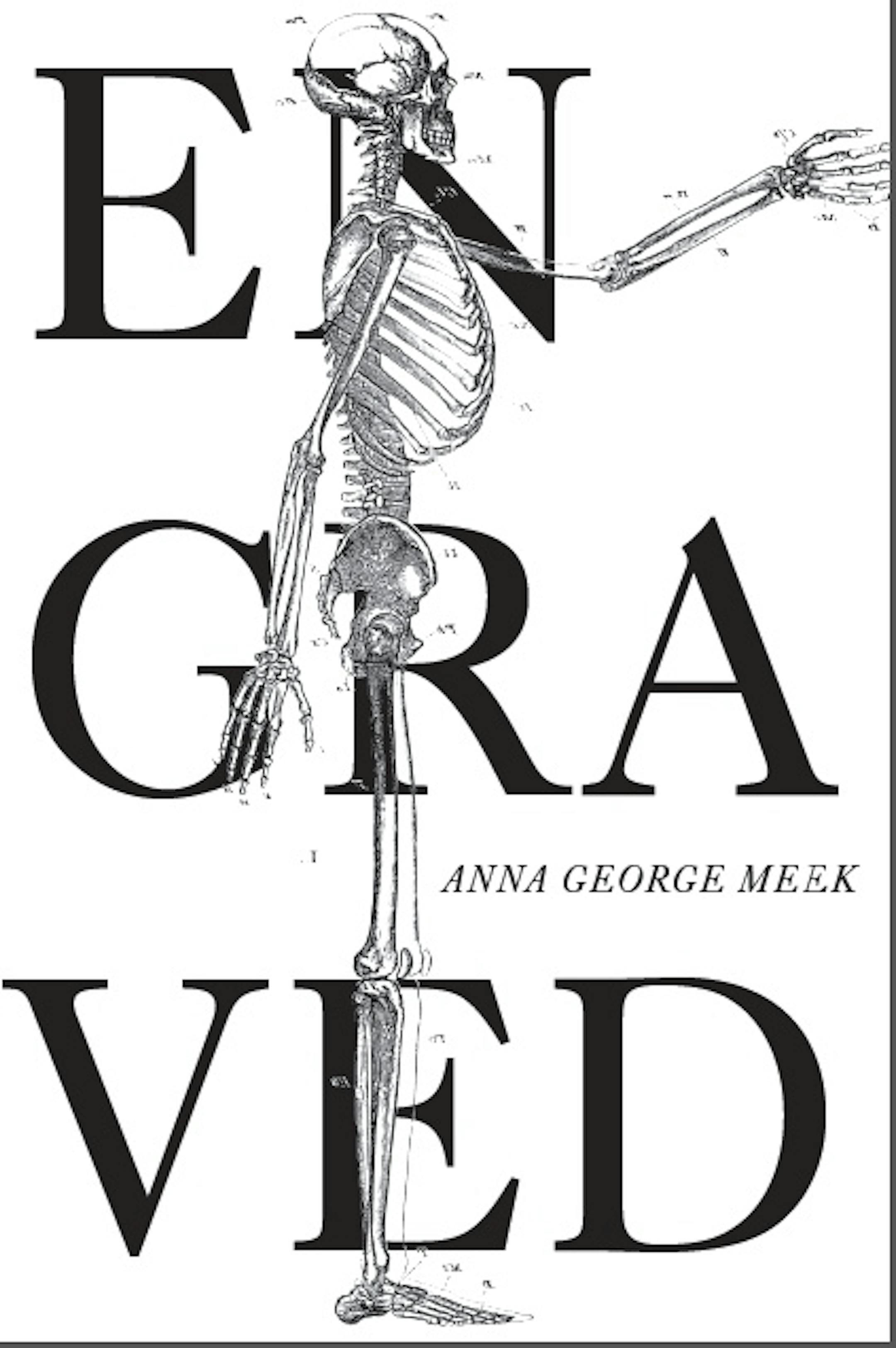
"Engraved," by Anna George Meek. (Tupelo Press, 24 pages, $9.95.)
In 1859, Merriam-Webster published the first illustrated dictionary, hiring anonymous artisans to engrave tiny pictures. Anna George Meek uses these images as a source of inspiration in "Engraved."
She notes that when looking at the illustrations, the "best parts of imagination emerge." These wildly imaginative poems are astonishing in their density, vividness and precision.
She writes, "An idea books / passage, … the mind sails … the narrow channels / … only to wreck on uncharted land." Meek's poems chart that wandering, beginning with precise descriptions of illustrations that lead into speculations about what is off the frame or into beautiful meditations on how humans construct meaning: "Pediculina / crawls up the page to Peacock / and its showier tail: The Pediculina pauses / takes a left to Passenger / Pigeon."
While the dictionary's illustrations make words visible, the picture's engraver remains invisible: "Before vanishing, the engraver / has pressed on me and inked a gothic hope."
Meek is interested in how these images isolate an object from context; the blankness surrounding is fertile ground for the imagination. In an illustration for "gargoyle," "a cathedral affixed to each figure, cavity / for a god who goes unrendered." Her poems skirt the fantastic with esoteric words rich in sound and history and near vanishing themselves: cupola furnace, clavichord and toboggan.
Full of surprising moments of vivid description and sudden swerves of thinking, this chapbook will leave the reader eager for more. Hopefully, this slender volume is a prelude to a full-length book.
"Albedo," by Kathleen Jesme. (Ahsahta Press, 112 pages, $18.)