

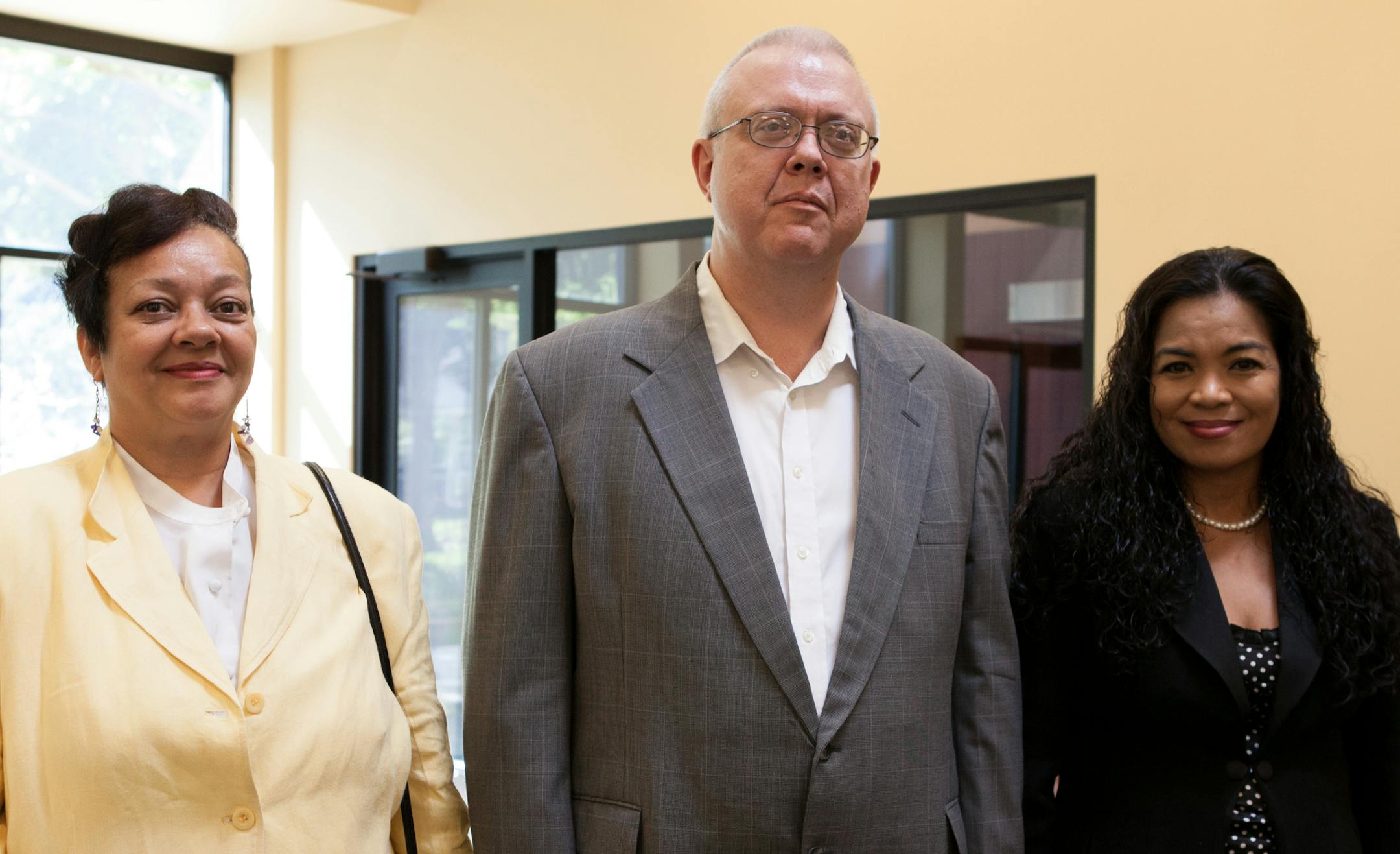
Imee Clark lost her administrative job of 10 years in 2009 after Atlanta-based Delta Air Lines acquired Northwest Airlines. The veteran worker has applied for countless jobs and earned several software certifications only to be told by prospective employers that she lacks sufficient experience.
Thomas Hill, a 20-year Air Force veteran, worked in catering and took a job at the Veterans Hospital in 2009. He lost it in 2011 after his department lost some funding.
Nardal Stroud lost a job at the predecessor of Comcast cable and a part-time position at North High. She continues to volunteer about 10 hours a week as she seeks work.
These three 50-somethings embody the face of the long-term unemployed who have exhausted unemployment benefits as they sought work over the past several years. They added training and credentials. They have cut into savings and struggled financially. They volunteer because they're good citizens and it's an antidote to despair.
Minneapolis last week became the sixth U.S. city where the WorkPlace, a workforce council, and local partners launched the organization's "Platform to Employment" program aimed at giving veterans and older workers extra help to find a permanent job.
"I have ups and downs," said Clark, a mother of two whose husband lost his job and had to move to another state for full-time work. "I decided to go into IT and got my 'mini-master's' from the University of St. Thomas in IT and business analysis. And I'm Microsoft-certified [on various software]. I've applied for jobs and been told there were 50 other applications. I have applied [online] for up to 10 jobs a day. I had the [new] certifications but no experience. That was the stopping point."
Minnesota employers added 12,200 positions in August, finally recapturing all the jobs lost during the 2008-09 Great Recession. The state's official unemployment rate dropped last month to 5.1 percent, below the national average of 7.3 percent. Yet thousands of Minnesotans still seek work.
It can be particularly difficult for older workers such as Clark, Hill and Stroud, long-term unemployed who have insufficient retirement savings to call it a career and are too young for Social Security.



