

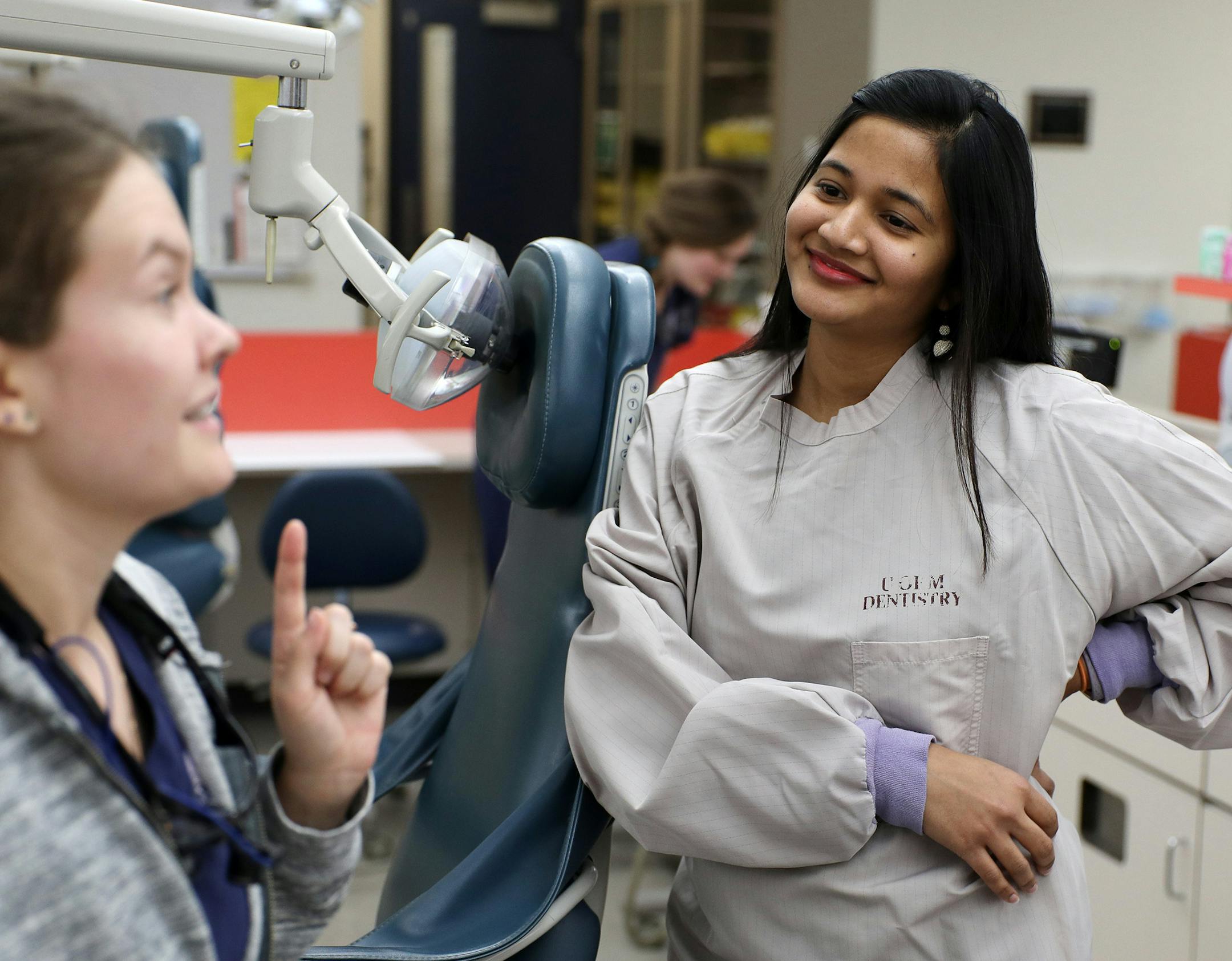
Neeharika Bhashyam got a surprising break from the U.S. government almost three years ago: The Obama administration gave the native of India and other spouses of foreign professionals permission to work. Bhashyam landed a job as a dental assistant and enrolled in the University of Minnesota's school of dentistry.
Now the Trump administration is gearing up to scrap the work permits for spouses of skilled workers in the final stage of the green card application process — part of a harder line on the controversial H-1B visa program Trump has championed. Given the president's "Hire American" creed, the administration will also dodge the awkward task of defending the Obama permits against a court challenge by a group of IT workers who lost their jobs to H-1B hires.
Bhashyam faces graduating with $300,000 in debt and murky prospects for putting her degree to use. She and others say families made key life decisions based the ability to work while their spouses are stuck in green card backlogs, mainly for workers from India and to a lesser extent China. They have launched a long-shot campaign to prevent the change.
"Sometimes I think, 'What is the point of pursuing dentistry if I can't work?' " Bhashyam said. "But it's my dream to be a dentist."
The H-1B program's critics, who say some employers abuse it to import cheaper and more pliable labor, have cheered Trump's tougher approach as a bid to protect American workers. Immigrant advocates see the plan to take away H-1B spouses' work permits as the latest salvo in a broader push toward curtailing legal immigration that they say will turn off global talent.
"We are going to lose the best and the brightest to other places," said Laura Danielson, immigration attorney at Fredrikson & Byron.
To work or not to work
Bhashyam arrived in the Twin Cities in 2014 to join her new husband, Chaitanya Polumetla, a software developer working on an H-1B visa, which is primarily for college graduates in specialized fields. His employer had recently sponsored him for a green card, the document that grants permanent residence and a path to citizenship.
Because of the high number of applicants from India and a per-country quota for the green cards, Polumetla landed in a backlog that his attorney warned him could last 15 years or more. Meanwhile, Bhashyam, a dentist back in India, could live in the United States but would not be allowed to work.


