

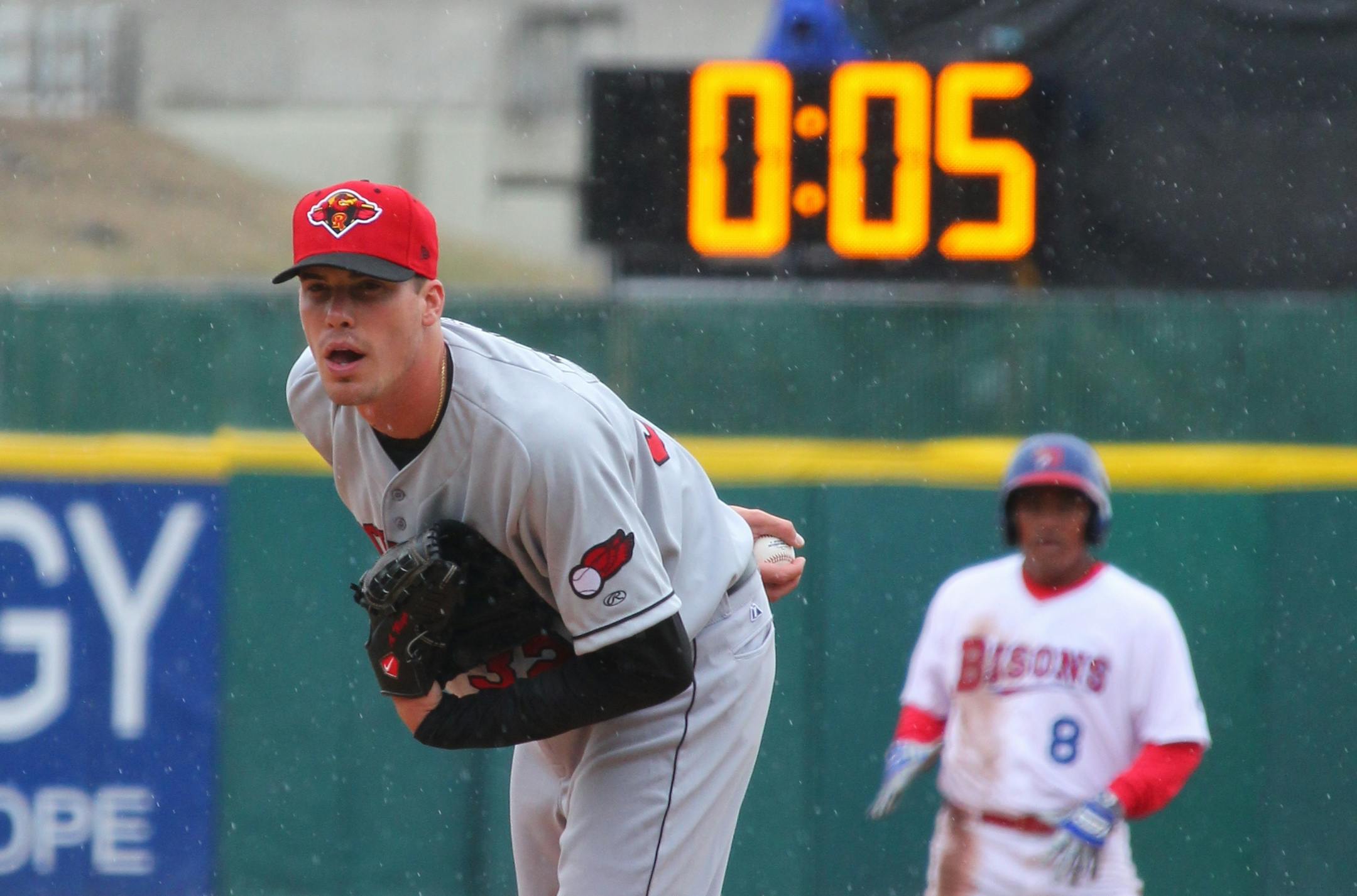
It has been said that one of the greatest things about baseball in comparison to other major team sports is that there is no clock.
You can't take a knee, dribble out the clock or chip the puck down the ice to preserve a lead. You need 27 outs, and until you get them the team that is trailing still has hope. This is a beautiful aspect of baseball that should be preserved.
However: It very well could be time for a clock within the game — a pitch clock. I was already starting to warm up to the idea; the past few days cemented those feelings.
I was on my annual Great Baseball Road Trip, which has been going strong every year since 2000 (and when something reaches its 17th consecutive year, it deserves to be capitalized).
The trip this year consisted of five baseball lovers, and the venues stretched from the College World Series in Omaha to a Class AAA game in Colorado Springs to a pair of games at Coors Field in Denver.
Thursday's game between Coastal Carolina and Texas Tech (won 7-5 by Coastal Carolina) took 3 hours, 48 minutes to play nine innings. That was actually an improvement from the early pace: The first 4½ innings were played in 2 hours, 25 minutes.
Friday, the Colorado Sky Sox defeated the Memphis Redbirds 11-6. It was an action-filled game, finished in a reasonable 2 hours, 57 minutes.
On that same day — a game we weren't at — Colorado and Arizona played the longest nine-inning game in National League history. finishing in 4 hours, 30 minutes. We arrived for Saturday's game, which took a still-ponderous 3 hours, 35 minutes. The score Saturday was 11-6, just like Friday's Class AAA game. There was roughly the same amount of action. But it took 38 extra minutes.


