

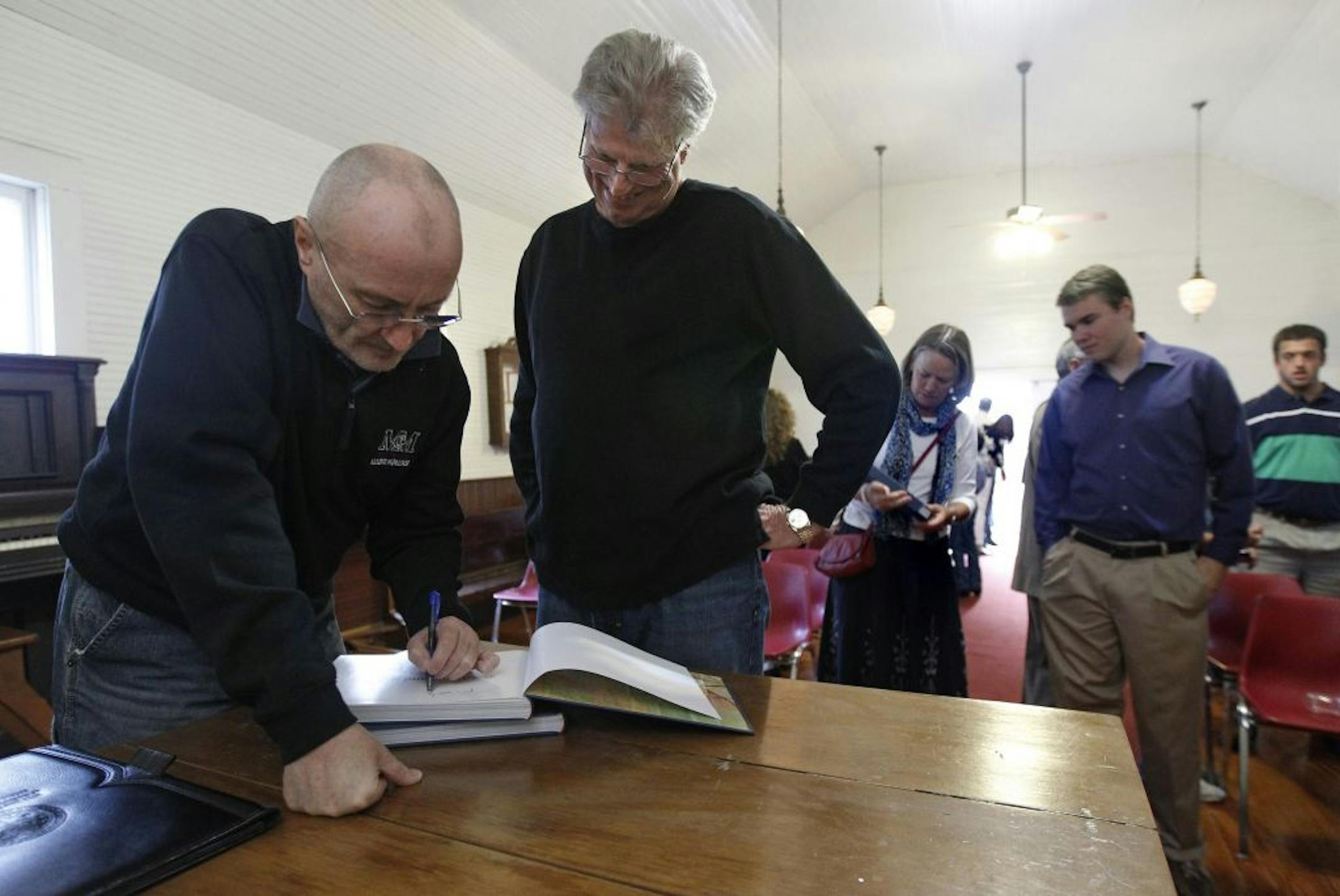
Sandwiched between two respected historians on a hard church pew, the compact Englishman looked nervous, stroking his stubbled chin as he eyed 60 or so people crowded into the Buffalo Gap Chapel in Texas waiting for the sound of that voice they couldn't have escaped hearing over the last 40 years.
Never mind that he has performed before crowds a thousand times bigger, sold a gazillion records, won Grammys and an Academy Award. British singer and drummer Phil Collins was fidgeting because he was about to give the world a first glimpse inside his own private Alamo.
It's a rarefied and improbable realm, filled with hundreds of Texas Revolution artifacts and documents painstakingly archived inside a basement room in Collins' home outside Geneva.
Rock stars are known for burning cash on Ferraris, yachts or trophy girlfriends. Collins? He never forgets the Alamo.
"It keeps me off the streets. What am I going to do? I don't want to traipse around the world anymore," he said. "I love it. I sit downstairs in my basement and looking at and sort of drooling over what I've got. It was never my intention to have this huge collection, but one thing led to another and it's my private thing."
Among his treasures are one of Davy Crockett's rifles and his post-death receipt from the Texian Army. They share space with Jim Bowie's knives, verbose William Barret Travis' letters, Santa Anna items and a snuffbox that Sam Houston gave to a romantic interest.
Perhaps more revealing about the depth of Collins' obsession are the hundreds of historical bits -- buttons, dice, letters, weapons and IOUs -- linked to the less-celebrated defenders who died at the Alamo or the hundreds of anonymous Mexican soldiers who died with them on March 6, 1836.
The recent private event at the Buffalo Gap Historic Village's 1903 chapel was the rehearsal for a five-day Texas tour to promote Collins' expansive new book, "The Alamo and Beyond, A Collector's Journey."


