

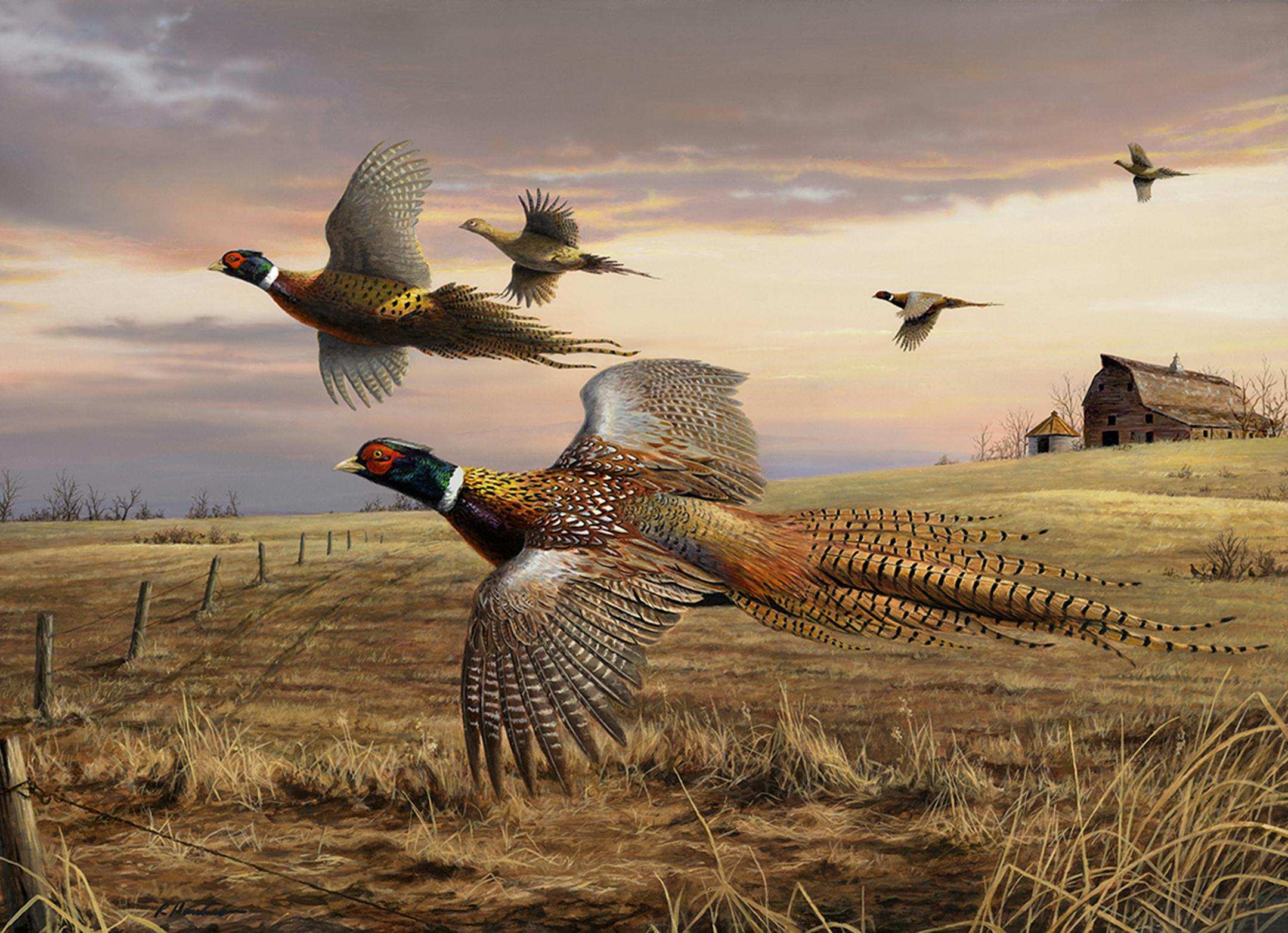
I departed my former home in Bismarck at 6 a.m. without even a rumor of inclement weather in the forecast. My destination: Wessington Springs, a sleepy little town in east-central South Dakota.
My plan: To hunt ring-necked pheasants, the Lords of the Prairie. Riding shotgun was Buddy, my 8-year-old black Labrador.
It was Thanksgiving 2009, and my drive that morning passed like a kidney stone. It was white-knuckled agony. A seemingly innocent snow squall near the North Dakota-South Dakota border unleashed a chain reaction of ugly conditions, from periodic whiteouts to icy overpasses and highways that sent vehicles into ditch-bound tailspins. For tow-truck drivers, it was a bull market. For me, it was precious hunting time lost. For Buddy — well, he just slept, and snored, the drive away.
I pulled back the curtain on the semi-rusted memory a few weeks ago when I got a call from an old friend and former co-worker. He wanted to take his son to South Dakota over Thanksgiving weekend and asked me for some pheasant-hunting advice.
He came to the right source. For nearly 20 years beginning in my early 20s, I spent every Thanksgiving holiday weekend — often to the chagrin of my mother — in South Dakota chasing ringnecks. At 51, I look back on those oft-crazy bird-hunting adventures — and the many people I met and became friends with along the way — with deep gratitude and thankfulness. It was a stanza of my life truly lived in full.
During this period's early years, I spent the long Thanksgiving weekend mostly with my uncle and late grandfather. Superb wingshooters, they made their bones hunting the birdie bottomlands of the Minnesota River near Belle Plaine. Most years we'd hit the road after Thanksgiving dinner — a five-hour journey to the South Dakota hinterlands. We shot countless limits in those days, most over my uncle's relentless German shorthaired pointer. Fine hunting aside, my grandfather — a proud Irishman — always stole the show. Often while chewing leaf tobacco and using a jelly jar as a spittoon, he held court, spinning wonderful yarns about hunting during the Soil Bank era, making blood sausage on the farm, playing "hide-and-seek" with local game wardens and watching his old German shepherd — a former police dog he taught to hunt — break ice to retrieve a drake mallard on a river slough.
Truth is, I never knew which stories were true — or merely embellished. But I didn't care: It was grand theater. I still hear his stories today and feel the sensation of his mild Irish brogue hit my ears, proving, at least for me, Faulkner's famous quote: "The past is never dead. It isn't even past."
• • •
In the late 1990s, I took my first daily newspaper job as the outdoors writer for the Aberdeen American News. For my sins, I was paid the living wage of $8.95 an hour. But I got rich in other ways. My first editor wanted me to write a series on agricultural producers who practiced habitat conservation. That's when I met Charlie and Rudy, both whip-smart land stewards and wildlife enthusiasts.


