

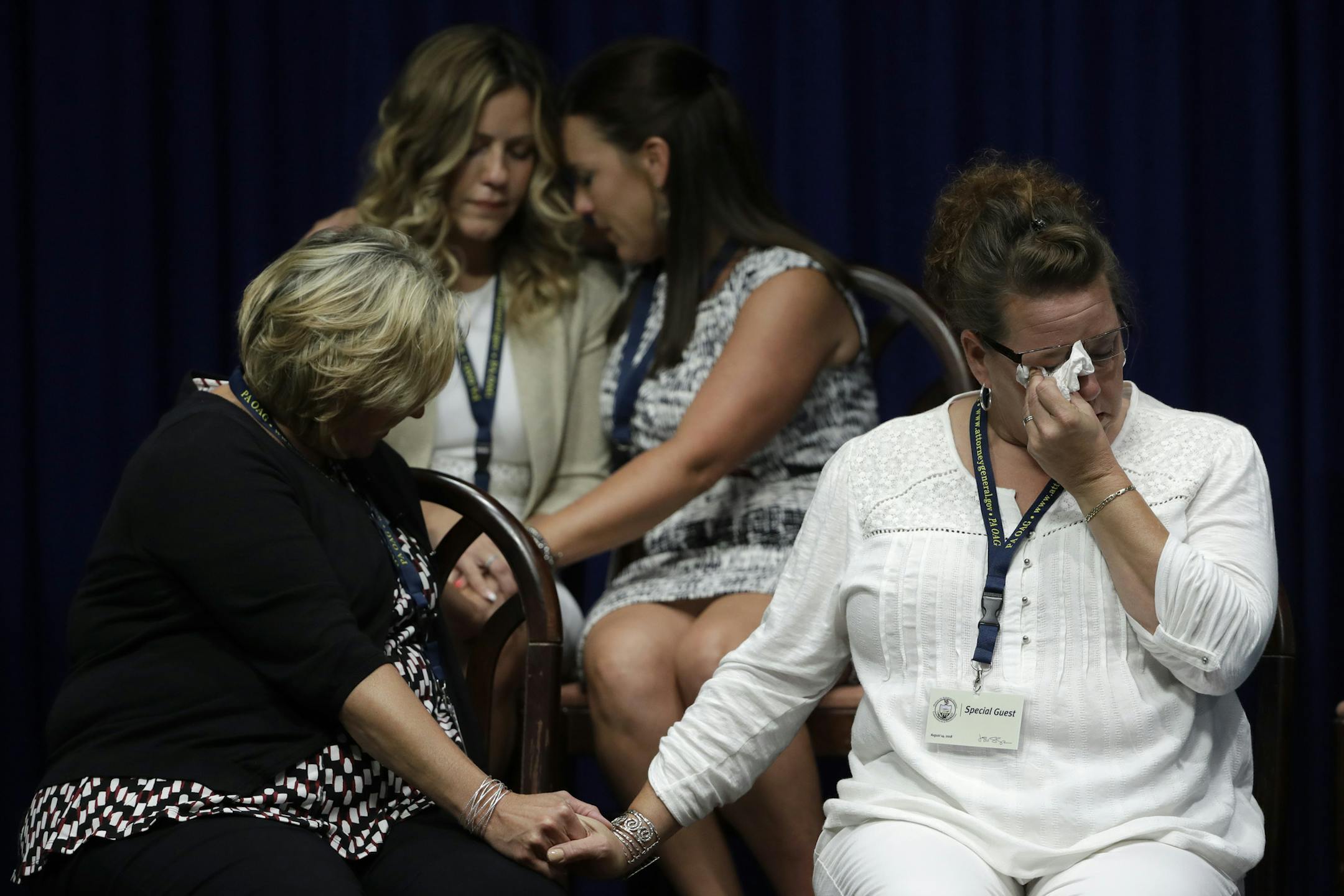
For all of the soul-shattering details in a new report about Pennsylvania priests preying on children and the decadeslong effort to cover it up, the most chilling line in nearly 900 pages is this:
"While the list of priests is long, we don't think we got them all."
That statement comes from the grand jury convened two years ago by the Pennsylvania Attorney General and given a massive responsibility — investigating clergy sexual abuse over a span of 70 years in a state where 25 percent of the population is Roman Catholic. The review, which encompassed six of the state's eight archdioceses and included access to records kept under bishops' lock and key, is viewed as one of the most comprehensive government inquiries into abuse to date within the United States.
More than 1,000 victims were documented and the report names over 300 priests as abusers. The conclusions are solid and supported with church records. The report was clearly prepared with great care, which is why reading it is a public duty.
Despite this admirable effort, the words written on behalf of the grand jury are deeply apologetic. Despite their powers to subpoena documents and witnesses, grand jurors knew their limitations.
They could not possibly uncover all the victims or all of the abusers or those who covered up their crimes. And they knew their work would fail to punish perpetrators more often than not. The passage of time proved a formidable adversary, with expired statutes of limitations or the death of accusers preventing prosecution.
In the end, transparency proved to be the grand jurors' most potent instrument. But it is only powerful if the report prepared gets read inside and outside of Pennsylvania, and by Catholics and non-Catholics. Neither abuse nor the instinct to protect the powerful is exclusive to this religious institution. There are lessons for all in seeing these wrongs detailed.
Policymakers should also scrutinize the findings. It is clear that what the church hierarchy has done on its own to hold abusers accountable is inadequate. It is only with powerful prodding — investigations with subpoena power or courageous litigation like that seen in Minnesota — that abuses have been aired and victims heard.


