

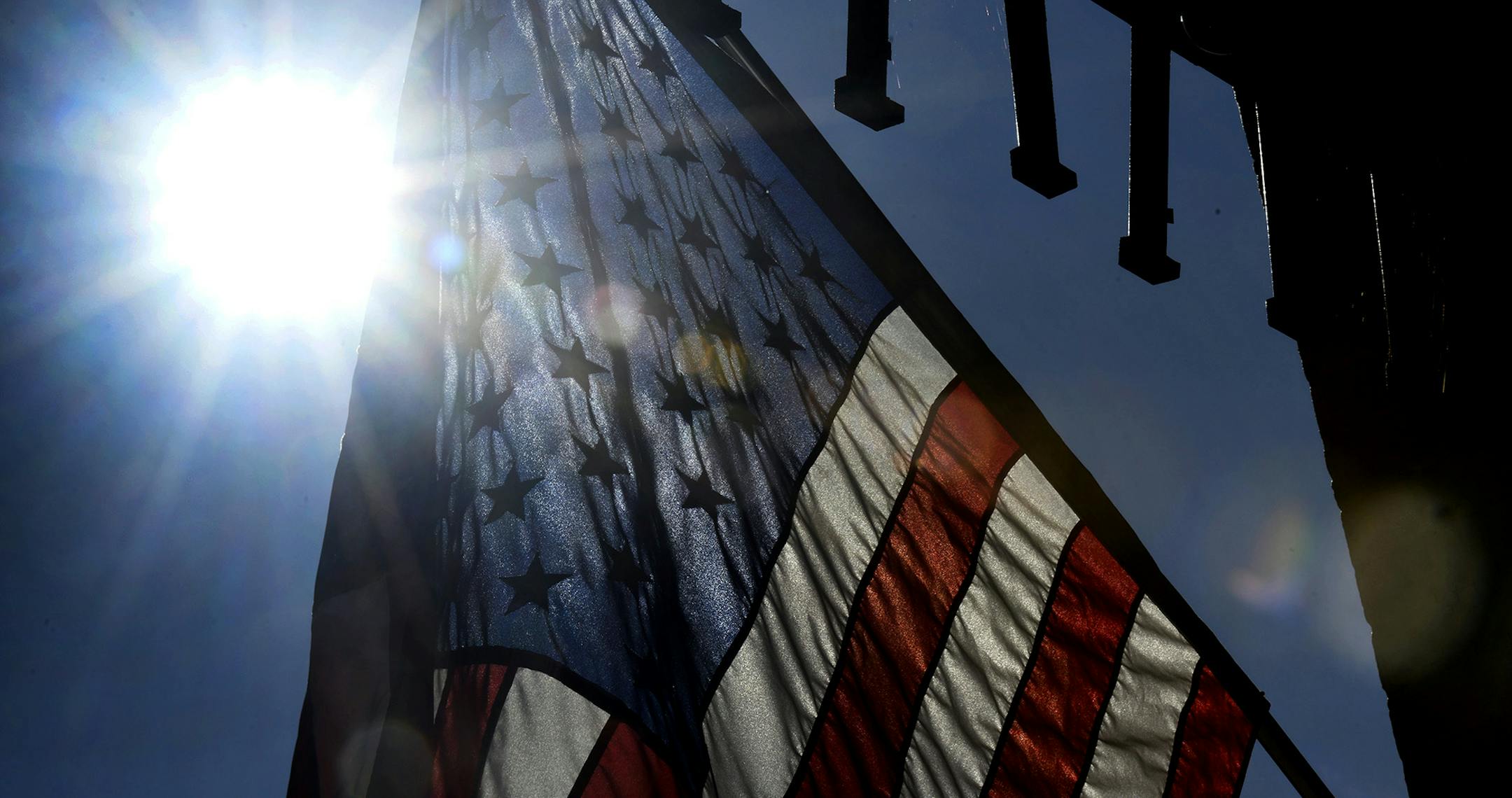
I'm the wife of a refugee from a communist regime who is now a naturalized citizen. He may love the spirit of the Pledge of Allegiance and its "liberty and justice for all" even more than I, because he has firsthand experience with "forced patriotism." In his case, as a soldier, it meant being ordered to kill fellow citizens who may have done anything to provoke the government. Men and boys were taken, families not knowing where they were — until the government sent them an invoice for the bullets used to execute them. All the public bowing, marching, saluting — a forced facade. He fled, risking being caught and killed, rather than execute fellow citizens at the government's orders. He was branded an "unpatriotic traitor." "Wanted" posters went up, with instructions to kill him, if caught.
My husband loves his home country and celebrates his culture. But it is a true love of country and people — not trappings. Now, he stands for the U.S. flag. We have three of them in our home. We also have his home country's flag. He and his fellow refugees say, "This is the flag of the country I was born in, and this is the flag of the country that saved me. I love them both." He would be first to tell you that patriotism is not something as simple as a pledge, or what one does publicly for show or by rote memorization — but what one does every single day to contribute to, and honor, the country they love. We each hold the power to be a walking, talking "pledge" to the city, state and nation we love.
I love the pledge. And the national anthem. And so many symbols of our national culture. But I have seen many a white supremacist waving the flag while spewing hate.
Words and symbols are meaningless without actions that support them. I will take action every time. And nothing at all prevents anyone, at any time, from silently, fervently offering up a pledge, an anthem — or a prayer, for that matter — out of gratitude and love for one's community and country.
Kathleen Goor, St. Louis Park
EDUCATION
$1 spent on education now is $17 returned later. Why not do it?
It's obvious politicians don't like to spend on education. The federal government is cutting funding and subsequently, so are states, including here in Minnesota. Teachers are getting laid off, programs cut and class sizes are increasing. It's obvious these politicians need education. They don't seem to know the difference between an "expense" and an "investment."
Education is, literally, an investment — in children and adults, in us and society. We get the best bang for our buck — or return on our tax dollar — by providing early education, prior to kindergarten, especially for lower-income kids. I've heard and read many times that every $1 invested in high quality, early-learning programs yields up to $17 in societal benefits.
It's obvious why: A business coalition formed to confront education issues found that half (half!) of Minnesota kids — disproportionately lower-income families and minorities — weren't getting the development they needed to be ready for kindergarten.
The Star Tribune story on the findings (from September 2018) concluded that "getting kids ready for school was the best single investment Minnesota taxpayers could make. Kids who succeed in school, according to myriad studies, are less likely to drop out, get in trouble with the law, get pregnant as teenagers and otherwise disproportionately tap public programs instead of graduating high school, ready to be trained for employment or postsecondary education and economically self-sufficient taxpayers."

