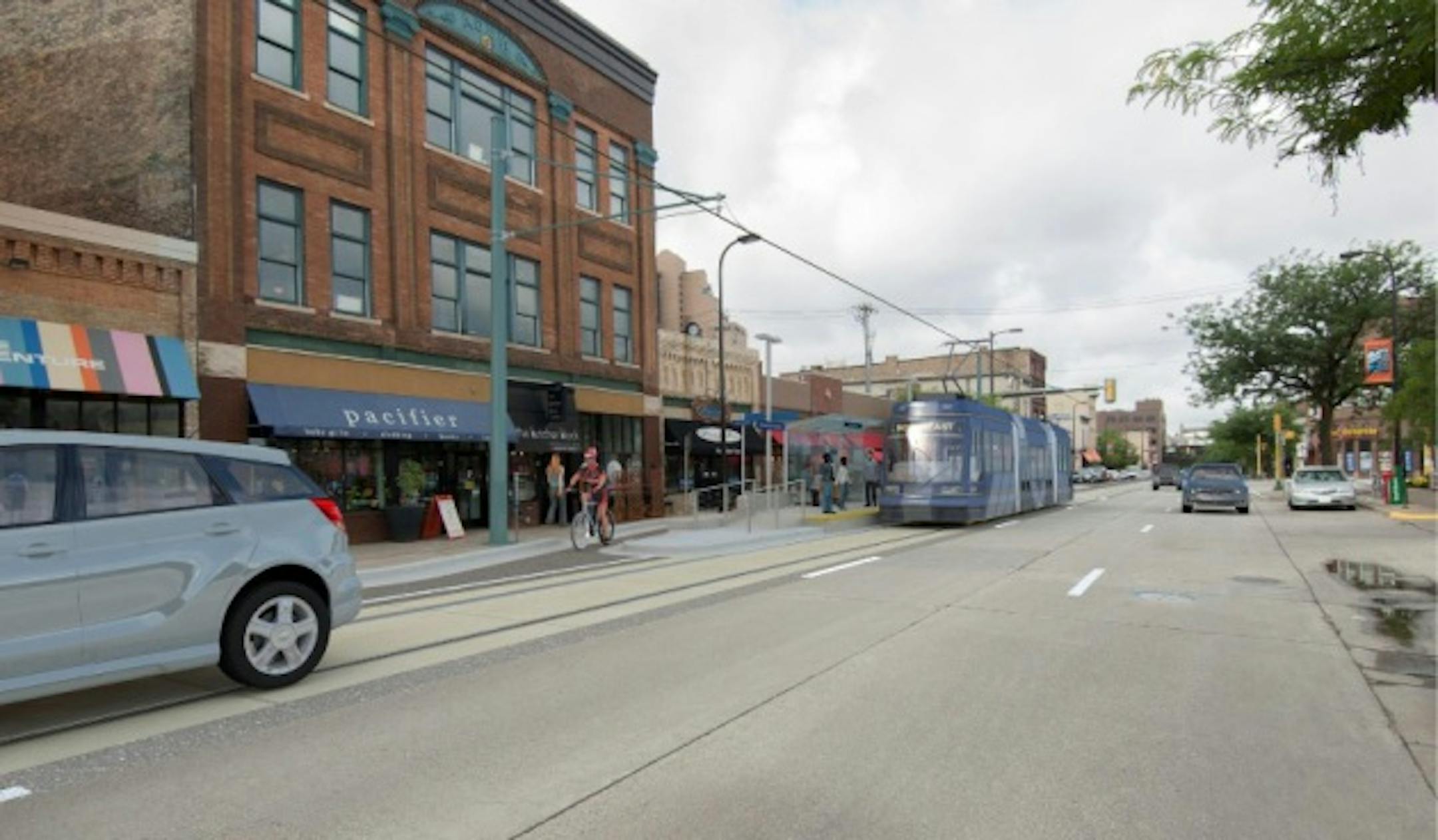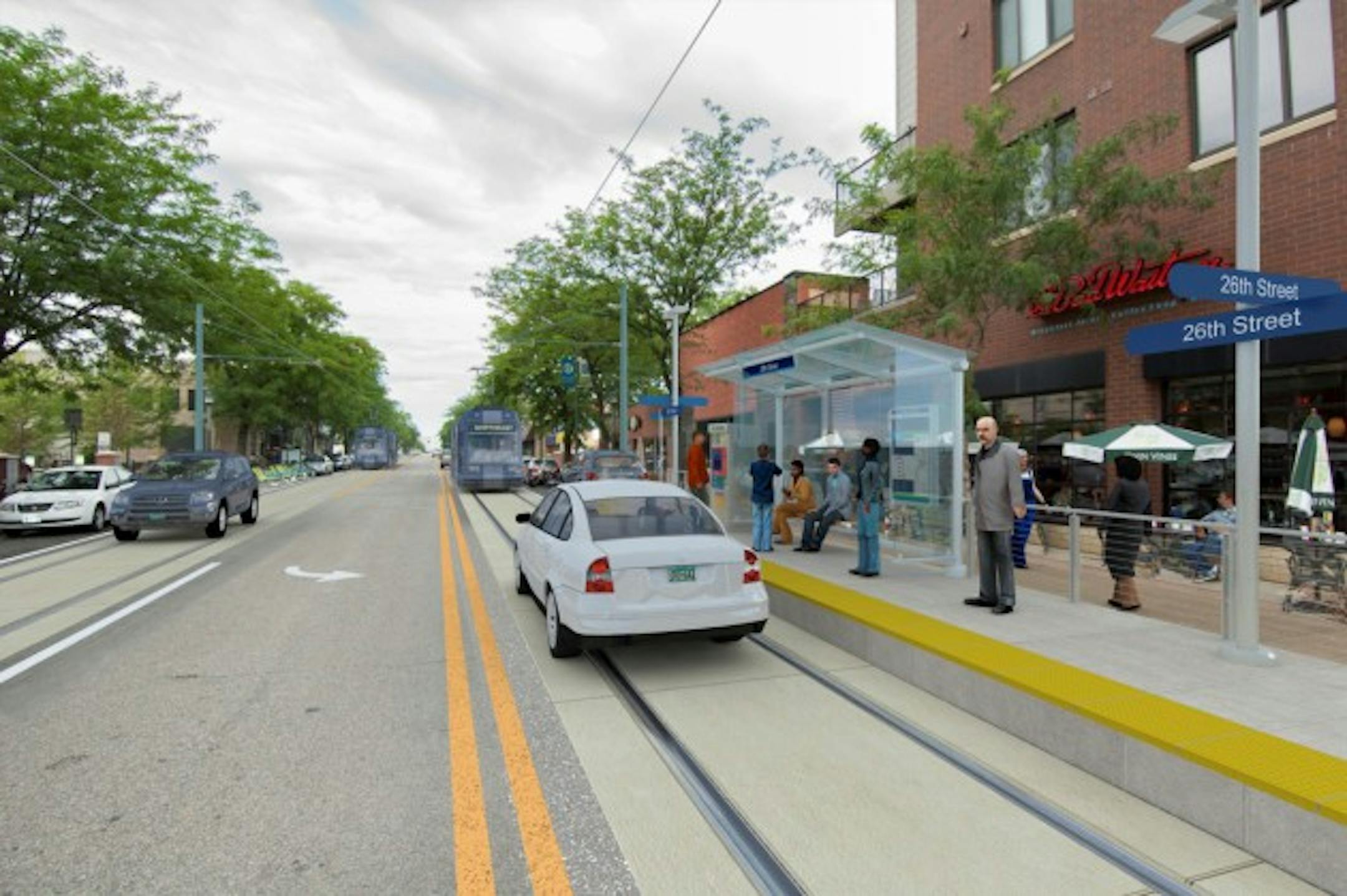
Above: The streetcar running in mixed traffic along Nicollet Avenue (City of Minneapolis)
About one percent of Minneapolis' tax capacity will be redirected next year toward a fund intended to one day pay for a streetcar line.
The city's unique method for funding a 3.7-mile Nicollet Avenue streetcar, a project that remains far from certain, is hitting its stride as several new apartment towers have opened. Those buildings now have $5.4 million in city tax capacity, which will aid the streetcar "value capture" district next year rather than helping absorb the growing cost of city services.
If the district did not exist, the city could theoretically raise tax collections for city services by an additional one percent without having an added impact on taxpayers, city finance officials said last week. Or, if tax collections remained as proposed for next year, the burden on existing homeowners would be slightly reduced.
The streetcar district was established in 2013 with the permission of the Legislature to aid a line that would run from approximately Kmart to Kramarczuk's on East Hennepin -- largely in mixed traffic. Unlike tax increment financing, which pays for development with new taxes generated by that development, the streetcar district redirected taxes from a number of anticipated buildings toward a potential future project.

A penthouse on the 36th floor of LPM Apartments offers spectacular views of the Minneapolis skyline and surrounding area. (JIM GEHRZ)
Those buildings are now complete in and around downtown: Nic on 5th, LPM Apartments, 4Marq apartments, 222 Hennepin, Red20 and Xcel Energy's new headquarters. As they've opened, the city tax capacity of the district has risen from $3.6 million last year to $5.4 million in 2017. The city's gross tax capacity is about $550 million.
The city's contribution to the district next year will be less than $5.4 million, since only part of the capacity is taxed. But the total amount generated for the district next year will be possibly more than $5.4 million, since it also pulls from the county and school district's tax capacities.