
One industry stands above others as a barometer of the world economy

It is semiconductors. And things are looking up for the chip business.

January 22, 2020 at 2:12AM
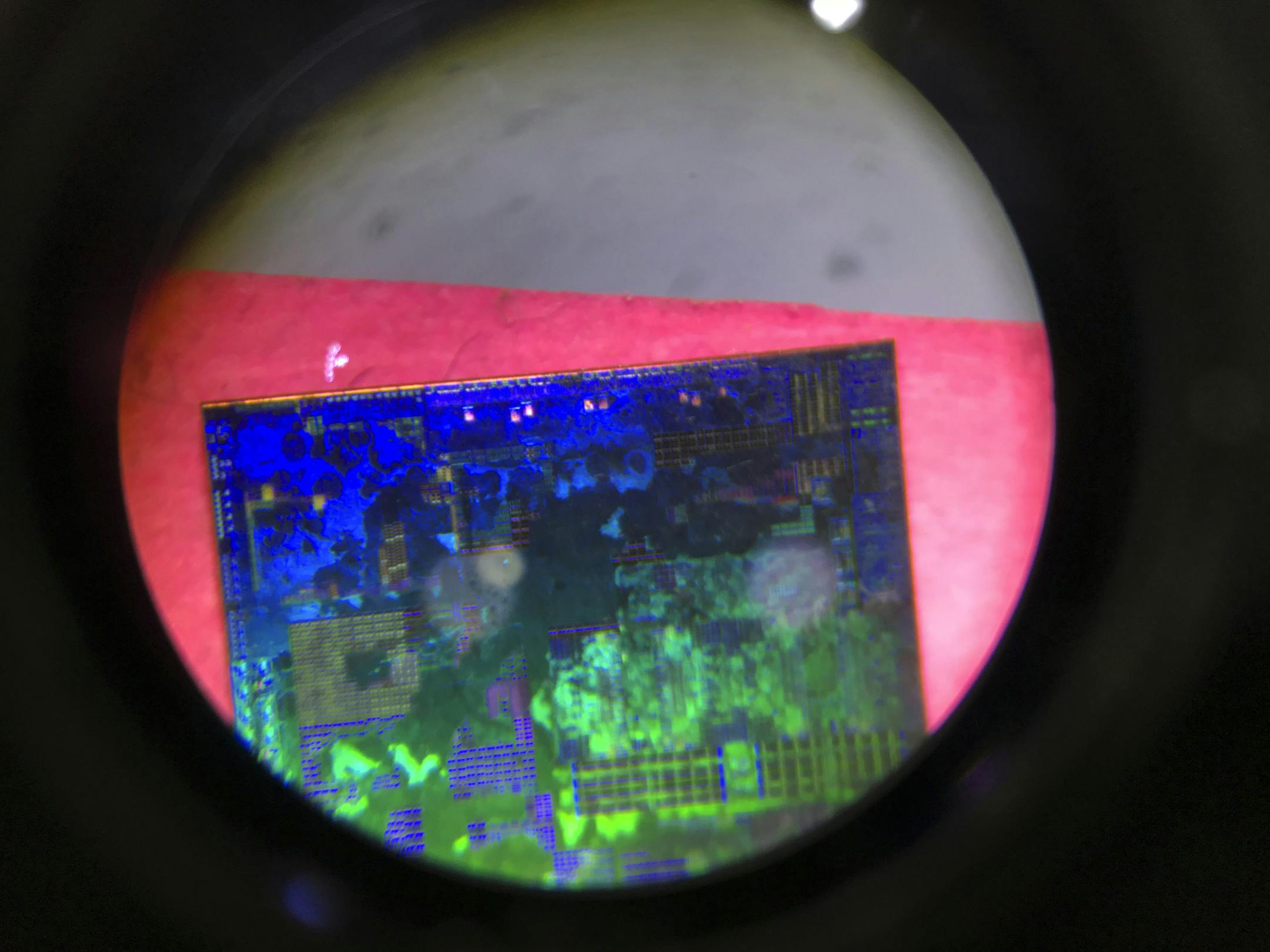
FILE - In this file photo taken Thursday, May 17, 2018, a Chinese microchip is seen through a microscope set up at the booth for the state-controlled Tsinghua Unigroup project which is driving China's semiconductor ambitions during the 21st China Beijing International High-tech Expo in Beijing, China. China is cutting taxes on its fledgling software and integrated circuit industries to spur development in the face of U.S. export controls that threaten to handicap Chinese tech companies. (AP Phot
A Chinese microchip, seen through a microscope. Until recently the industry’s rhythms were dictated by the life-cycle of smartphones. (The Minnesota Star Tribune)

The setting for Robert Harris' thriller, "Enigma," is wartime Britain, where everything is rationed except for the rain.

It follows Tom Jericho, a young prodigy stationed at Bletchley Park, the real-life center of code-breaking operations, who is part of a team of cryptologists trying to break the code used by Germany's armed forces. Any progress can be undone if the enemy changes the code — which he will if he suspects that it has been cracked.

The novel comes to mind when considering the mysteries of shifts in the economic cycle and market reactions. The mood has clearly changed for the better since the middle of last year.

Fears of recession have receded. Global equity prices have rallied. Bond yields have perked up. A truce in the trade war, however fragile, has helped. But the improvement in mood coincided with signs of life in Asia's manufacturing hubs.

The key to these coded messages is the semiconductor industry.

Cars, smartphones, gadgets and cloud-computing servers rely on components, notably memory chips, that are disproportionately made in emerging Asia. The mood-sensitive parts of aggregate demand — capital spending by firms and nonessential purchases by consumers — have microchips in there somewhere.

The chip industry itself has savage mini-cycles. When it turns down, it is a sign of trouble ahead in the world economy. When it perks up, as it has done recently, there is reason to be more optimistic.

The cost structure of the chip business is central to this enigma. A semiconductor fabrication plant, or fab, costs billions of dollars to build. A sudden jump in orders, such as occurred in 2017, is met with increased capacity. But when demand falls, the fabs just keep producing. They are highly automated with few staff, so running costs are low.
Continuous output makes sense but leads to occasional gluts and sagging prices, as happened through most of last year. Stocks become bloated. When demand picks up again, as it did late last year, stocks are drawn down and prices begin to stabilize.

Until quite recently the industry's rhythms were dictated by the two- or three-year life-cycle of smartphones. Export orders for Taiwanese electronics, for instance, tended to spike whenever a new Apple or Galaxy handset was launched.

But the smartphone market is now saturated. Consumers find that an old model works almost as well as a newer one — and this might still be the case even when the new 5G generation of phones reaches the market.

What drives growth in demand now is cloud computing, electrification of cars, wearable gadgetry and gaming, said Shawn Kim of Morgan Stanley. The cloud is a particular force. As firms ramp up capital spending of all kinds, that in turn spurs investment in cloud capacity, where business-related software lives.

What signals should market cryptologists be looking at? One measure is exports of semiconductors from South Korea, said Alicia Garcia-Herrero, chief economist for Asia at Natixis, an investment bank, who is based in Hong Kong.

South Korea is pivotal to Asia's supply chain, she said, and its shipments of semiconductors help predict exports in the region more generally. After a brutal 2019 the trend has bottomed out and is turning.

Another signal is the financial health of big Asian chip companies, such as Samsung and SK Hynix.

Market watchers will come to feel the same frustration felt by Harris' fictional codebreakers at Bletchley. The codes keep changing. For now, though, the message from Asia is that the sun is peeking through the clouds — or, at least, that it has stopped raining.

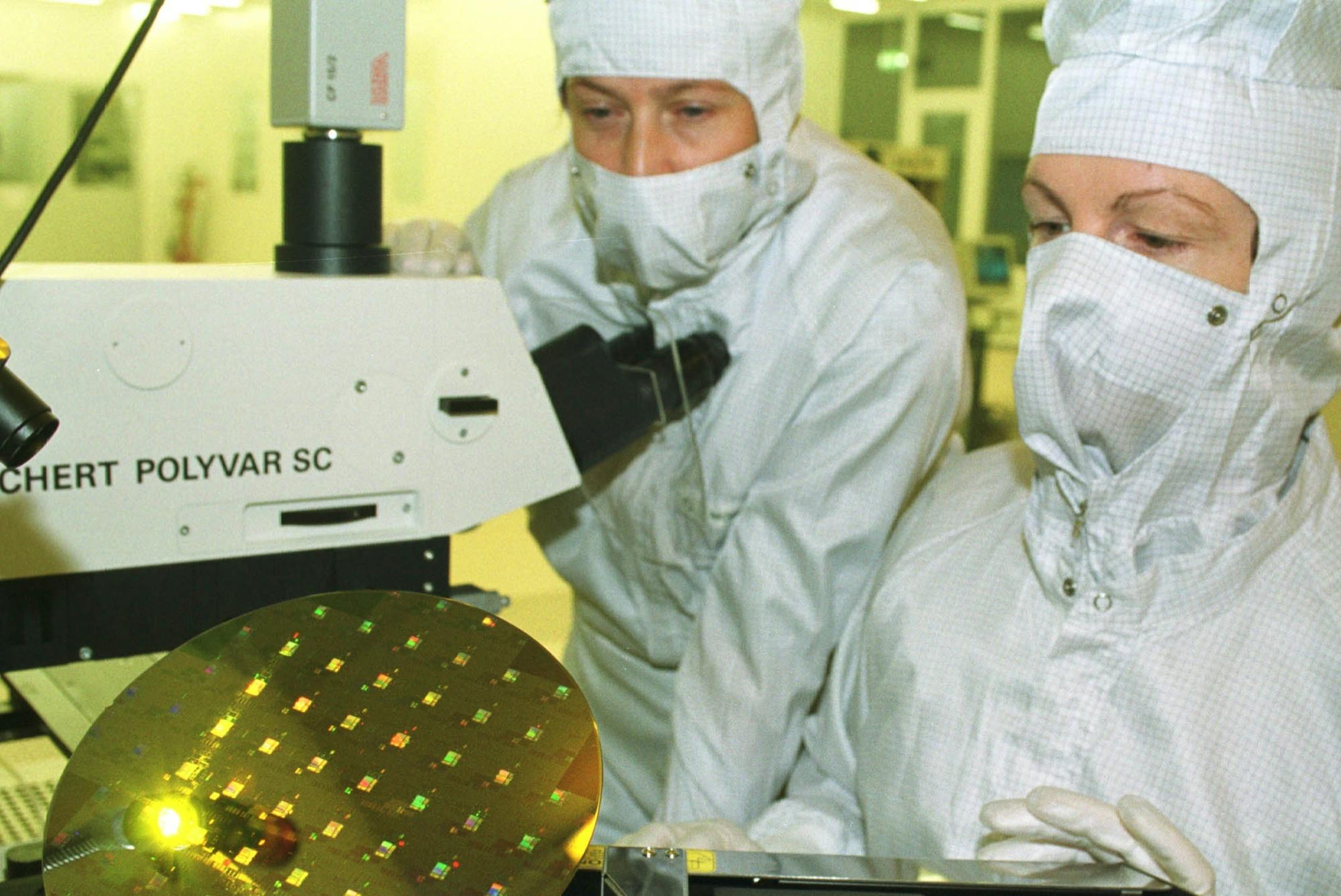
Two employees of the Institute of Semiconductor Physics (IHP) supervise the clean room of the IHP, the work process on an 8-inch wafer loader, on 15 December 1999 in Frankfurt. The construction of the IHP will be inaugurated on 20 December 1999. The cost for the construction amounted to 128 million DM. Kernstueck is the clean room, which was handed over in September. With the clean room, the IHP is to become one of the most modern microelectronics research institutions in the world. Here also th
Workers at the Institute of Semiconductor Physics in Frankfurt, Germany, were working on microelectronics for mobile communications in 1999. (The Minnesota Star Tribune)
about the writer

about the writer

Economist

More from Business

See More
card image
Dick Enrico