

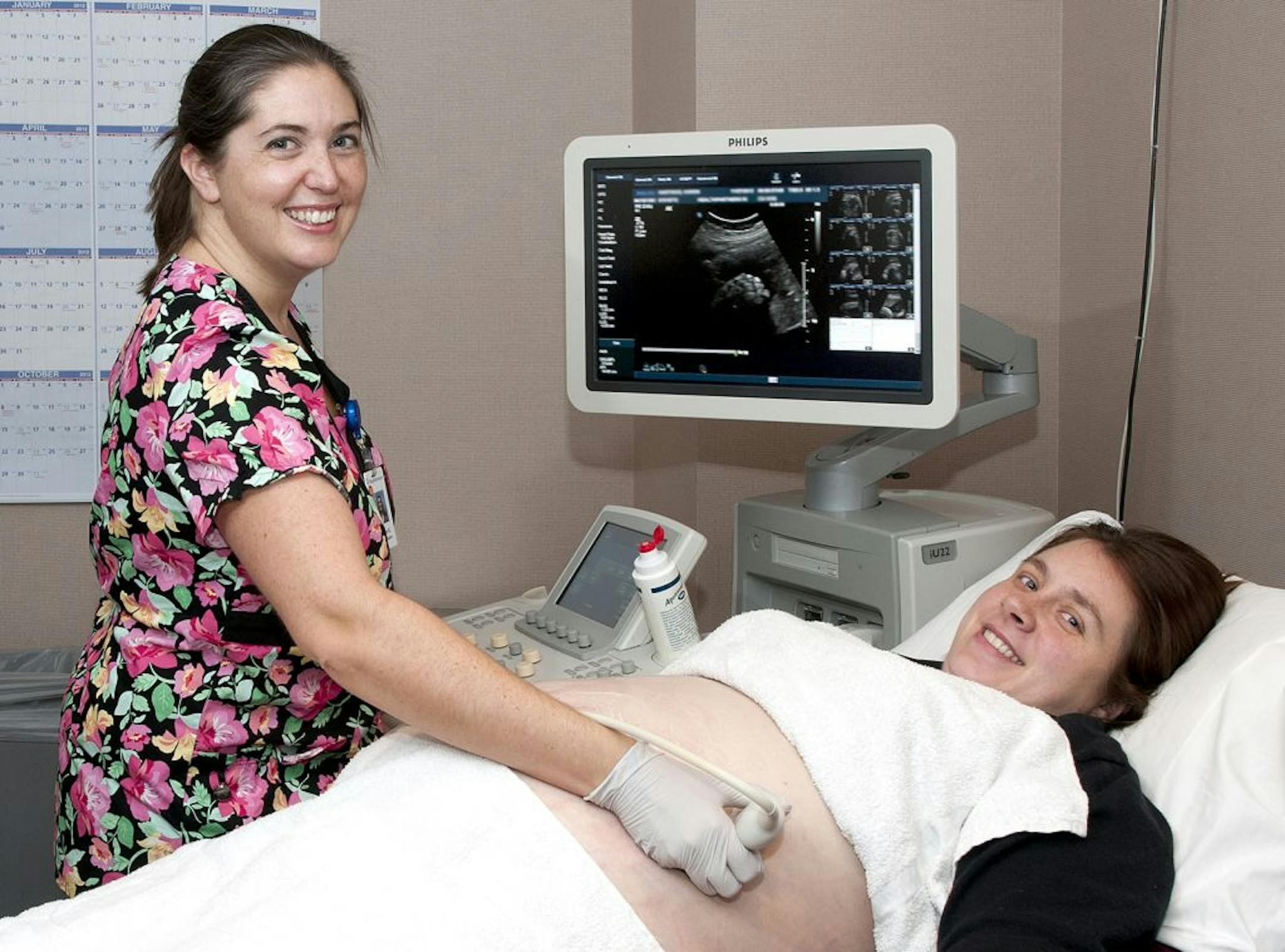
Alison Kemlitz isn't surprised to hear that sonography is listed seventh in a new book called 300 Best Jobs Without a Four-Year Degree. "People still just think of babies, but like all the technology out there, the images are better, the machines are smaller. Sonography is getting better every day. That's exploded what we can use it for," she said.
Kemlitz's first career was in clinical trials. "I was in cancer research on the administrative end. It was a lot of paperwork, and I wanted direct patient care. On the job, I met my first sonographer at an eye cancer clinic. I didn't know that ultrasound would be such a great application for looking at the eye," she said.
After shadowing the sonographer for a while, Kemlitz decided that it was the field for her. "I was happy to find that St. Kate's has a strong program," she said. She started taking pre-requisites like anatomy and physiology while still working in clinical research, then went "nearly full-time" to finish coursework and a one-year internship.
Kemlitz, who already had a bachelor's degree, completed the Associate of Science degree at St. Kate's. "It doesn't really matter to employers whether you have the AAS or BS. The main requirement is to be a Registered Diagnostic Sonographer," she said. "That means you have passed credentialing exams by the American Registry for Diagnostic Medical Sonography" (ARDMS). A benefit of the ARDMS certification, Kemlitz said, is that it's nationally recognized.
Kemlitz now works full-time at HealthPartners in obstetrics and gynecology. She is happy to spread the word about careers in sonography. "I think sonography is off a lot of people's radar. There have been a lot of exciting developments in the field. I love my job."
What does a sonographer do?
Ultrasound is really an interesting technology. We're manipulating the machine to get the best images for the doctor. It's not an automated process. The person doing ultrasound has to have a solid foundation in normal anatomy, and even though we're not doctors, we have to know pathology. It's a whole new ballgame, every thing we do.
What are some of the challenges?


