
On the eve of Trump-Xi meeting, here's how the U.S. looks to China's leaders

Officials realize that U.S. leaders of all stripes want it to make big changes.

June 25, 2019 at 1:04AM
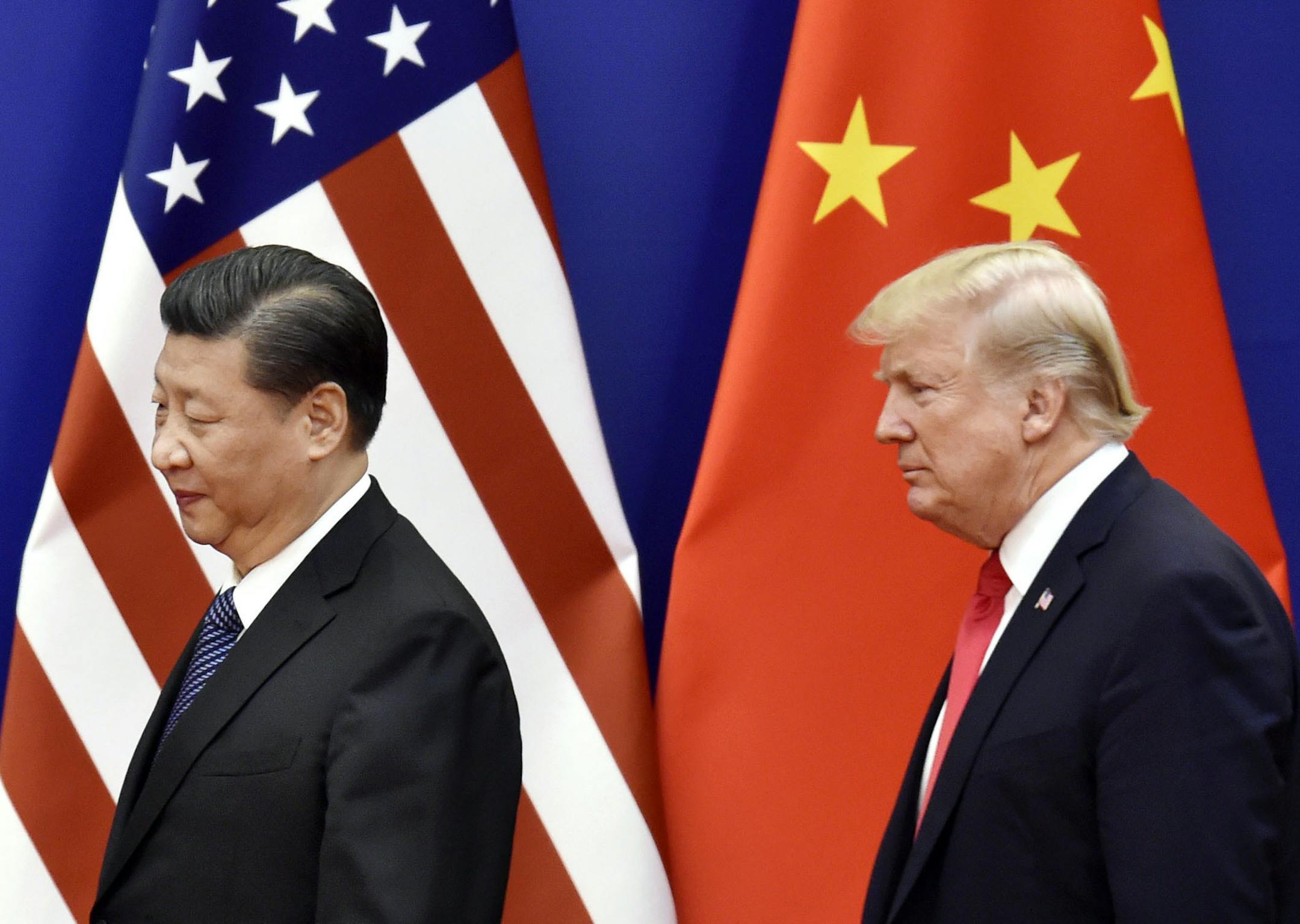
File photo taken in November 2017 shows U.S. President Donald Trump (R) and Chinese President Xi Jinping at the Great Hall of the People in Beijing. (Kyodo via AP Images) ==Kyodo ORG XMIT: KYDPL
President Donald Trump, right, and Chinese President Xi Jinping will meet together at the upcoming G-20 summit. (The Minnesota Star Tribune)

A bit late, China's leaders are starting to accept that their trade war with President Donald Trump is only one element of a larger crisis in relations with the United States — and not the most dangerous one.

The leaders understand that their critics within the U.S. foreign-policy and national-security machine — meaning aides to Trump, members of both parties in Congress and officers in the State Department, Pentagon, spy agencies and beyond — want China to change its ways. They also believe (or hope) that Trump wants something different, and perhaps less painful for them: to show voters the spectacle of China losing a trade fight with him.

China's rulers now accept that they face more than a Trump problem. They concede that bipartisan suspicion of China in the U.S. will intensify in the run-up to the elections of November 2020, and will continue afterward, whoever wins.

They absorbed that message during visits by high-ranking Americans, including Trump's officials, business bosses and veterans of Republican and Democratic governments. Dismayingly, they show no sign of accepting that China's own actions are in any way to blame.

Chinese leaders believe that America's policy machine wants them to change principles that have guided China's rise for 20 years. They protest that these demands cut to the heart of China's model of development. They are not entirely wrong.

Such figures as the U.S. Trade Representative, Robert Lighthizer, have drawn up a charge sheet of Chinese norms and practices deemed intolerable now that China is so large, and so competitive in so many fields.

Lighthizer has allies in Congress, from both parties. They want China to abandon its model of state capitalism, with its subsidies for local champions, arm-twisting transfers of technology, curbs on market access and politicized regulation. Lighthizer has proposed enforcement and verification mechanisms that Chinese figures indignantly compare to the inspections that underpinned cold-war arms-control agreements.

No Chinese leader, it is said, could accept such a humiliation — any more than they will tolerate U.S. moves to strangle Huawei, a telecommunications giant that is central to China's plans to become a standard-setting tech superpower.
There is much Chinese grumbling about security hawks working for Trump, from his national security adviser, John Bolton, to military commanders. The hawks are accused of breaking understandings about support for Taiwan, the democratic island that China claims as its own.

The Chinese think that Trump was bullied by hawks into walking out on North Korea's leader, Kim Jong Un, at their summit in Hanoi in February. It is no accident that China's president, Xi Jinping, decided to pay a state visit to North Korea, shortly before attending this week's G-20 summit where he will meet Trump.

Chinese officials gasped when Trump threatened to slap extra tariffs on China if Xi did not agree to meet him on the G20's sidelines. Japan's prime minister might swallow an American insult like that, growl Chinese sources, but not us. By visiting Pyongyang first, Xi reminded Trump that China's leader is an indispensable diplomatic actor, not a junior partner in a trade dispute.

Chinese policy types obsess over the idea that Team Trump is not engaged in a sincere negotiation, but is seeking to contain a rising China. They complain about shifting U.S. demands. At first China was told that the problem was the trade balance, and offered to buy American goods. Then economic rules and norms were called the crux of the dispute. So China prepared to negotiate, drawing up a 150-page draft agreement.

Then, as the Chinese side tells it, Xi realized that the U.S. plan amounted to an assault on Chinese sovereignty, rejected it and has since been cheered within his own system for his stand. There is muttering, in contrast, about Xi's chief economic aide and trade envoy, Liu He, who is accused of lacking political sense.

Trump is not a leader in thrall to principles. That is why the Chinese side hopes, in essence, that he could accept a trade deal which breaks Lighthizer's heart, and a North Korean pact that leaves Bolton miserable, as long as those deals bring him applause from voters.

Xi, it is said, believes that Trump does not want to decouple the U.S. economy from China's — except in the production of some sensitive technology. But Xi does worry that America's president could be hijacked by hard-line advisers.

If no reasonable deal can be struck, Chinese hosts tell Americans, Xi will wait for the election in November 2020 to produce a different president.

They express confidence that relief will come sooner, because Trump needs votes from farm states hurt by the tariff wars, and is desperate to keep the stock market roaring.

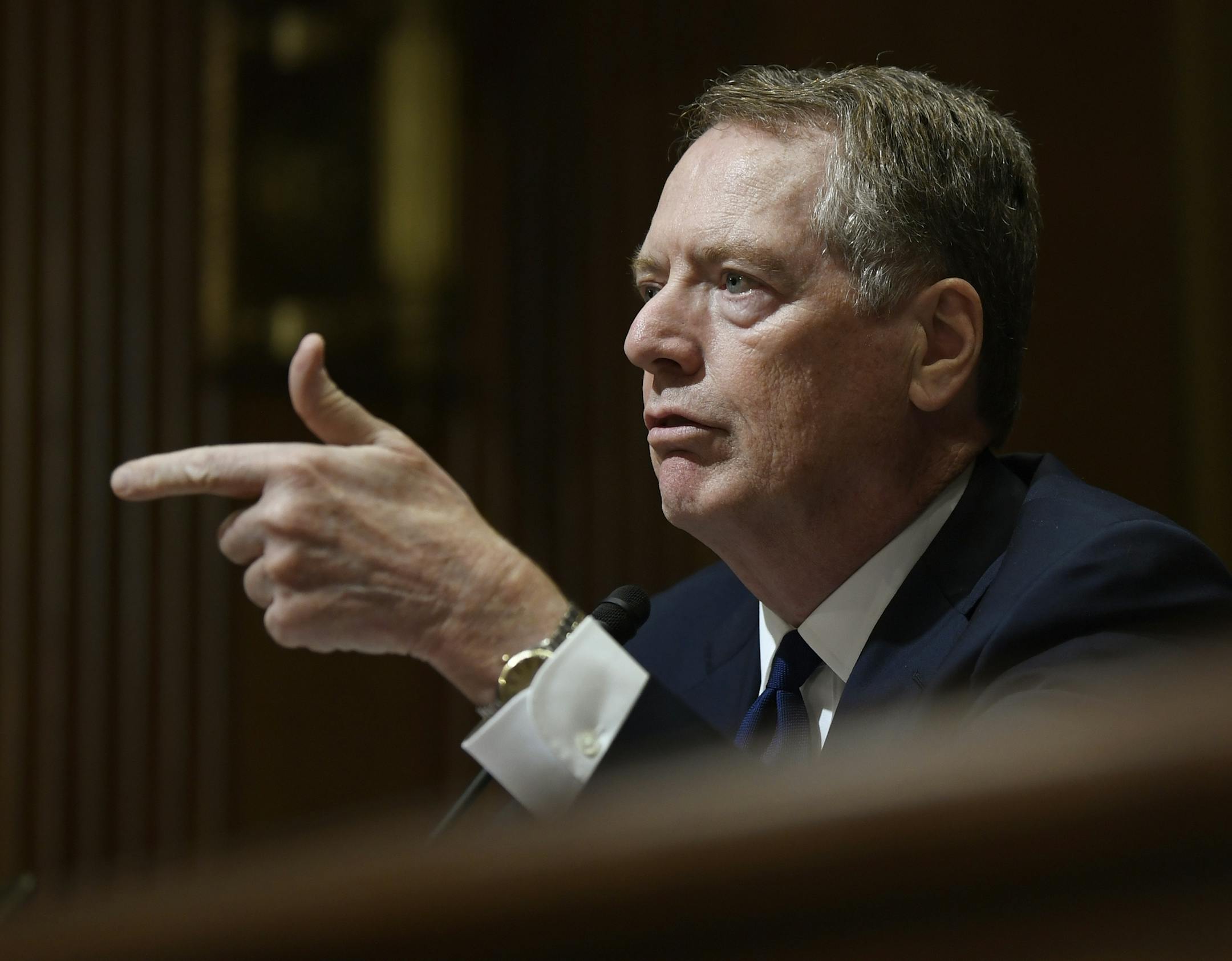
United States Trade Representative Robert Lighthizer testifies before the Senate Finance Committee on Capitol Hill in Washington, Tuesday, June 18, 2019, during a hearing hearing on 'The President's 2019 Trade Policy Agenda and the United States-Mexico-Canada Agreement'. (AP Photo/Susan Walsh)
China hopes President Trump will accept a deal that U.S. Trade Representative Robert Lighthizer, above, does not like. (The Minnesota Star Tribune)
about the writer

about the writer

Economist

More from Business

See More
card image
Daniel Gustafson

Steepleview Farm & Equestrian Center, a 69-acre estate about a 40-minute drive from the Twin Cities, underwent a $4.5 million rebuild after the 2023 blaze.

A pedestrian strolled by the U.S. Bank Center in October, a few weeks before the 25-story office tower headed to auction with a starting bid of $1 million, far less than its assessed value. Court records from the summer cited extensive maintenance needs, including elevator malfunctions and code violations in the parking structure.
card image