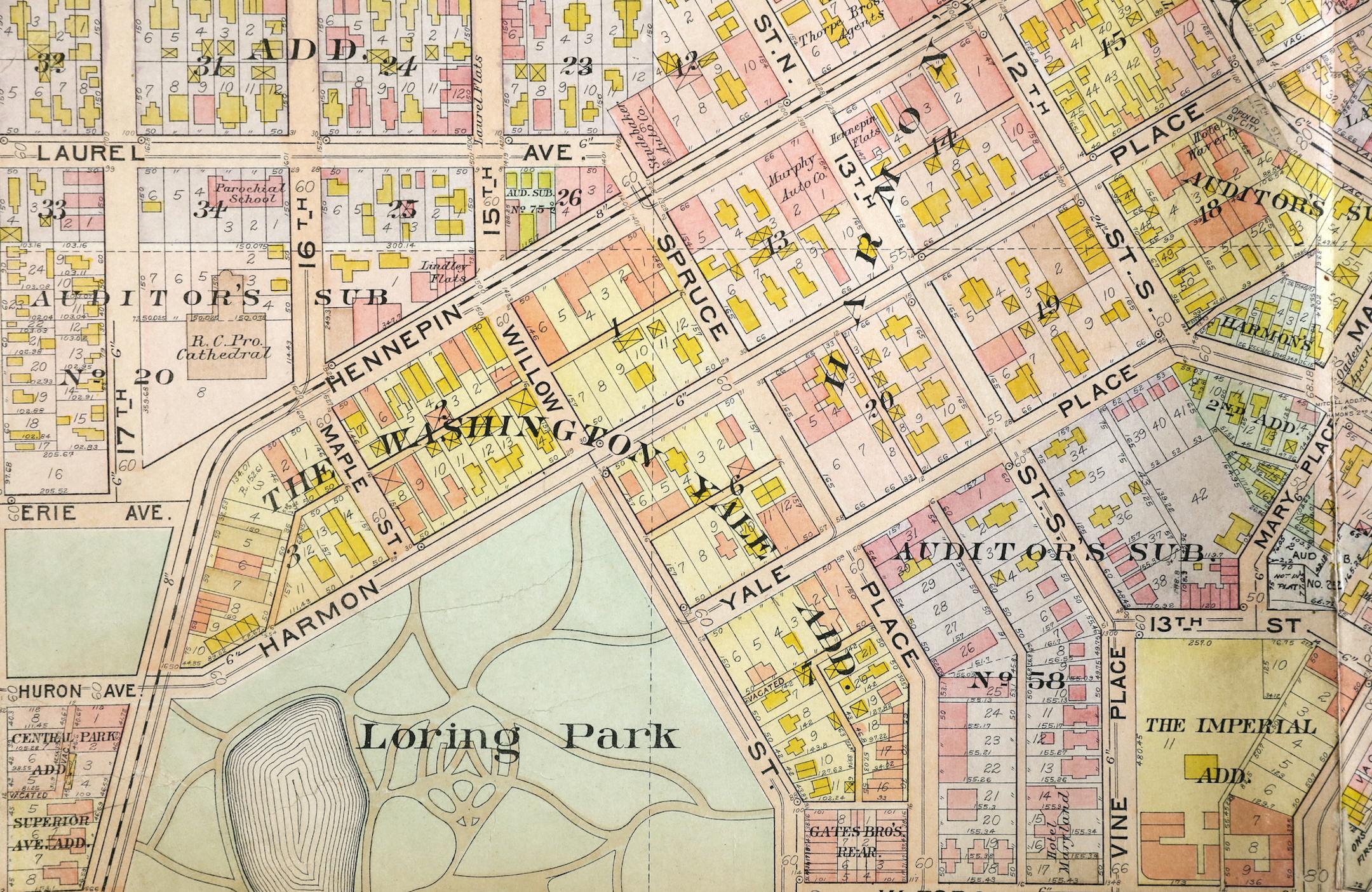
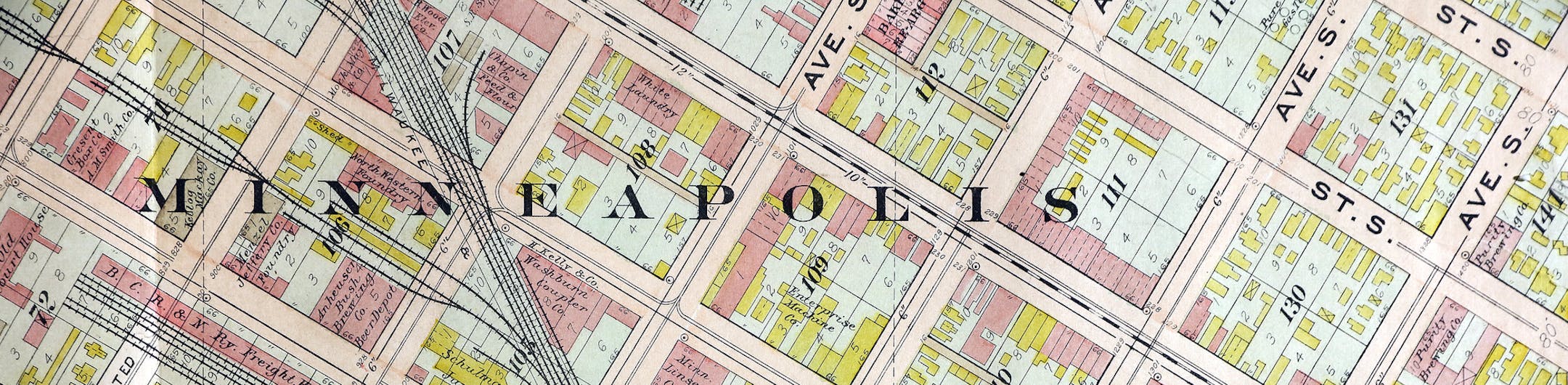
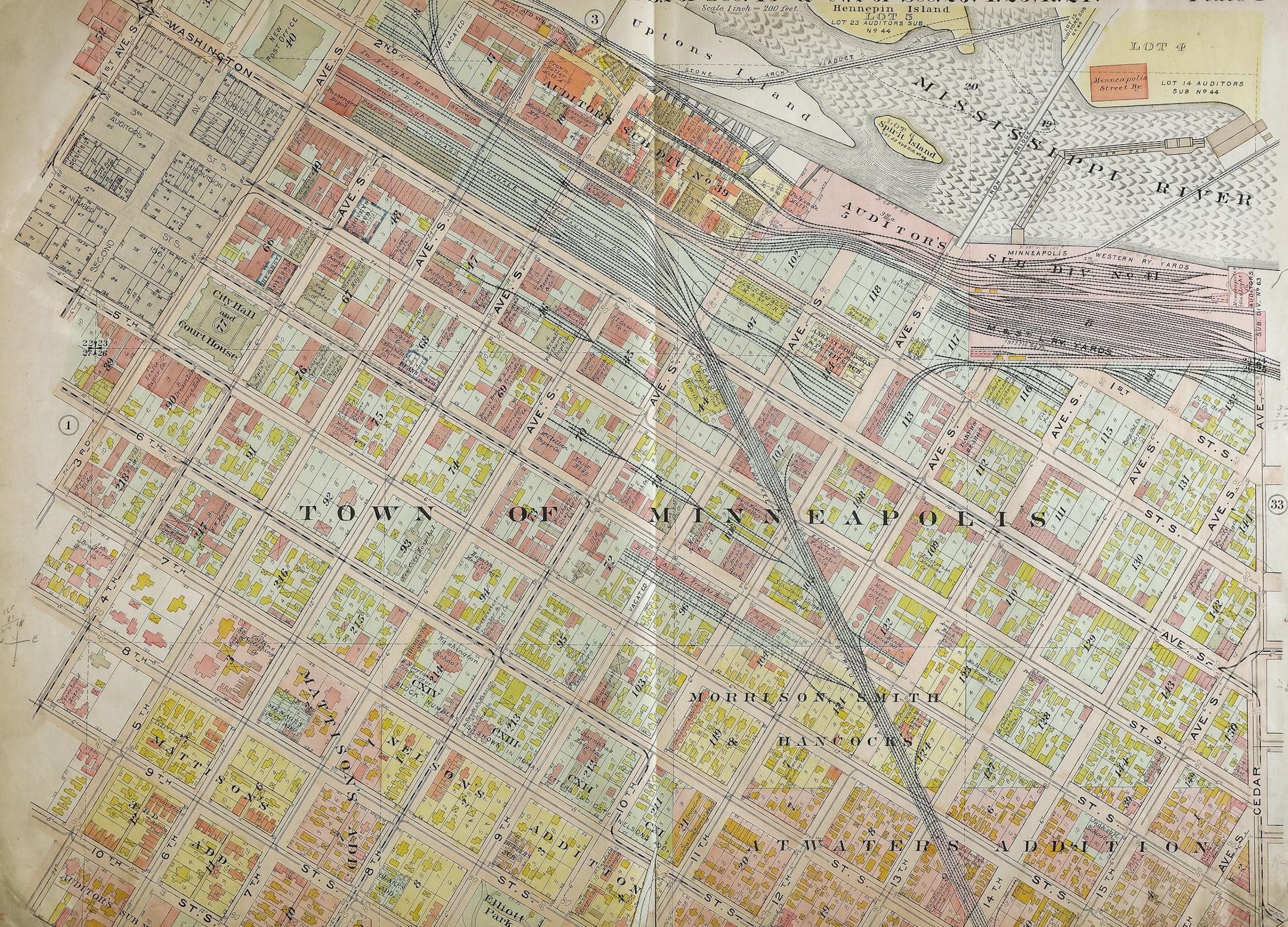
In the case of the plat map, an abstract is actually literal.
These old sheets laid out the legal names for the streets and real estate parcels, creating a visual database of the city. They were bound in thick, important-looking volumes, printed on heavy paper that feels like a stiff bedsheet. With their simple color code — pink for brick, yellow for wood, brown for stone — and tiny hand-drawn letters that look like the calligraphy of elegant ants, they are excruciatingly detailed.
They're also pieces of conceptual art.
If you wish, you can read them as a disquisition on capitalism's ability to commodify the terrain, turn the broad open land into slices of private property with a monetary value. You can peer at a tiny line and imagine a story of two neighbors arguing over a fence, or see a block crammed with the names of businesses and imagine a Balzac novel overflowing with commerce and conflict.
Plat maps remind you that everything passes — the buildings rise and fall, the names of the owners and developers bloom and fade. But the arteries and capillaries of the streets are constant.
Plat maps are also quite lovely and if they're old enough, quite rare.
"I would love to know how many copies were made," says Althea Willette, plat map collector and dealer at Missouri Mouse Antiques in St. Paul. "I'd say less than 50."
But that's per edition. As the city grew, new maps were required, and there were many editions, known by the names of their publishers.