

A couple weeks ago, Jimmy Butler arrived at the Mall of America for his introductory Timberwolves news conference. Music was blaring and the crowd was estimated in the thousands. One man I talked to came all the way from Baltimore just to be there. Butler oozed charisma and star appeal — memorably, at one point, giving out his cell phone number to anyone who had a problem with him.
That introduction cemented the notion that the Wolves had acquired a true running mate for Karl-Anthony Towns and Andrew Wiggins — a no-doubt member of a "Big Three." Minnesota had tried to include Zach LaVine as part of a young Big Three before trading him to Chicago, but it always felt like a Big Two and maybe one more.
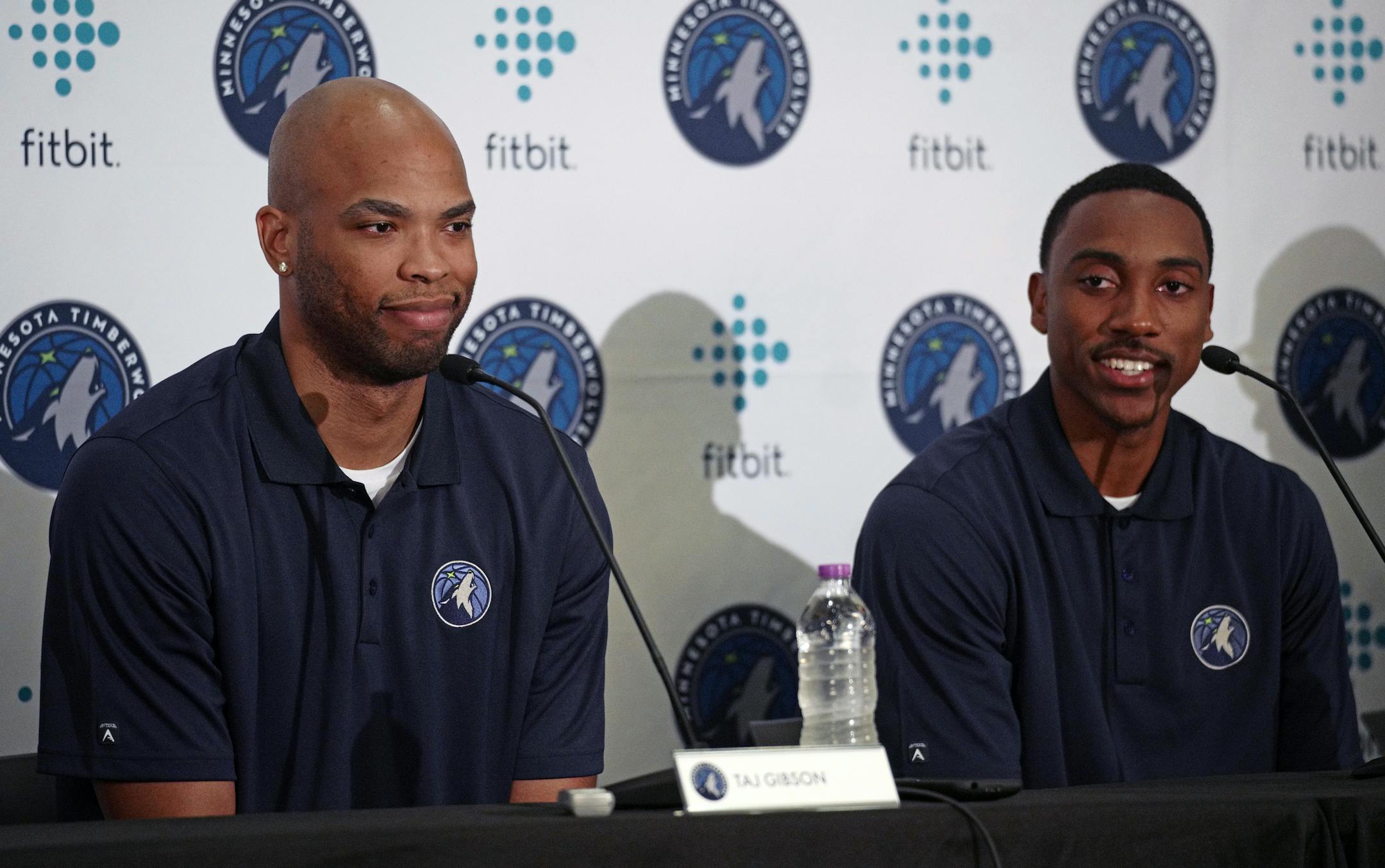
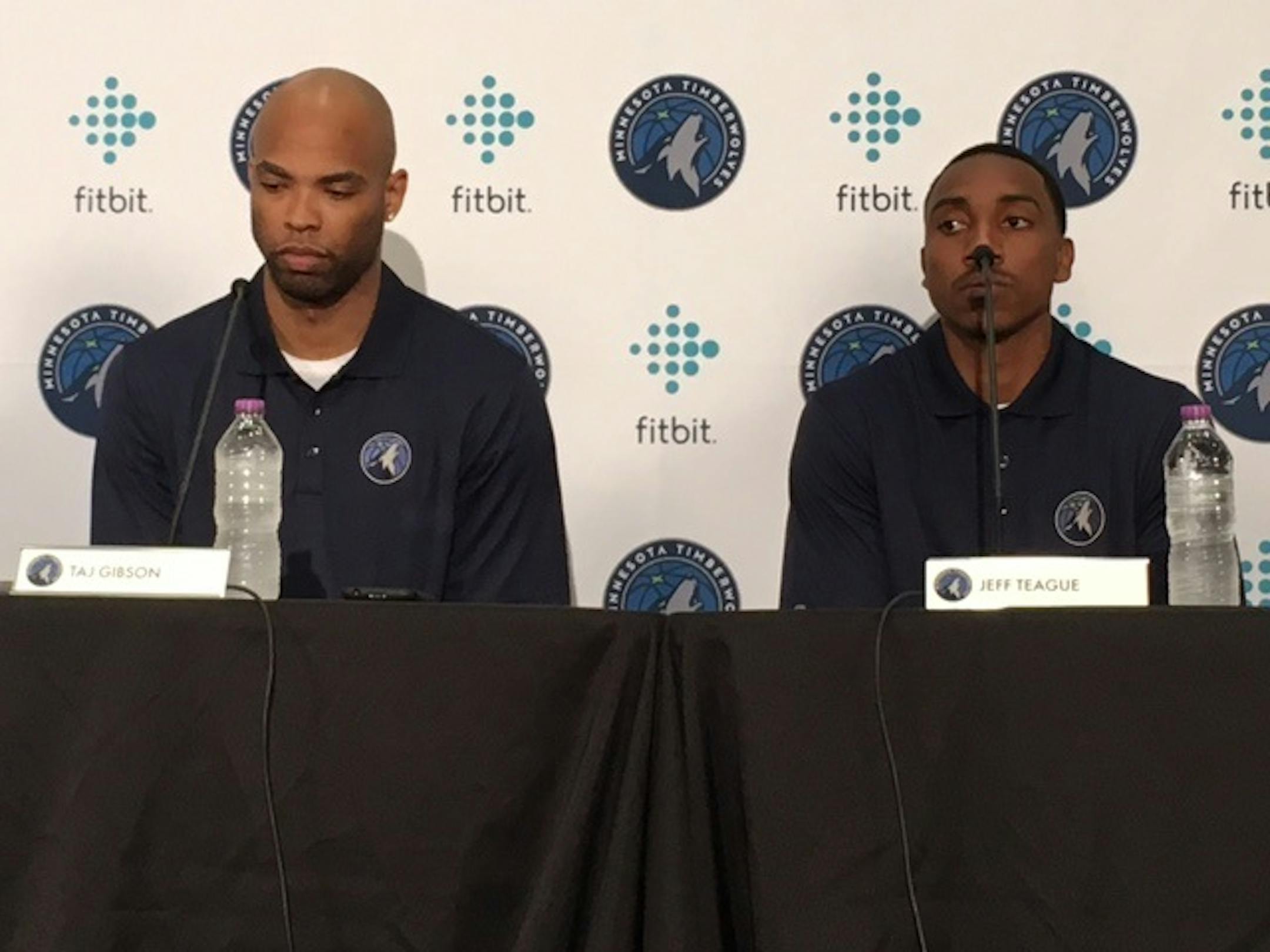
Monday afternoon, the Wolves had another introductory news conference — this one to welcome free agents Jeff Teague and Taj Gibson to the mix. It was held in the atrium of Mayo Clinic Square, the former Block E building adjacent to Target Center which now houses the Wolves' practice facility. A smattering of non-media folks watched and applauded politely from the skyway level as Teague and Gibson walked out slowly and solemnly.
As they took their seats between head coach/personnel boss Tom Thibodeau and GM Scott Layden, Teague and Gibson continued looking quite serious. It looked like the start of a subcommittee meeting on a proposed new water treatment facility than a basketball news conference. It couldn't have been more different from the Butler experience.
That's not good nor bad — just an observation. Teague and Butler eventually smiled after a couple minutes, but even the subject that lightened the mood was instructive: A story from Thibodeau about the 2010-11 season, when he was coaching the Bulls and Gibson was on the team and Teague, then a lightly used reserve, lit them up during a playoff series when he was with the Hawks.
The message from Thibodeau and Layden was loud and clear: these two veteran players were brought in for their specific skill sets — Teague as a pick-and-roll guard who can score, Gibson as an elite defender who can guard multiple positions — and for their 127 combined playoff games between them.
These guys are professionals, and they are here to play basketball.
Both are being paid quite well in the modern NBA economic scheme — Teague is getting $57 million over three years, while Gibson received $28 million for two years — but both also appear to be low-ego players driven to contribute while not needing top billing.


