

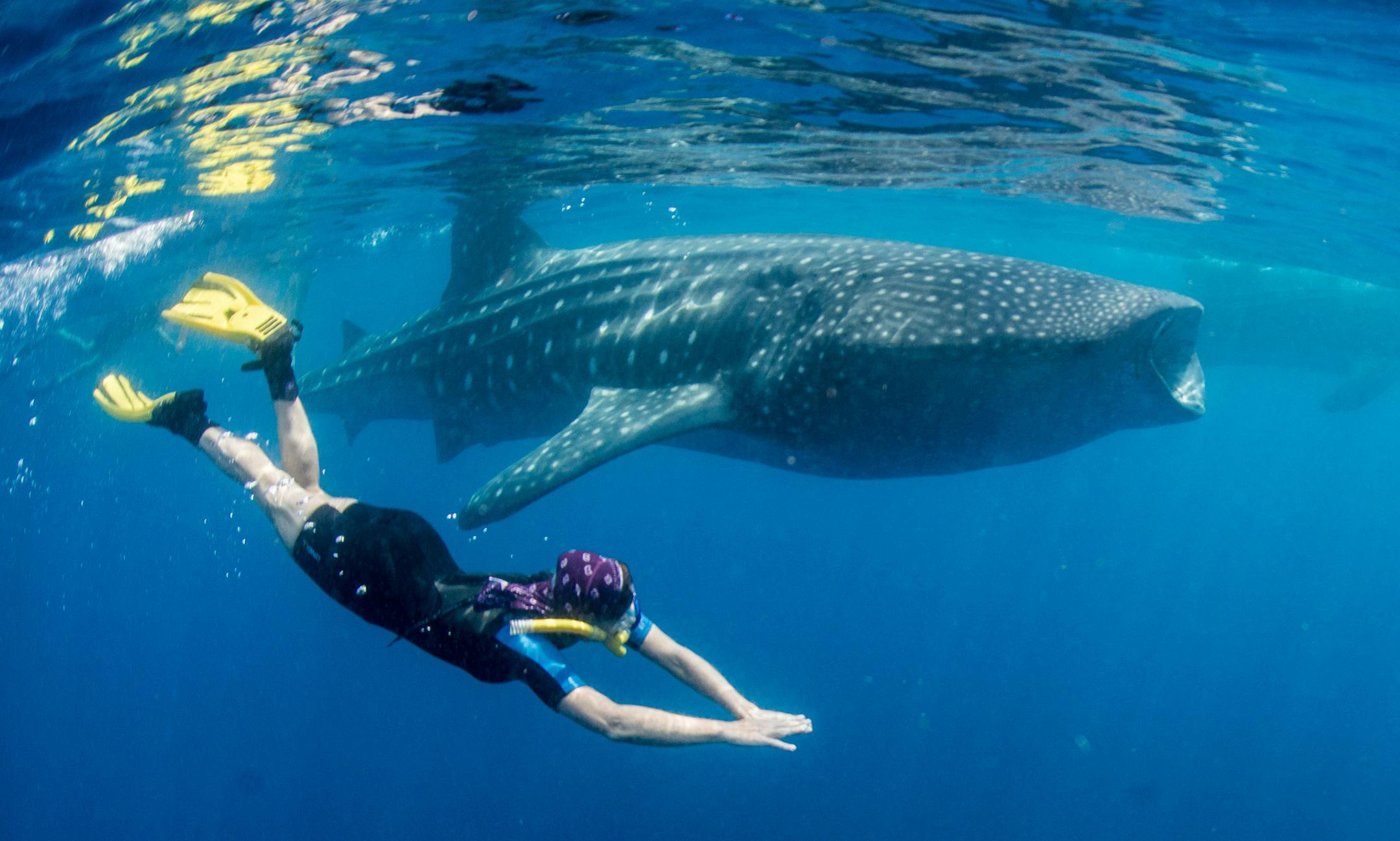
I'm hanging in a bottomless abyss of blue-green, peering through a mask, when a shadowy shape practically the size of a semitrailer truck glides into frame.
A 40-foot fish swims past, its mouth open so wide I can see down its throat as it scoops up millions of tiny, nearly invisible fish eggs.
I'm awe-struck. As a scuba diver with more than 300 dives under my belt, I've long dreamed of catching a glimpse of a single whale shark. Today, I'm surrounded by dozens of the giant plankton eaters.
About a decade ago, Mexican fishermen discovered that whale sharks were congregating in the warm waters off the Yucatán coast. The sharks, which they called "domino" or "checkerboard" fish, gather here during the summer months for food — they gulp the clear, pinhead-sized eggs of spawning little tunny, a type of tuna.
Big, graceful and toothless, the sharks soon became the perfect tourism attraction. In the past six or seven years, the industry surrounding the phenomenon has exploded, with visitors paying $150 or more for guided trips to the site, where they can jump in and snorkel alongside the animals.
"After a while tour operators started to see that it was a great experience," says David Oliver of Solo Buceo, a dive shop in nearby Cancun that we hired to ferry us to the site.
The trips are popular because, unlike scuba diving, which requires certification, even kids or grandparents can snorkel.
Oliver still remembers the first time he saw a whale shark up close. "The water conditions were not too good; it was green with no visibility at all," he said. "When I saw it, it was already a couple of feet away from me, with the big open mouth."


