

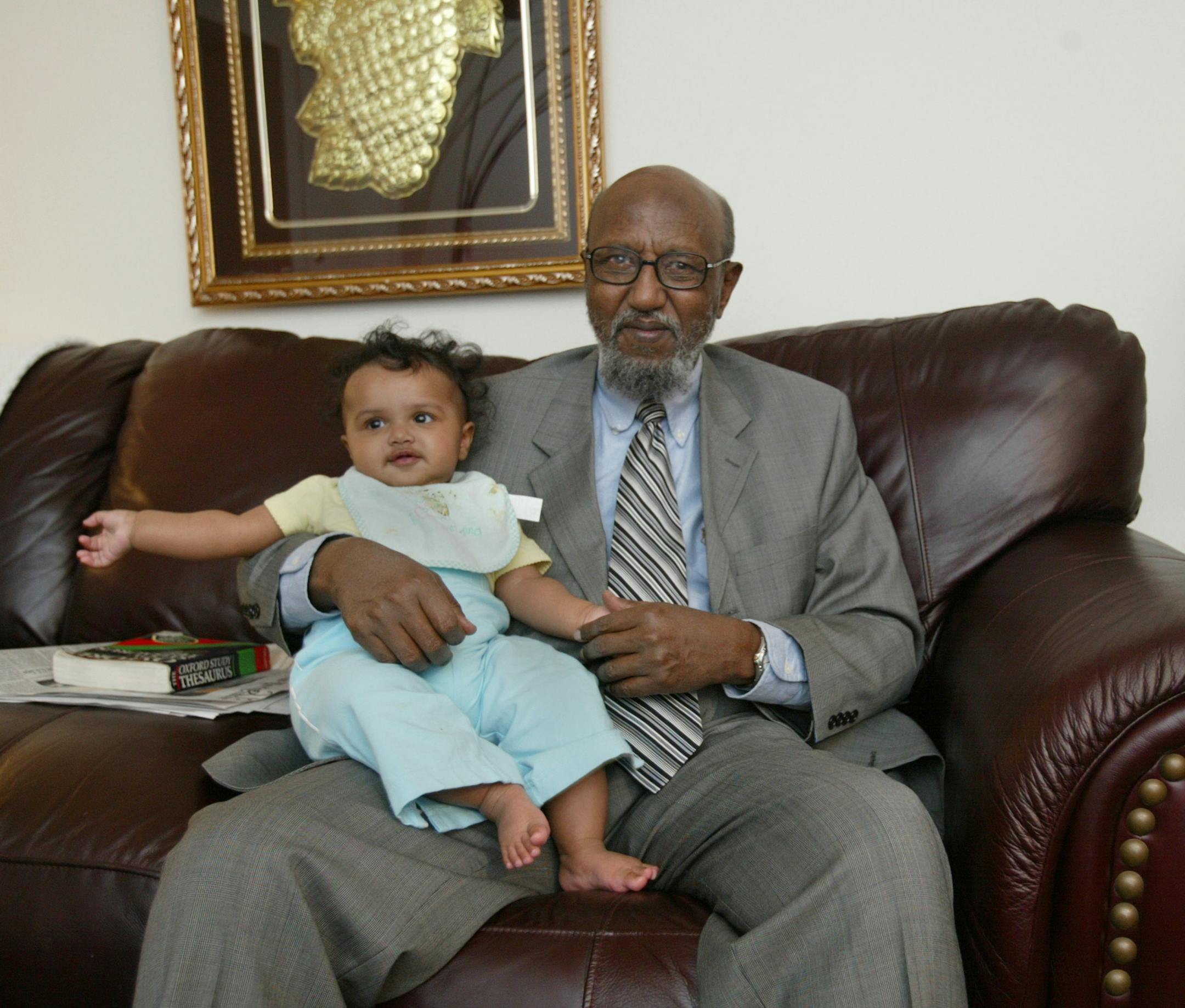
In one of the world's most war-torn countries, Gen. Mohamed Abshir Musa was a peacemaker.
At 32, he became commander of independent Somalia's first national police force in 1960, and he spent his life working for democracy and unification. But he paid a high price for those ideals and his ties to America.
After a Soviet-backed military coup established Siad Barre as the nation's leader in 1969, Abshir was imprisoned in a remote desert jail for more than nine years.
He returned from the experience more determined to fight for freedom, said those who knew him.
"He's one of the real heroes of the African independence movement," said Robert Gosende, who worked at the U.S. embassy in Somalia in the 1960s and returned as U.S. ambassador in 1992 and 1993 during the height of the humanitarian crisis. "There's no stronger friend we had in Somalia than Abshir."
Abshir, who moved to Minnesota in 2001, died Oct. 25 of respiratory failure. He was 91.
Over the course of his life, Abshir challenged warlords and spoke out against Barre's brutal regime. He worked with international military leaders, businessmen and political and religious elite who shared his vision.
He met Presidents John F. Kennedy and George H.W. Bush, and he welcomed Vice President Hubert Humphrey and Supreme Court Justice Thurgood Marshall to his country. In early 1962, he won a grant from the U.S. government to study at Princeton University.


