

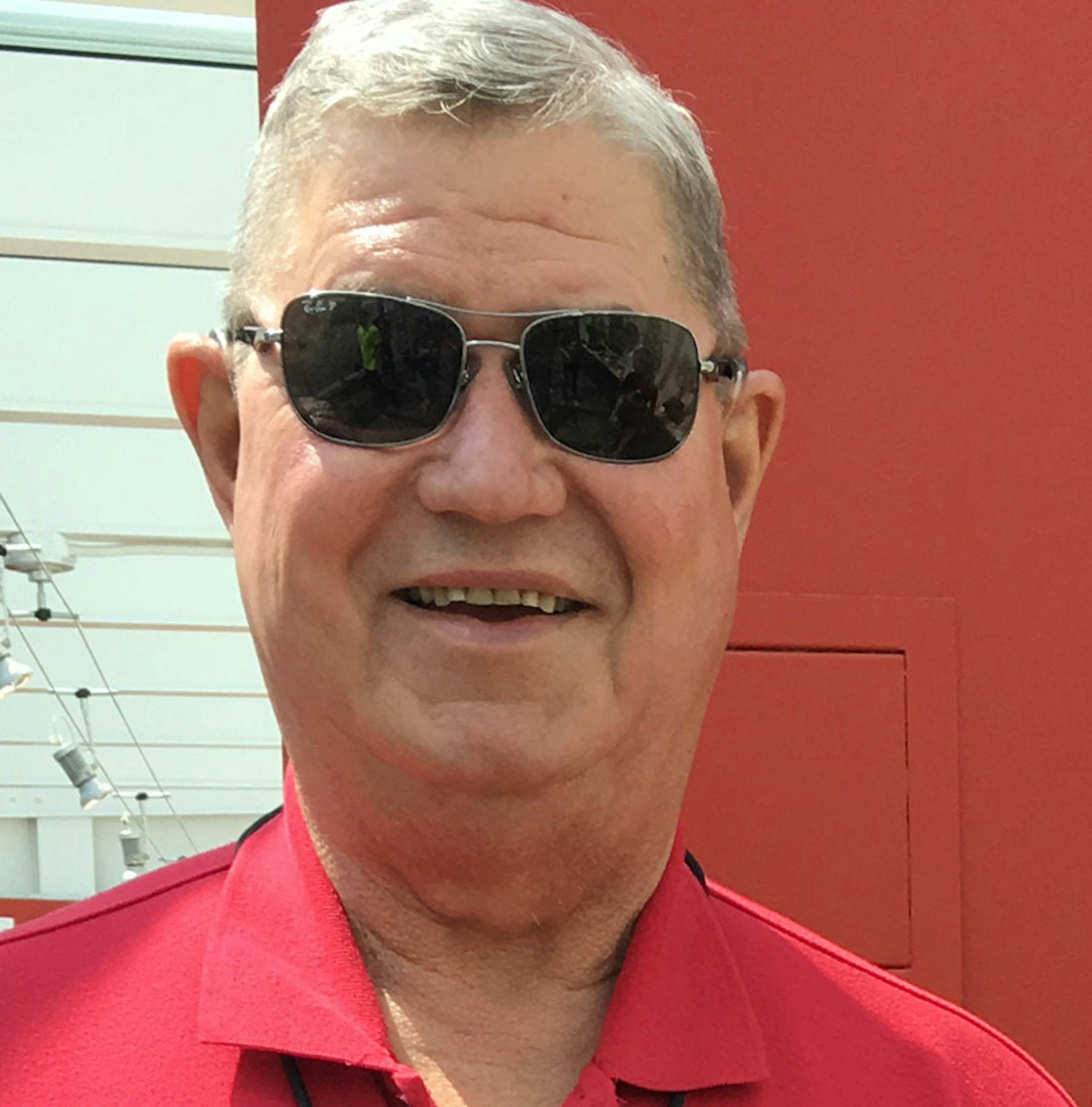
When Jim Fuchs got interested in something, he knew only one way to tackle it: Research it exhaustively, understand it thoroughly and enjoy it immensely.
That's how he handled his work as a University of Minnesota professor. It's how he approached his hobbies of barbecue and bonsai. It's even how he wooed his high school sweetheart and wife of 49 years.
Fuchs, 72, of Roseville, died Monday of cardiac arrest after a fall at home. He retired in 2011 after 40 years of research and teaching in the U's Department of Biochemistry, Molecular Biology and Biophysics. Colleagues remembered Fuchs as a scholar who embraced teaching with the same enthusiasm he brought to his research into DNA replication.
"He was a really top teacher in our program, teaching both undergrad and graduate students," said department head David Bernlohr. "Jim was well-regarded for his leadership, for his good common sense and for his putting students first. He was the kind of guy who made a lot of friends around the institution."
Fuchs grew up on a farm in rural West Texas. His wife, Sandra, said they met when she was 14 and Fuchs was 16. But they didn't have their first date until late in the summer when she was 16; he was 18 and heading off to college.
"We had our first date, and then we had 10 dates in 10 days," she said, laughing at the memory. The couple spent the next few years in a long-distance relationship through the U.S. mail, "which really helped us get to know each other," Sandra Fuchs said. They finally married the day after she graduated from nursing school.
The couple moved to Minnesota after Fuchs got his Ph.D. and landed a job at the U. Both their daughters, Kimberley Tolias and Stephanie Callanan, went into science careers, Tolias as a professor of neuroscience and Callanan as an obstetrician/gynecologist.
"It was his confidence in us that gave us the courage to go into fields dominated by men," Tolias said. Added her sister: "At every meal, all the topics would come back to science. He loved to talk about news and politics, but it would always come back to science."


