

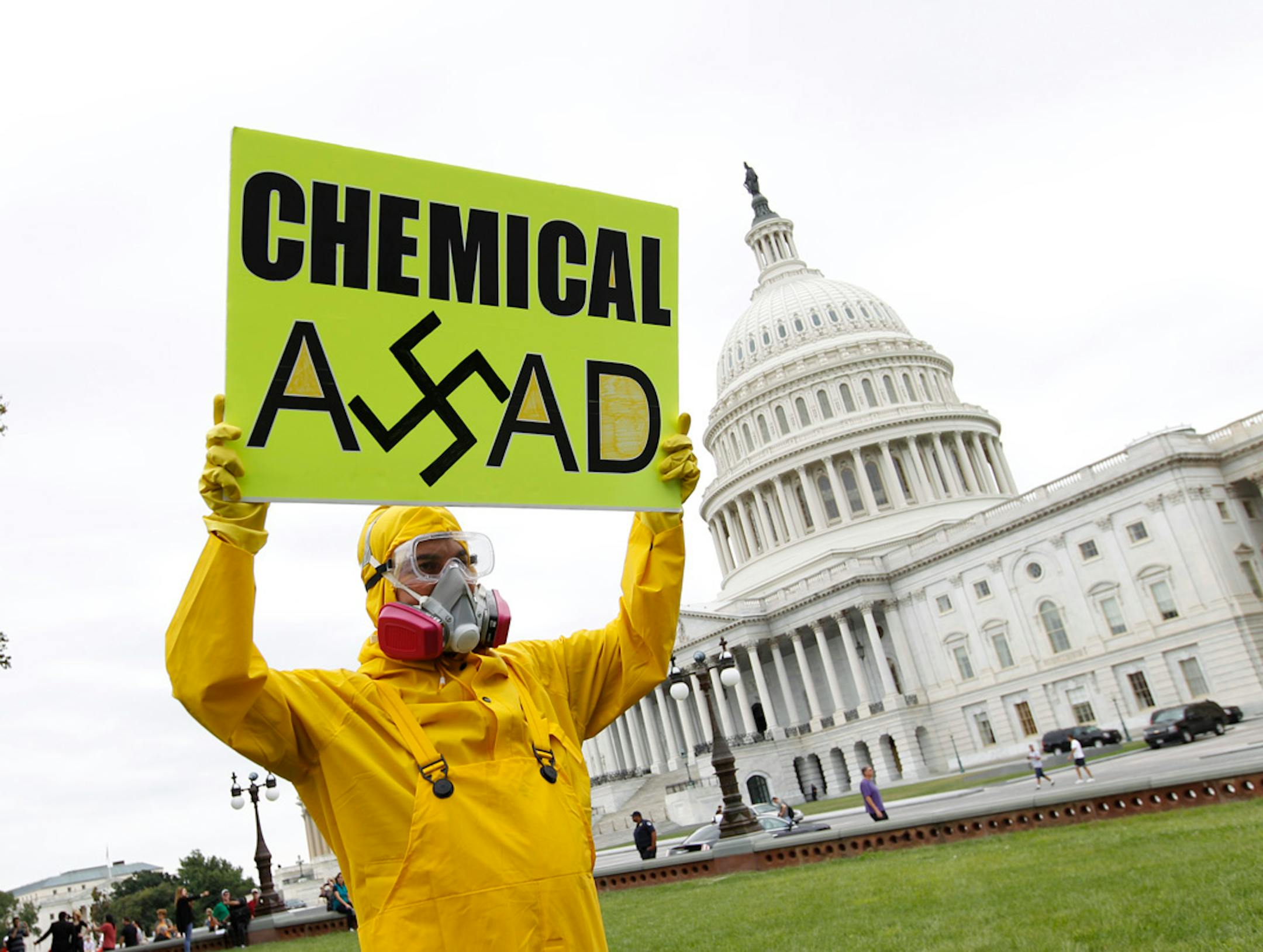
What is the Obama administration plan in Syria?
It depends on whom you ask and when.
At 9 p.m. Tuesday, President Obama, in his address to the nation, said that he had "asked the leaders of Congress to postpone a vote to authorize the use of force."
This contradicted what his secretary of state, John Kerry, had said in testimony to Congress just 11 hours earlier. "We're not asking Congress not to vote," Kerry told the House Armed Services Committee. "I'm not asking (for) delay," he added later.
Kerry can be forgiven for being at odds with the president. Obama, in the space of his 16-minute address, was often at odds with himself. He spent the first 12 minutes arguing for the merits of striking Syria -- and then delivered the news that he was putting military action on hold.
He promised that it would be "a limited strike" without troops on the ground or a long air campaign, yet he argued that it was the sort of blow that "no other nation can deliver."
He argued that "we should not be the world's policeman" while also saying that because of our "belief in freedom and dignity for all people," we cannot "look the other way." He asserted that what Bashar al-Assad did is "a danger to our security" while also saying that "the Assad regime does not have the ability to seriously threaten our military."
These are not all contradictions; the president was trying to thread a needle and outlined a highly nuanced and frequently shifting policy. But nuance can sound a lot like a muddle.


