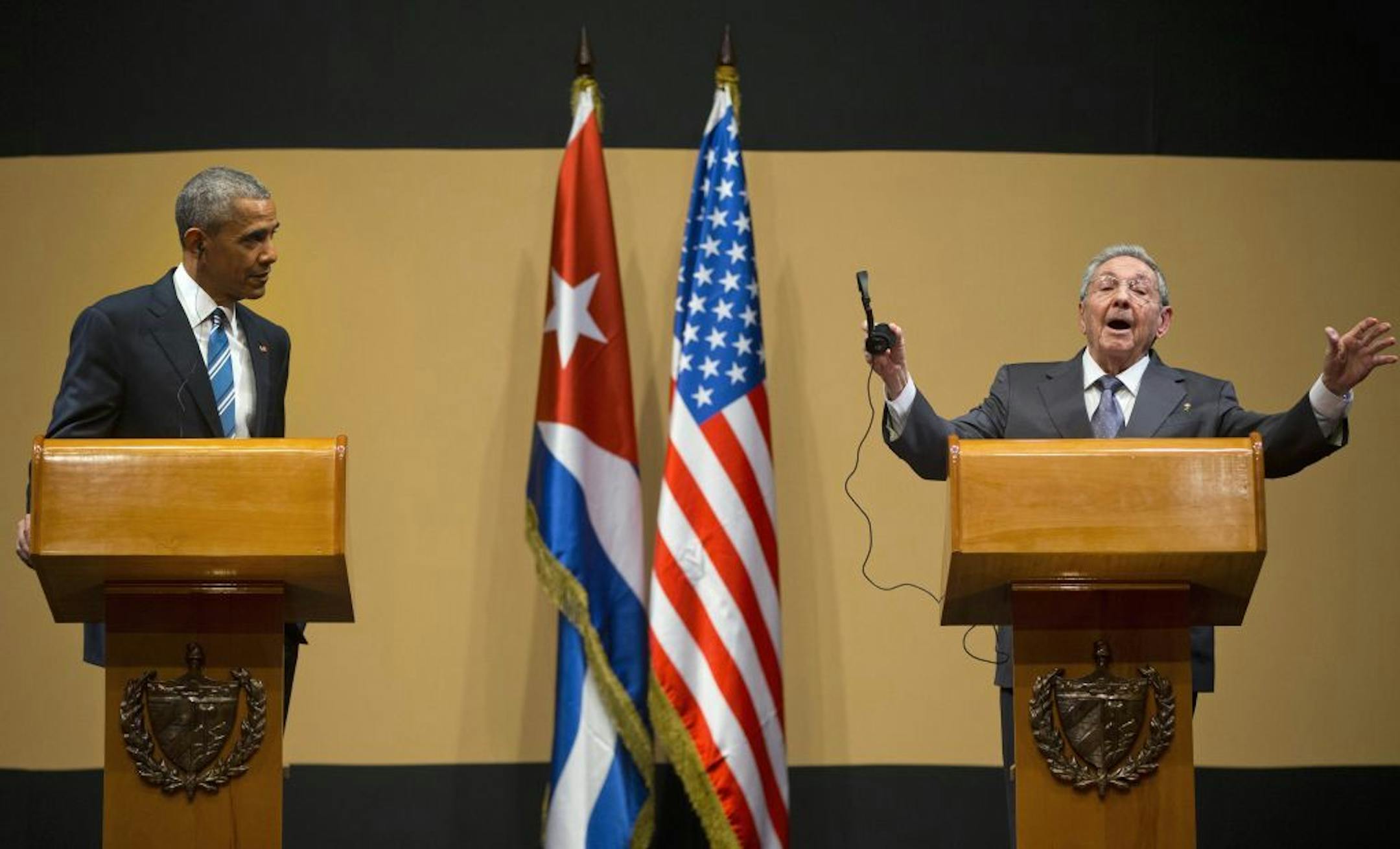
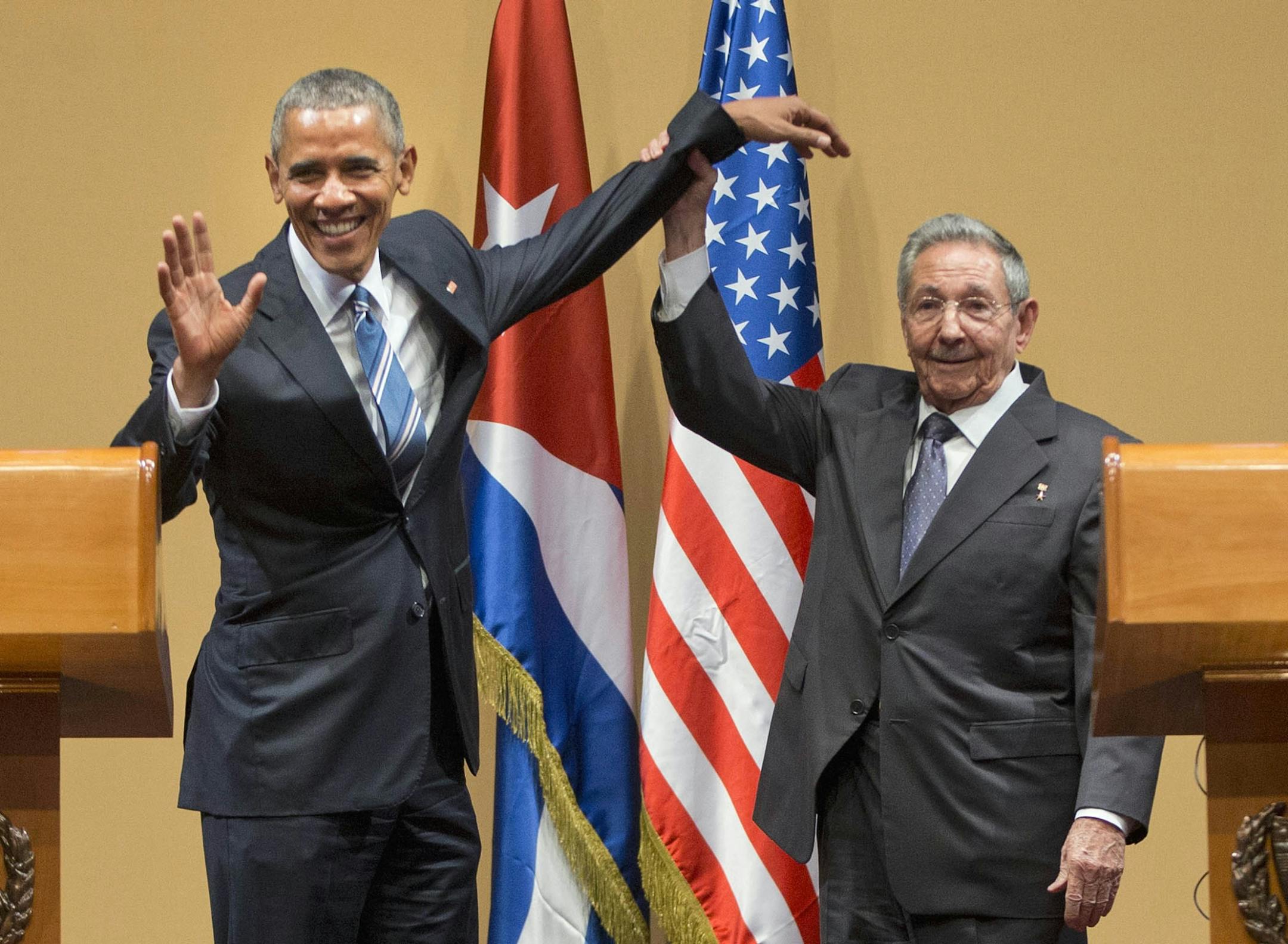
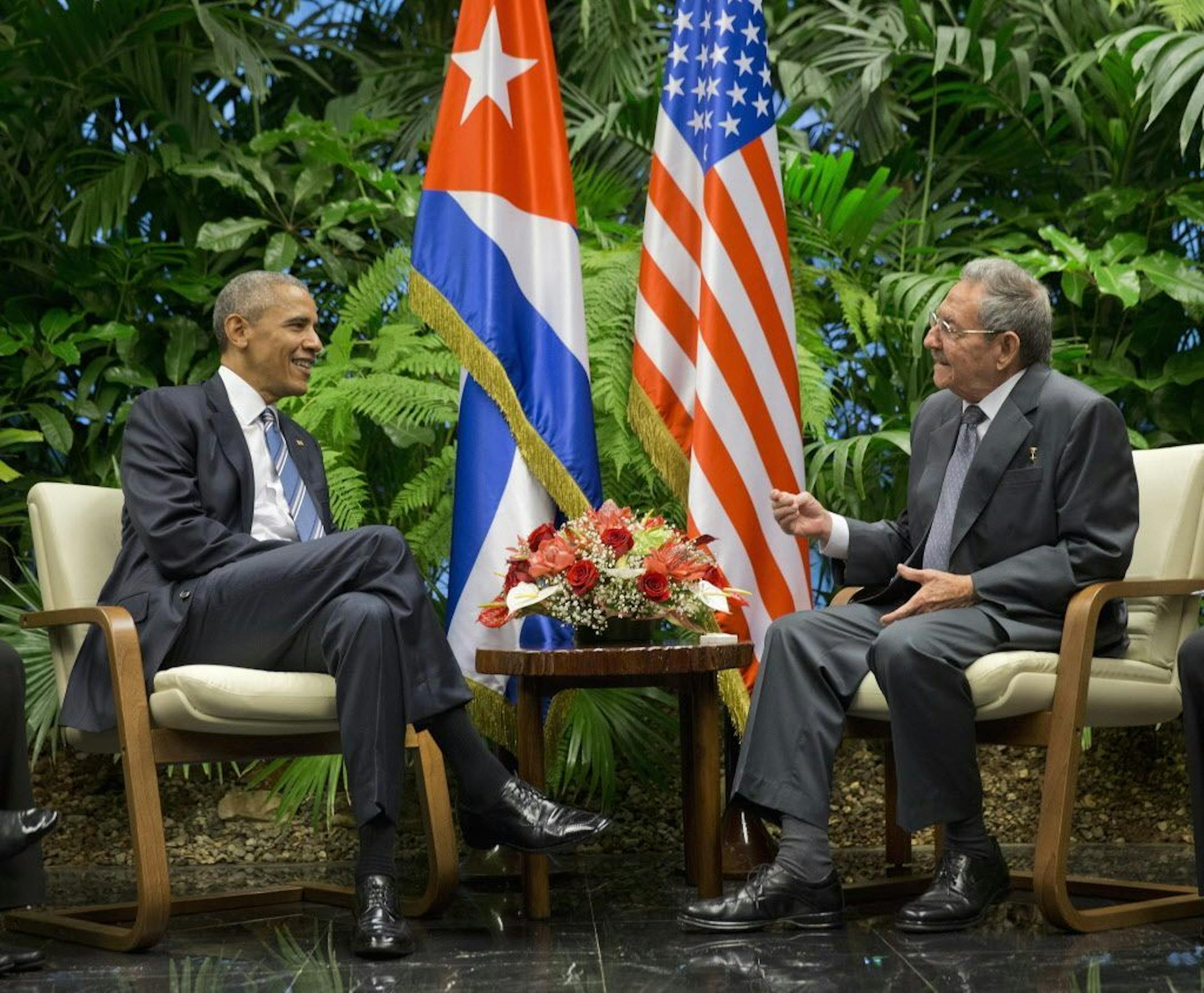
HAVANA — Laying bare a half-century of tensions, President Barack Obama and Cuban President Raul Castro prodded each other Monday over human rights and the longstanding U.S. economic embargo during an unprecedented joint news conference that stunned Cubans unaccustomed to their leaders being aggressively questioned.
The exchanges underscored deep divisions that still exist between the two countries despite rapidly improved relations in the 15 months since Obama and Castro surprised the world with an announcement to end their Cold War-era diplomatic freeze.
Obama, standing in Havana's Palace of the Revolution on the second day of his historic visit to Cuba, repeatedly pushed Castro to take steps to address his country's human rights record.
"We continue, as President Castro indicated, to have some very serious differences, including on democracy and human rights," said Obama, who planned to meet with Cuban dissidents Tuesday. Still, Obama heralded a "new day" in the U.S.-Cuba relationship and said "part of normalizing relations means we discuss these differences directly."
Castro was blistering in his criticism of the American embargo, which he called "the most important obstacle" to his country's economic development. He also pressed Obama to return the U.S. naval base at Guantanamo Bay, which is on the island of Cuba, to his government.
"There are profound differences between our countries that will not go away," Castro said plainly.
White House officials spent weeks pushing their Cuban counterparts to agree for the leaders to take questions from reporters after their private meeting, reaching agreement just hours before Obama and Castro appeared before cameras. It's extremely rare for Castro to give a press conference, though he has sometimes taken questions from reporters spontaneously when the mood strikes.
While the issue of political prisoners is hugely important to Cuban-Americans and the international community, most people on the island are more concerned about the shortage of goods and their struggles with local bureaucracy.