

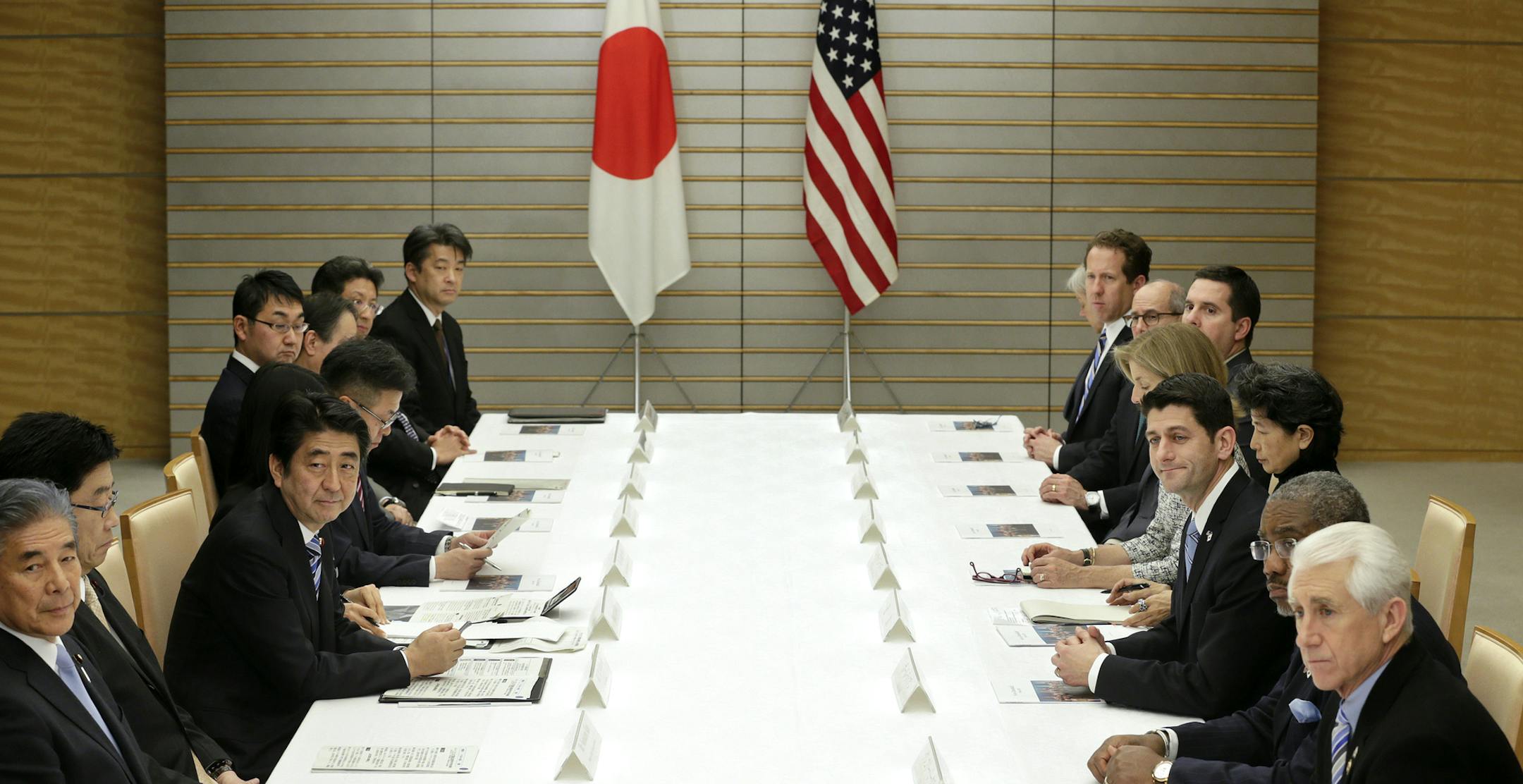
WASHINGTON – The Obama administration kept up its public relations offensive for free trade agreements in Europe and the Pacific Rim on Thursday, announcing state-by-state exports to nations participating in negotiations for the Trans-Pacific Partnership (TPP) and the Transatlantic Trade and Investment Partnership (TTIP).
From 2012 to 2014, Minnesota businesses averaged $10.2 billion annually in exports to TPP markets, the White House said. The state exported about $4.2 billion of goods and services a year to TTIP markets in the same time frame.
The news comes as the president pushes Congress to approve trade promotion authority legislation that he says will give U.S. negotiators the needed latitude to strike deals. The legislation has foundered in recent years as some members of the House and Senate worried that limiting their input into the specifics of the trade agreements could cost their constituents jobs.
In a meeting with regional reporters Thursday, U.S. Trade Representative Michael Froman said the administration is working to line up bipartisan support for a trade promotion authority bill. Froman said that successfully negotiating the TPP and TTIP and getting congressional approval of both could give American businesses "unfettered access" to two-thirds of the world's economy.
But on the very day Froman sang the praises of free trade, Sen. Elizabeth Warren, D-Mass., published an op-ed in the Washington Post attacking a part of the TPP that allows for out-of-court international arbitration of disagreements over the trade deal, called "Investor-State Dispute Settlement," or ISDS.
If the international arbitration panels ruled in favor of foreign companies, the ruling could not be challenged in a U.S. court, Warren said.
Froman said the arbitration power was designed to keep foreign governments from seizing private assets without compensating the companies that lost them.
But Warren's latest op-ed and the failure of Congress to pass a trade promotion authority bill since 2002 shows the difficulties the White House faces in getting the House and Senate on board with free trade measures. From the left, many labor unions oppose the trade deals; from the right, so do some who believe the U.S. should take care of its own citizens before enriching those in other countries.


