

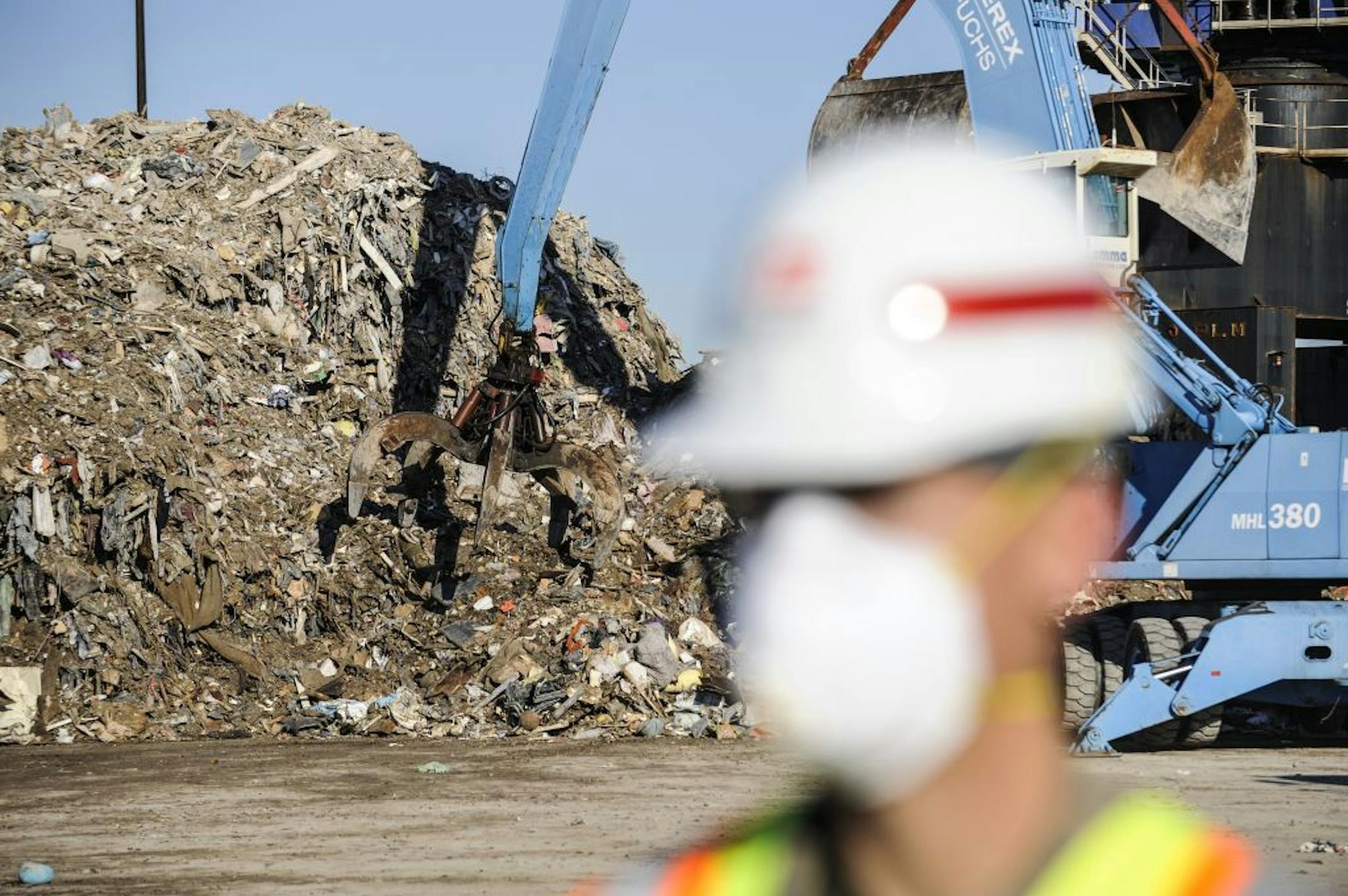
NEW YORK - Amid the clanging of dump trucks, a crane with a clamshell scoop hoisted a pile of debris as big as a minivan and dropped it onto a waiting barge -- striking evidence that New York City has revived a place it just cannot seem to do without.
The Fresh Kills landfill on Staten Island, where tons of debris were dumped after the Sept. 11 terrorist attacks, once again has been enlisted in the aftermath of a disaster, this time to serve as the staging area for the monumental cleanup job underway since superstorm Sandy hit. Again and again, that scoop plunges into a three-story hill of debris and lifts out pulverized drywall, floorboards, furniture, clothing, photo albums.
The cleanup has turned into a 24-hour-a-day military-scale operation at Fresh Kills, with the New York City Sanitation Department and the Army Corps of Engineers running a fleet of several hundred trucks, river barges and tugboats that will be moving an estimated 4 million cubic yards of debris to landfills in upstate New York and Pennsylvania.
And that is just New York City. Similar operations, on an equally epic scale, are underway on Long Island and in New Jersey, as the next step beyond restoring electricity for the region is cleaning up the giant putrid piles of waste that represent the overturned lives of the tens of thousands of area residents whose homes were flooded by the storm.
Stay until job is done
"We will stay here until the job gets done," said Col. John Pilot, who has moved temporarily to New York from his home base in Florida to supervise the Army Corps debris removal job. The effort will be a major test of the Army Corps, as well as of the Federal Emergency Management Agency, which is paying most of the cleanup bill that easily could run into the hundreds of millions of dollars across the region.
Indications are the cleanup in the New York area is off to a relatively smooth start. The New York City Sanitation Department has converted a wind-bitten dirt lot on an inlet in Fresh Kills into a temporary storage and transfer site for storm debris.
It is just adjacent to the landfill site, where all of New York City's trash was dumped for decades, a facility that was briefly reopened in the aftermath of the 9/11 attacks so crews could sift through debris collected from ground zero to search for human remains.


