2:55
2:55You don't need a bachelor's degree to get a good-paying job that incorporates science, technology, engineering or math.
A little more than half such jobs — known in workforce lingo as STEM jobs — are performed by people with an associate degree or less, according to a report from Brookings.
They are nurses and medical technicians, and the builders, operators and mechanics who turn innovation into commercial enterprise.
At a time when labor's share of income is falling across the United States and the globe, the report offers some encouragement for workers who are looking for new opportunities but lack a college degree. Technical blue-collar jobs pay far above what can be earned in a non-STEM field with the same level of education, providing a path to the middle class.
"Not all workers need formal college-level skills, but they do need to master a specific body of knowledge," Jonathan Rothwell wrote in the Brookings Institution report. "Entry-level occupations in factories no longer pay high wages, but occupations requiring education, experience, or training in STEM fields do, even for those requiring less than four years of postsecondary education."
In the Twin Cities, 22 percent of all employment — 366,520 jobs — is in a science, technology, engineering or math field, according to the Brookings report. That's 19th among the country's top 100 metro areas.
"Our medical device manufacturing, I bet that has a great deal to say about our ranking," said Steve Hine, labor market economist for the state.
While the Twin Cities science and technology job market skews toward people with higher education, 44 percent of STEM jobs are held by people who never got a four-year college degree, according to Brookings, a nonprofit public policy organization based in Washington.
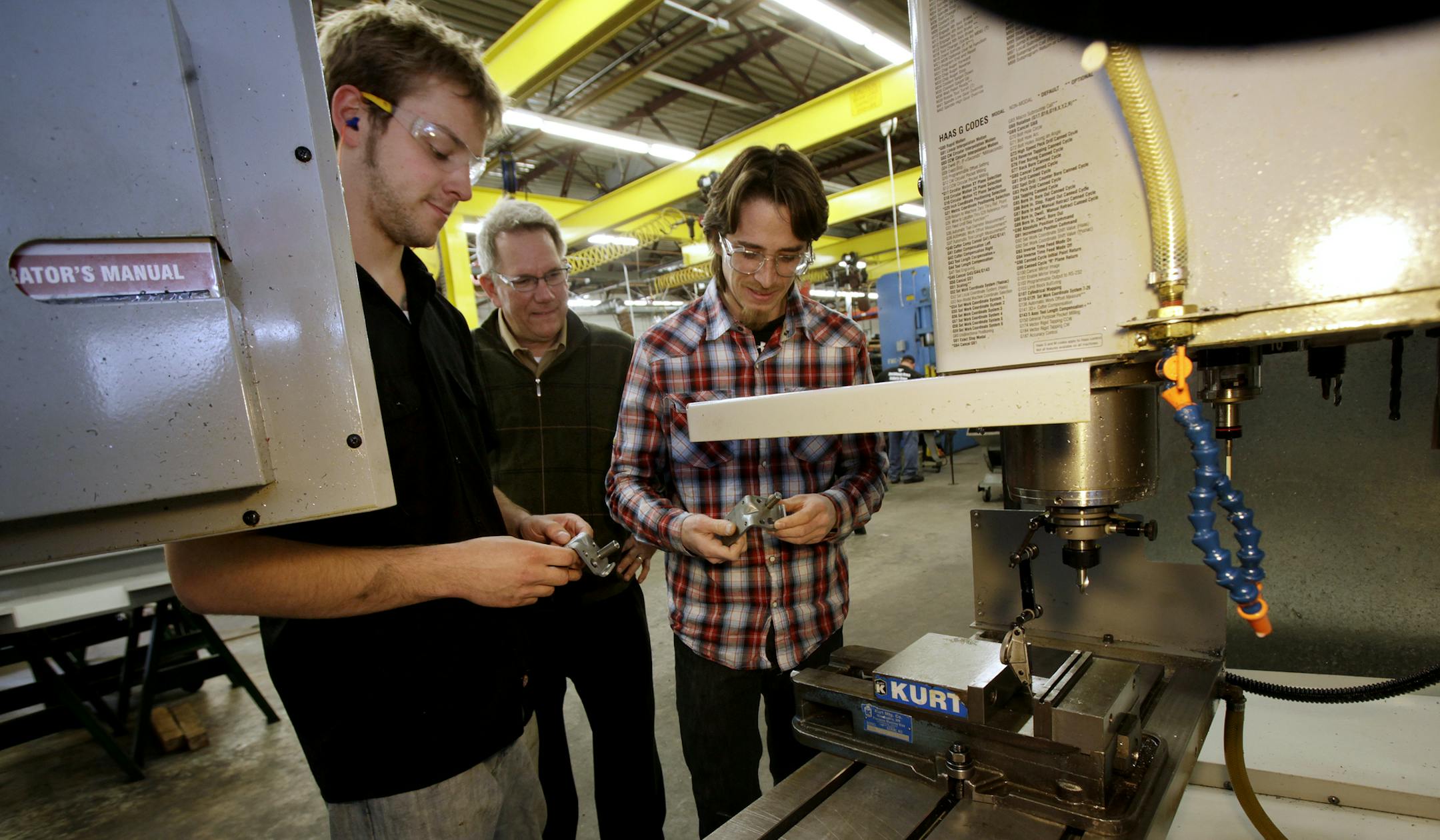
![Dunwoody intern, Joe Brudzinski, (right), talks to Erick Ajax, co-owner of E.J. Ajax & Sons Inc., about a part that he was working on at the Fridley, MN plant on March 25, 2013. ] JOELKOYAMA•joel koyama@startribune.com Ajax at EJ Ajax & Sons in Fridley is hosting a Dunwoody College of Technology Da. They are celebraing the graduation of several employee/ apprentices into full journeyman status. This company is a metal stamper that trains folksin high tech manufacturing. It par](https://arc.stimg.co/startribunemedia/MZHVAN2LMGCCFPHLARLR7Y2CWE.jpg?&w=1080)