

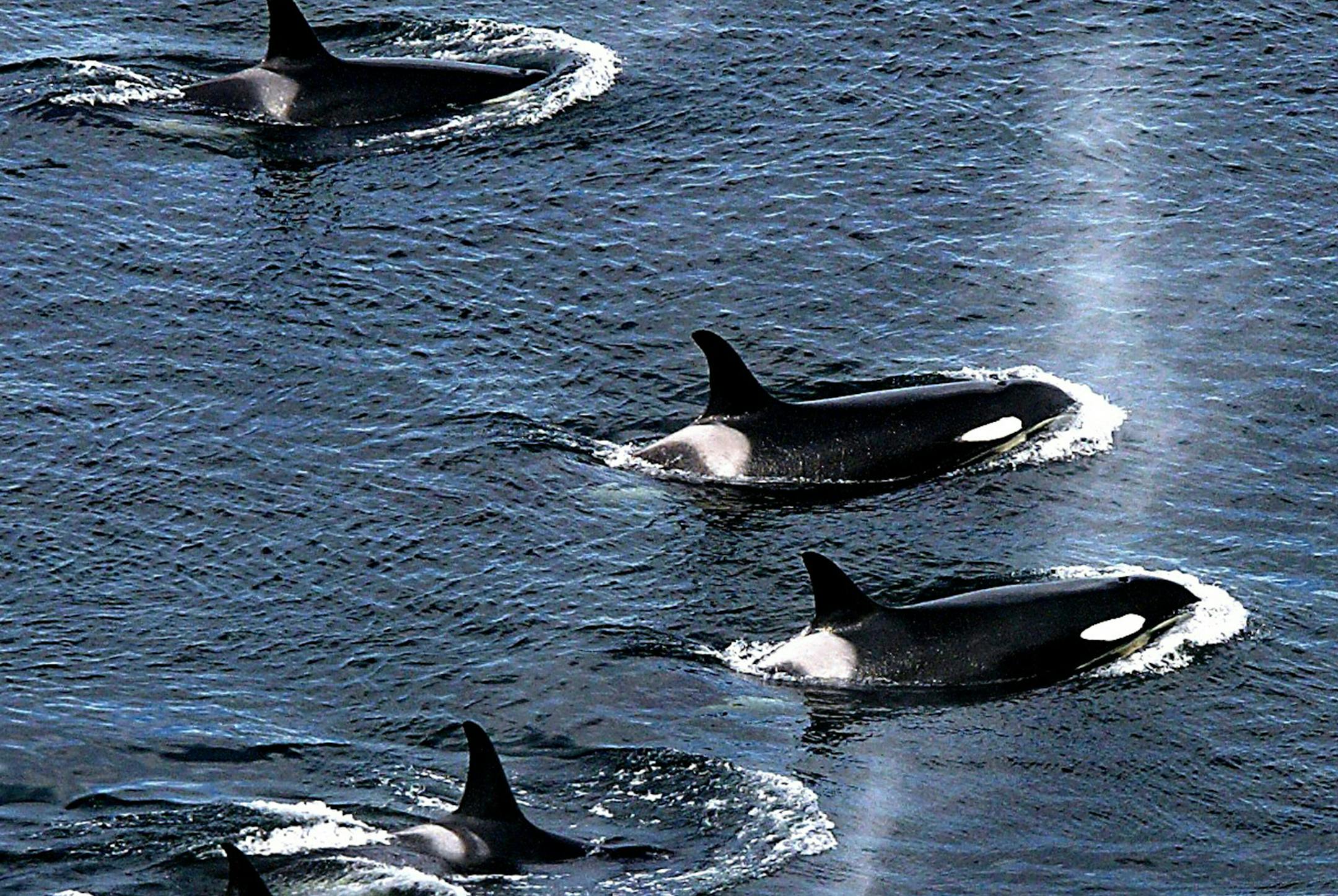
SEATTLE – Hungry young orcas grow up to be stunted orcas, new research shows, revealing that salmon run downturns can have lifelong effects.
The findings, published last month in the peer-reviewed scientific journal Endangered Species Research, were based on aerial photos taken by drone of whales in both the southern and northern resident orca populations.
The photos document just how closely the health of resident killer whales is tied to the abundance of their favorite prey: big chinook salmon.
Younger whales born since the 1980s in both the northern and southern populations of salmon-eating resident orcas are shorter in length than older whales that grew up when chinook runs were more abundant, the photos revealed.
It was a significant difference: The stunted whales growing up in lean times were on average nearly half a meter shorter than older adults, according to the paper published by authors from SR3: Sealife Response, Rehabilitation and Research, the National Oceanic and Atmospheric Administration, Vancouver Aquarium and Southall Environmental Associates Inc.
The findings suggest the effects of hunger not only can be lethal, taking out calves and adults, but also can have long-term consequences for the condition of the whales that survive, said John Durban, author and senior scientist with Southall Environmental Associates, or SEA. "It was shocking; some of these effects are pretty big," Durban said. "The average difference in size is a couple of feet."
The stunted whales actually were the lucky ones; some of the others born and growing up in the same time frame didn't make it at all. A spike in killer-whale deaths tracked closely with a West Coast-wide crash in chinook abundance in the 1990s, according to a 2009 paper published in Biology Letters, by lead author John K.B. Ford, working then for Canada's Department of Fisheries and Oceans.
While that relationship is changing statistically, scientists know lack of adequate prey is affecting southern whales' survival. So are boat noise and pollution. Scientists also are looking at inbreeding and disease as contributors to the decline of the southern orcas.


