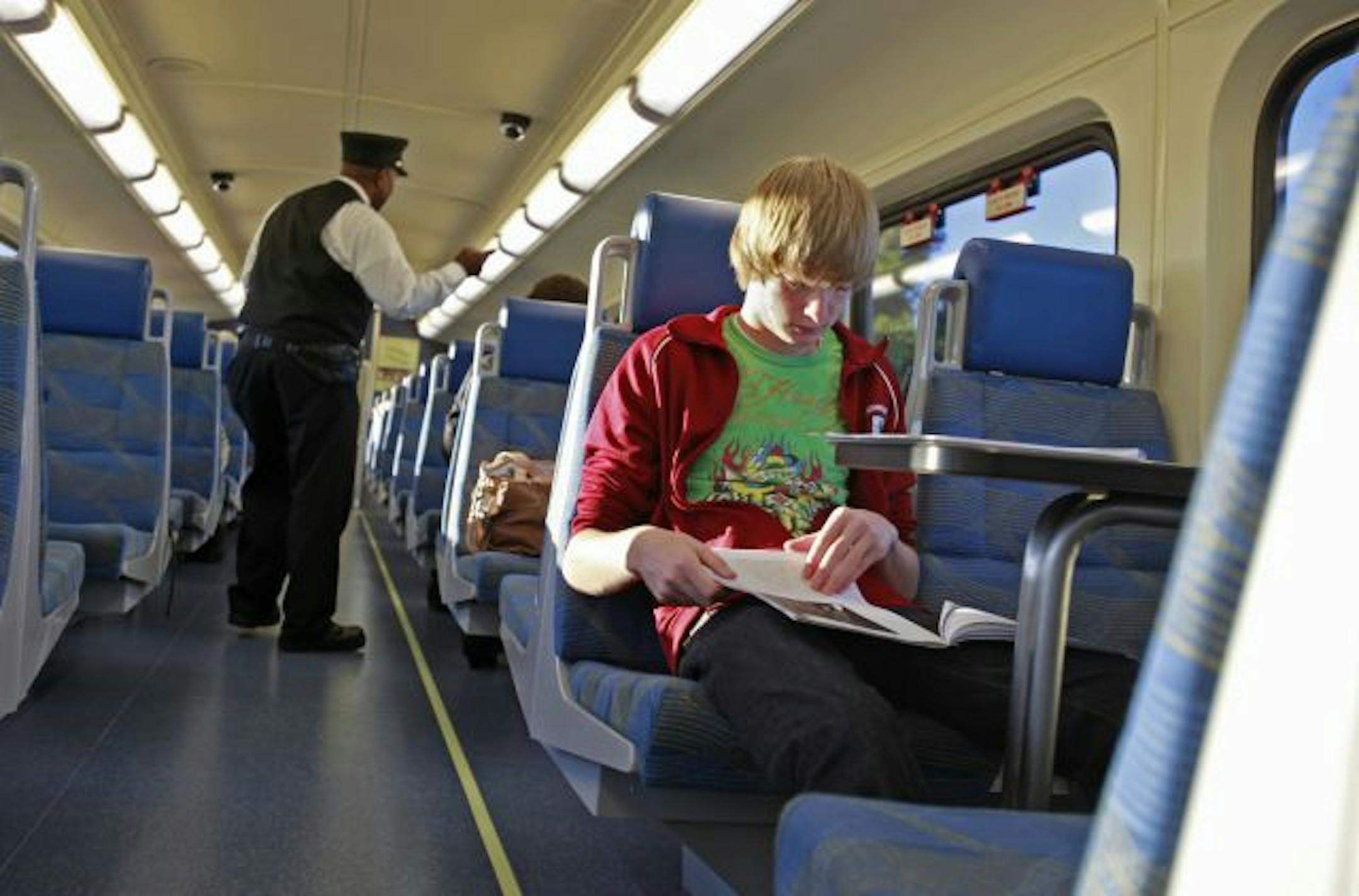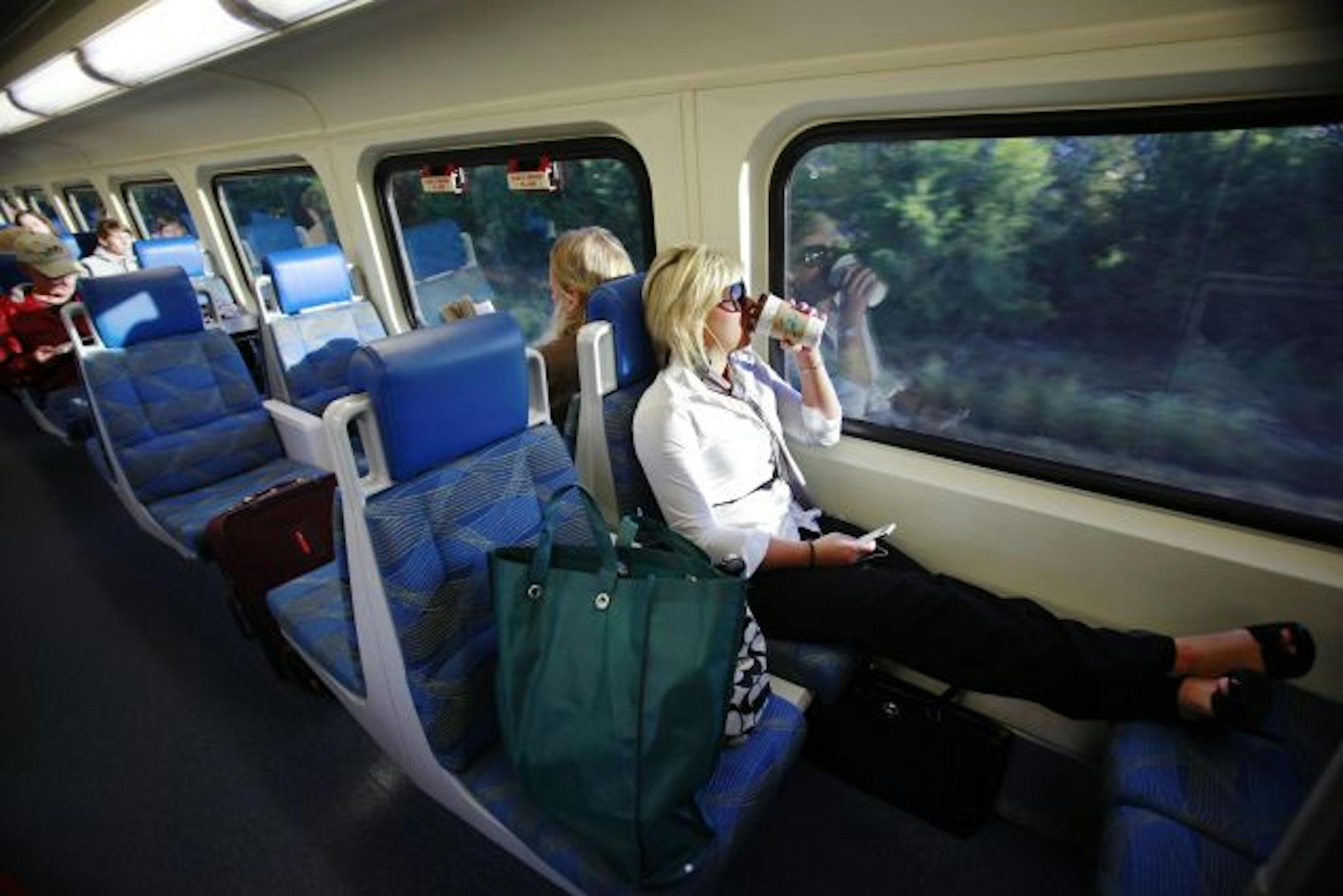
It was Alissa Ostroot's second day commuting to her new job. But as the Big Lake resident sent text messages, sipped a large Caribou and listened to Taylor Swift while riding downtown to work, she couldn't have appeared more relaxed.
No, she wasn't driving.
"This is a lot less stressful," Ostroot, 23, said during her 41-mile commute aboard a morning Northstar train this week. "And this costs me about half as much as driving and parking would."
But the $317 million commuter rail line from Big Lake to the Target Field station in downtown Minneapolis might appear more of a bargain to taxpayers if there weren't so many empty seats.
More than half a million people have ridden Northstar since November, the line's first nine months of existence after more than a decade of political maneuvering to launch the operation. But ridership remains slightly below projections -- by about 3 percent -- even though the train has been a huge hit with Twins fans.
Remember that April 15 Twins game against the Red Sox that attracted so many Northstar riders -- 2,118 -- that two buses had to be sent to the Fridley station for fans who couldn't get on the train? That number of passengers is nearly 10 times the average number of riders who board the last of five weekday morning train from Big Lake to Target Field.
The average weekday ridership in July was 2,530. Yet, on Saturdays in July, with a limited schedule that caters to leisurely passengers, not commuters, Northstar attracted an average of 2,373 riders.
"Must have been Twins games," said Bob Gibbons, a spokesman for Metro Transit, which operates Northstar.