

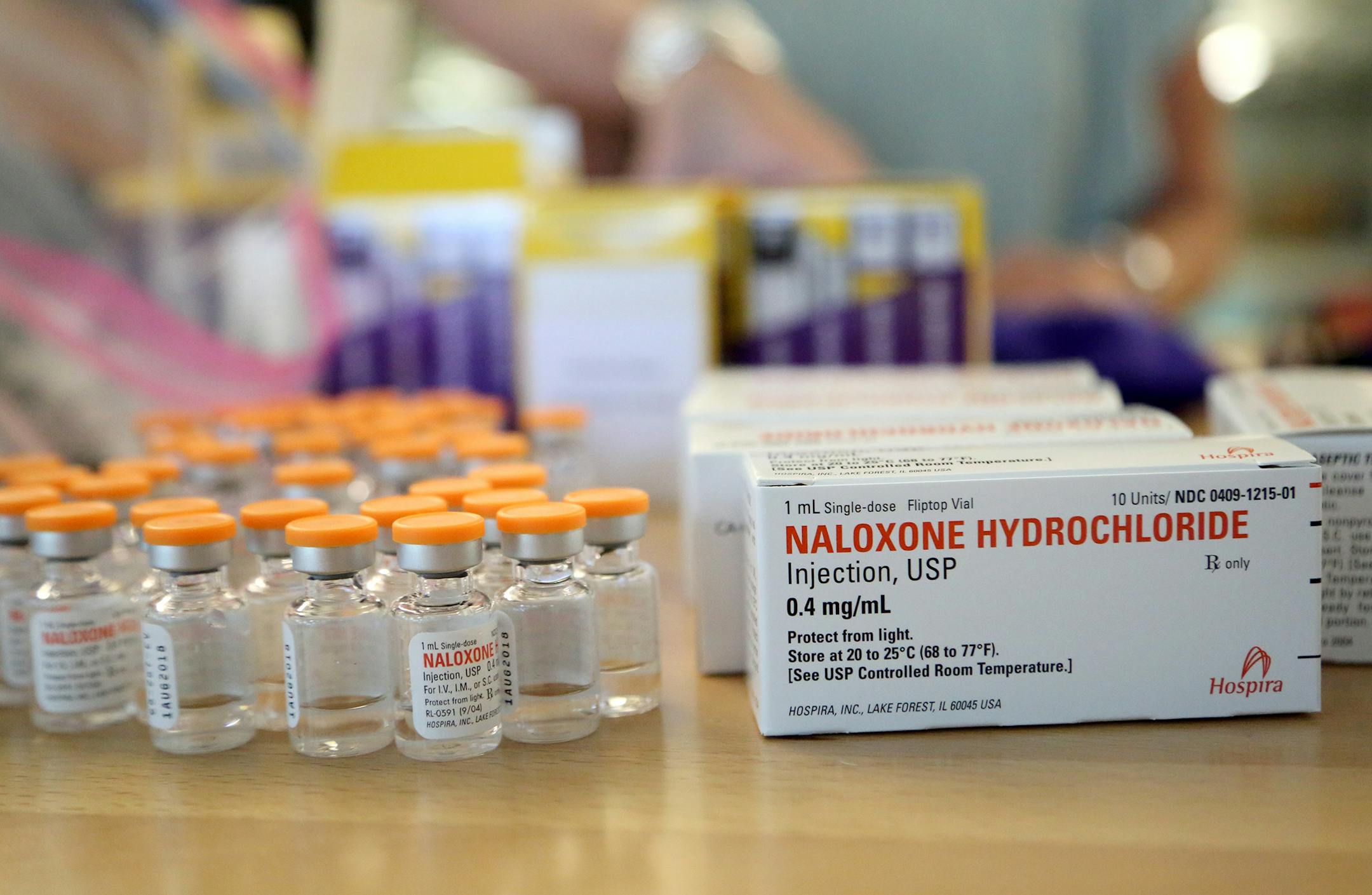
Anyone can now legally possess and administer naloxone, the powerful lifesaving antidote to a heroin or opioid overdose — even an addict.
The Steve Rummler Hope Network, a Minnesota nonprofit that lobbied for the 2014 law allowing for wider distribution of naloxone and immunity for those who use it to save a life, is giving away thousands of doses across the state to anyone who might need it. That includes police officers, first responders, college employees, drug rehab staffers and parents.
This summer, the Rummler network trained staffers and provided naloxone at Minneapolis Community and Technical College; Minnesota State University, Mankato, and even a big-box store after an overdose in a parking lot.
The nonprofit gave away 6,000 doses in 2016. This year, with the help of a $200,000 state grant, it wants to distribute up to 24,000 doses.
"It saves lives. I am down for anything that saves lives," said Dr. Anne Pylkas, the nonprofit's medical director and an addiction doctor at HealthPartners who writes the order for naloxone distribution.
With drug overdoses now killing more Americans than gun homicides and car crashes combined — more than 560,000 died from 1999 to 2015 — the Rummler network, founded in 2011, and a group of other nonprofits are doing the groundwork and advocacy that others are reticent to do.
The network is made up of a staff of four, a group of passionate volunteers often with personal ties to the crisis, and a team of 10 medical doctors who act as advisers and use their voices and expertise to combat the crisis within the medical community.
"I don't know any organization that is as visible as they are about the rising problem of opioid addiction," said Dr. Chris Johnson, chairman of the opioid prescription work group at the Minnesota Department of Human Services who sits on the nonprofit's medical advisory board. "They are trying to raise awareness of this problem as a disease."


