Never thought much about bees? Think again.
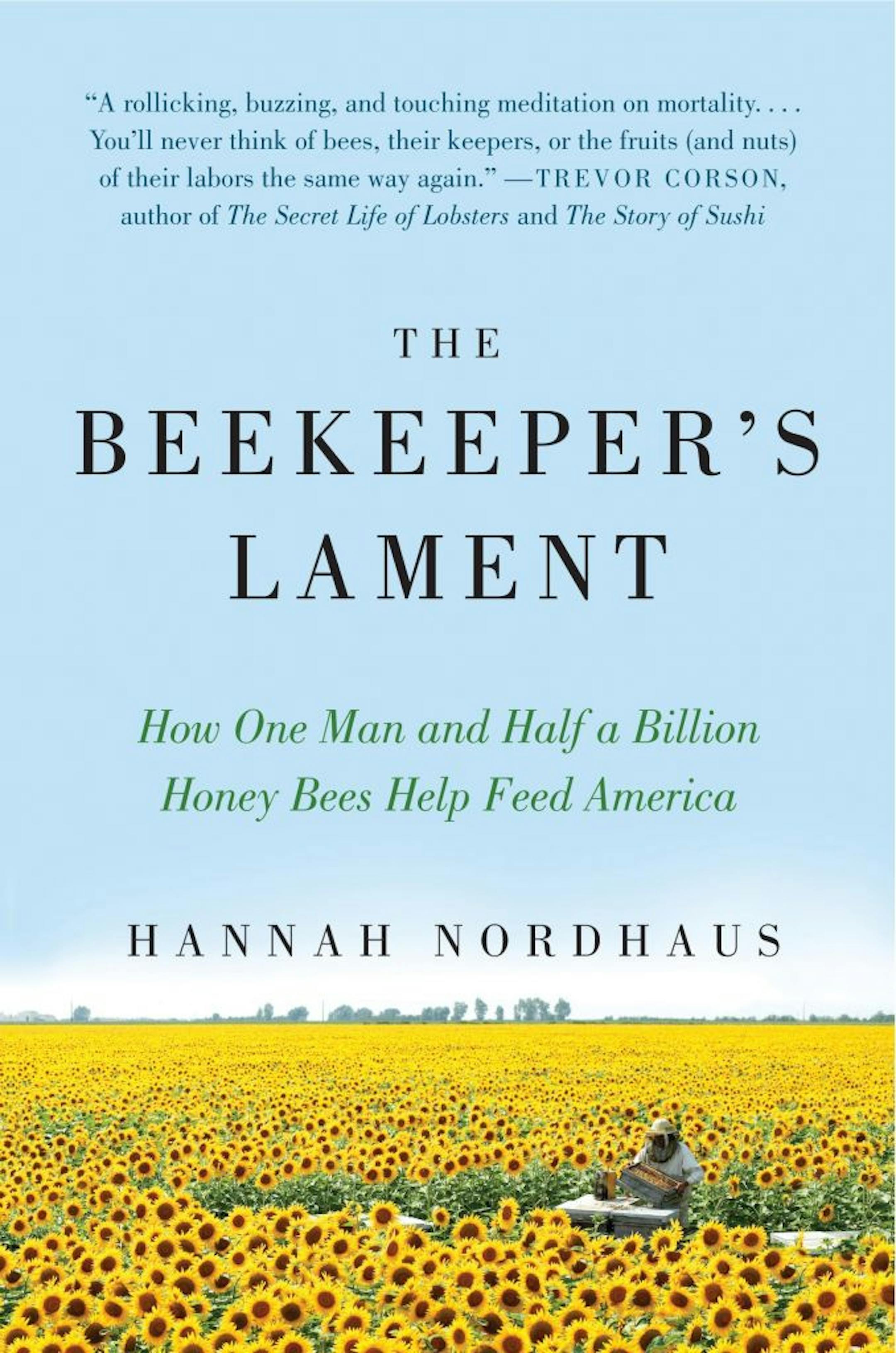
Without them, writes Hannah Nordhaus in her book "The Beekeeper's Lament: How One Man and Half a Billion Honey Bees Help Feed America," we'd starve for veggies and fruits. And they are no longer the romantic harbingers of spring in bee-loud glades. Wild honeybees are virtually extinct. Instead, bees are shipped by the billions in semitrucks across the country, managed by "bee guys" like the one who stars in her book, John Miller. An impassioned, lyrical, hard-driving fourth-generation beekeeper, Miller splits his time (and that of his bees) between Southern California's almond orchards, surrounded by manmade sprawl, and the increasing emptiness of North Dakota, where meadows remain to nurture his beloveds.
Miller grants Nordhaus an astonishing amount of access to his work and his psyche, shepherding her through his bee communities, sending her poetic e-mails to describe his challenges and joys. She is an exacting collector of detail -- some of it nerdy, some of it sweet. (Miller's fingers, for example, are always ink-stained because he uses German felt-tipped pens whose cases are yellow-and-black striped, discounted because they leak. He bought them all.)
The book is a rich mix of head and heart.
It's a lament because the beekeeper's life has never been easy, and is lately fraught with mysterious mega-death, which Nordhaus describes in such vivid detail that you feel for the little guys (and gals). Honey prices rise and fall; production does, too. Honey stretched with corn syrup is sold cheap. Contaminated Chinese honey, forbidden in the United States, makes its way in. And bees continue to confound.
"Ask any beekeeper," she writes. "Bees are addictive -- their purposefulness, their solidarity, their endless complexity. ... We should be grateful, then, that they have chosen to do something so imprudent, so daft. The world could not function without them.