

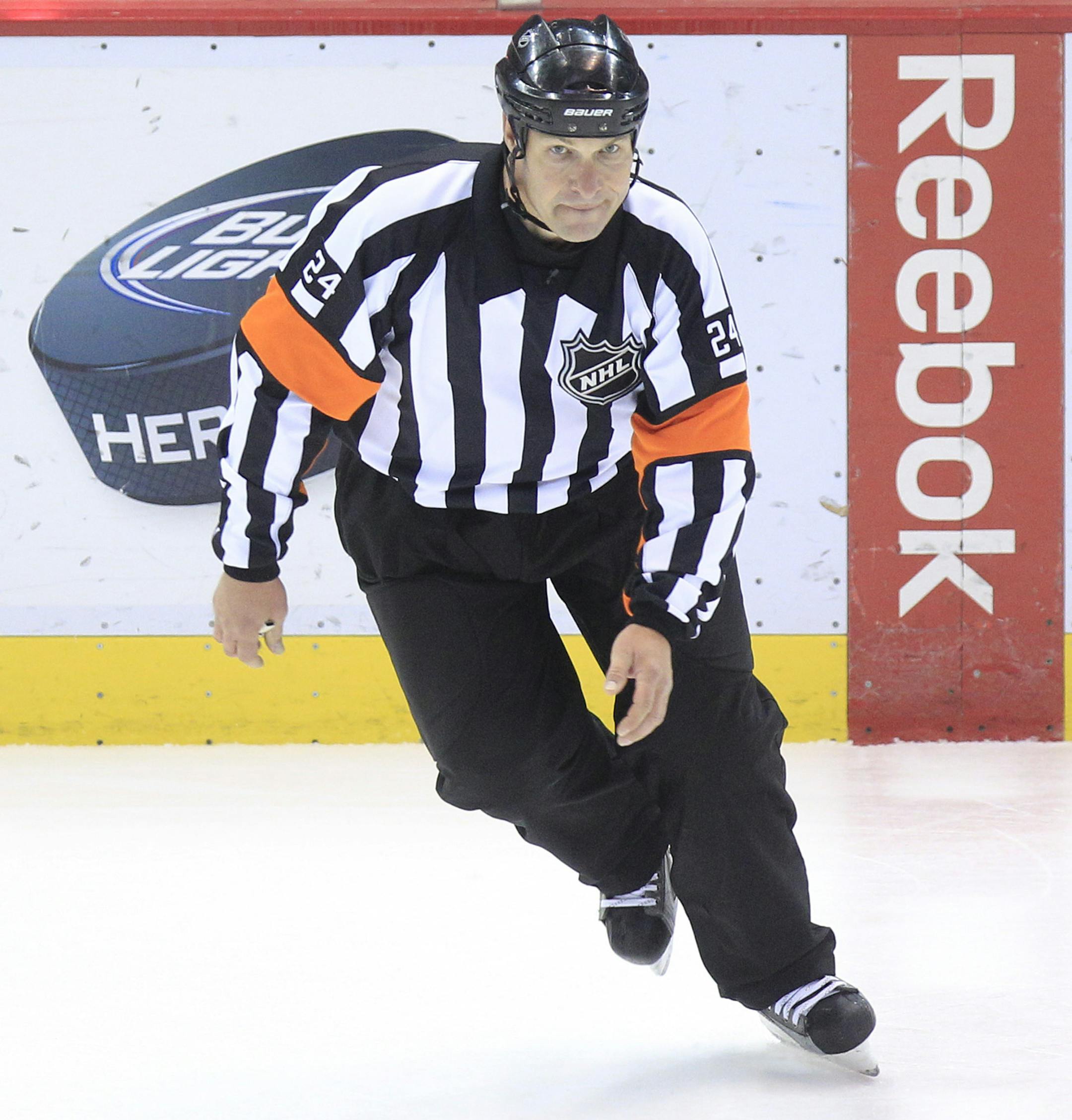
Stephen Walkom has strapped on the lonesome skates of an NHL referee, so he knows what it's like when you goof up.
"I know a lot of people would find this strange, but nobody feels worse when they leave the rink than our guys when they miss a call," said Walkom, four months into his second stint as the NHL's senior vice president and director of officiating. "Our guys want to be seamless in the game. Do their job. Go in and go out."
Walkom donned the orange armband in NHL rinks more than 1,000 times from 1990-2005 and 2009-13, working some of the sport's biggest moments, such as Stanley Cup Finals-deciding games and the Olympics, to uncomfortable moments, as when every pair of eyes at the United Center fixated on him after he waved off Niklas Hjalmarsson's go-ahead goal with less than two minutes left in Game 7 of the Western Conference semifinals last season.
On Saturday, Walkom agreed to an interview with the Star Tribune to talk about officiating — particularly, how officials fine-tune throughout a season, how they're evaluated and how it's decided which officials work the longest in the playoffs.
Walkom, himself, brought up the high-sticking incident Thursday in San Jose when the Wild's Zenon Konopka was incorrectly penalized four minutes. The Sharks' Jason Demers took a stick to the face, but it was from his own teammate. San Jose extended its lead to 3-0 in an eventual 3-1 win.
"As much as [referee Marc Joannette] thought he saw something, it wasn't as he thought he saw it," Walkom said.
Guilty feelings
Often, there's a supervisor of officials at games who evaluates the officiating performance upstairs, will act as a liaison between referees and the general manager (in the old days, coaches or managers commonly barged into the referee's locker room after a game) and will meet with officials after the game.
"Ten minutes after the game, the guys are in the room and they deal with the issues that happened right there," Walkom said. "You discuss them like men in an open forum."


