

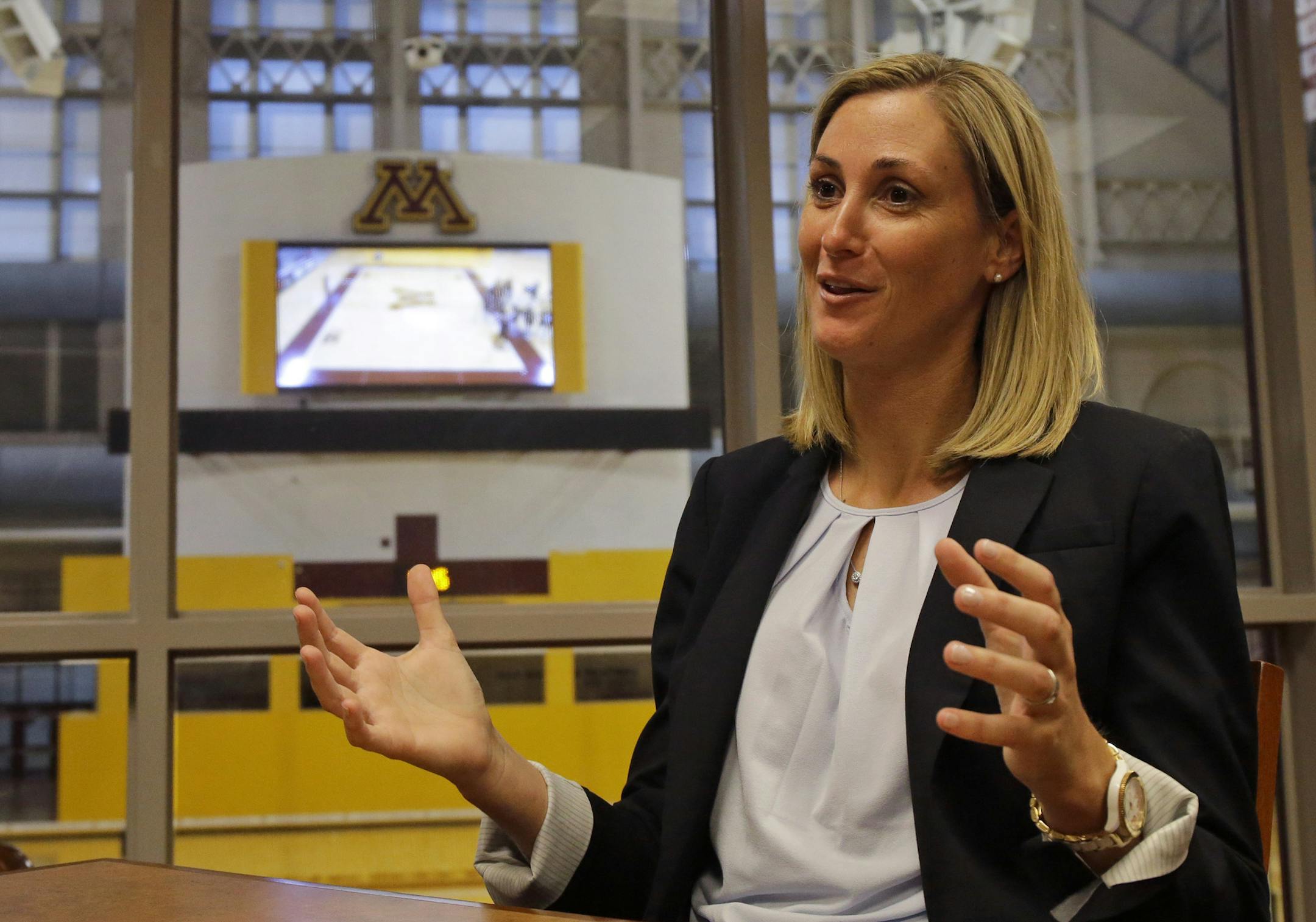
For far too long, gender issues have plagued the University of Minnesota's athletic department. Now, in the wake of Norwood Teague's necessary resignation, the university has an opportunity to chart a new course for athletics — one that fully embraces Title IX, empowers women in athletic administration and creates a work environment in which both women and men can do their jobs without harassment or bias.
What will it take? Start with an exceptional leader, one who will work tirelessly to heal the wounds left by Teague as well as the scars still visible from a long list of gender-related messes at the U since the 1972 passage of Title IX, the federal law meant to protect people from gender-based discrimination in education programs and activities. If the best candidate to take over for Teague is a woman, so much the better.
University President Eric Kaler's No. 1 goal for the search process should be to come up with a pool of well-qualified candidates from across the country that includes women and minorities. Although there are too few women leading major collegiate athletic programs today, there are plenty of worthy possibilities for that pool, assured Patti Phillips, chief executive of the National Association of Collegiate Women Athletics Administrators (NACWAA).
"We're talking about a cultural shift here," Phillips said of the steady but slow progress that women administrators are making in college sports. "The same things are happening in corporate America."
Of the 350 NCAA Division I schools, just 31 have a woman serving as athletic director, according to the NACWAA. And among the 120 programs such as the U's that comprise the Football Bowl Subdivision (FBS), there are nine.
Women face two major obstacles in climbing the ladder, according to Phillips and others: The notion that they cannot possibly understand football, and the belief among some search committees and university leaders that men are better fundraisers. We suspect a just-us-guys mentality is at play with both objections.
An athletic director does not need to understand how to stop the spread offense, but he or she must have the business expertise and management skills necessary to oversee a major football program. The fundraising claim is similarly bogus. In Minnesota and elsewhere, women are flourishing in for-profit and nonprofit roles that require the kind of credibility and relationship-building that serve as a foundation for successful fundraising.
It's also worth noting that two of Minnesota's Big Ten peers, Penn State and Rutgers, recently turned to women to lead their athletic departments in the wake of scandals. "I do think women have a way over time of coming in and fixing things — in all parts of our culture," Phillips said.


