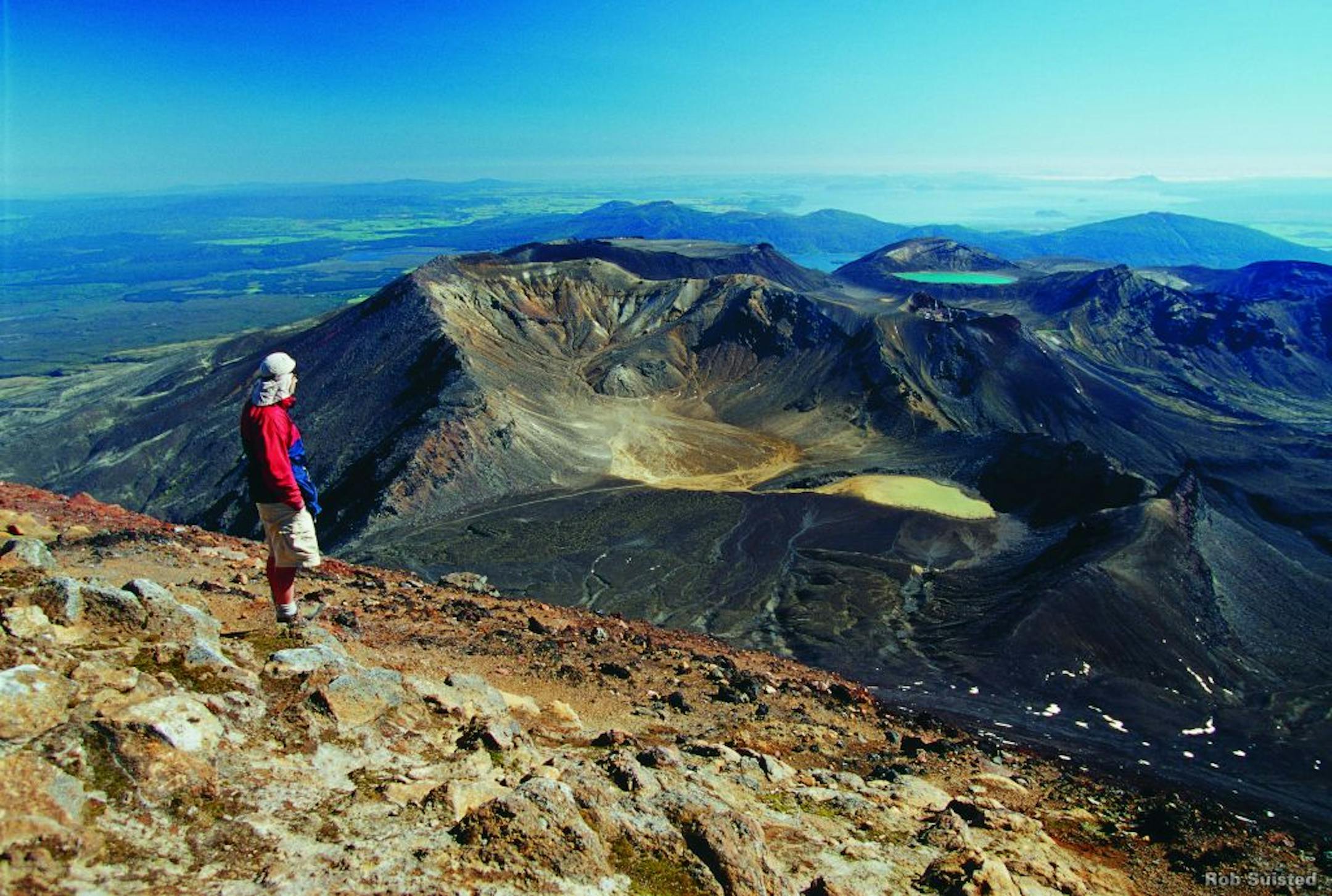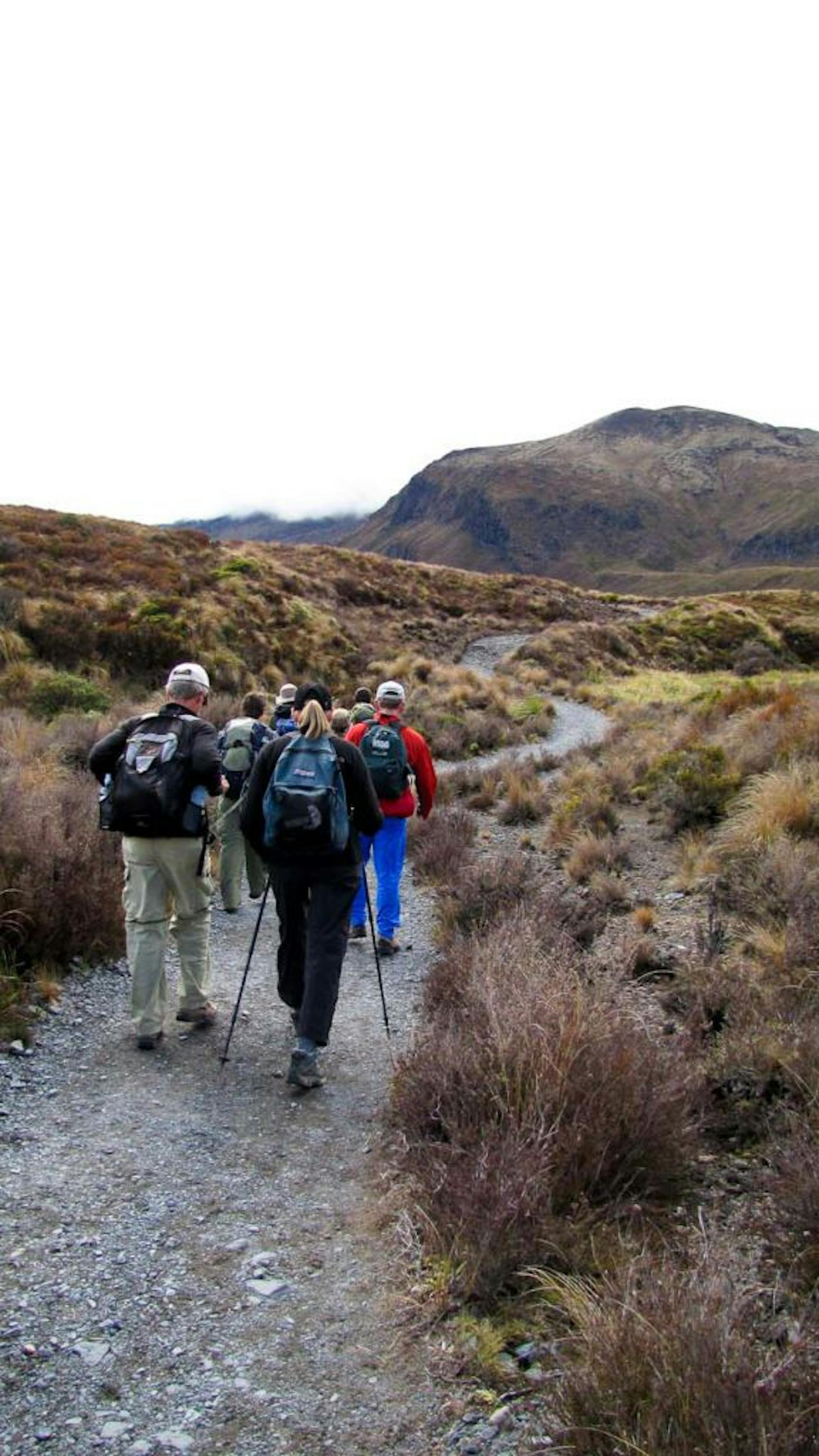
The wind came out of nowhere, madly swirling around the desolate volcanic crater. A small knot of hikers inching their way up its steep side quickly heeded the warning of their seasoned Maori guide, Tom Ngato. They dropped to their knees and pressed their bodies against the jumble of black pumice, so no gust could fling them into the crater's rocky depths. With luck, the wind would subside as quickly as it had roared to life, and the group could carry on and reach the summit of Red Crater, tantalizingly close.
But 20 minutes later the wind was still relentlessly howling around the lunar landscape, scooping up handfuls of dirt and ancient lava bits, and flinging them about like a toddler having a tantrum. Ngato could sense the tendrils of fear slowly creeping into the hikers' psyches. Slowly, carefully, the group crawled back down the mountain. In the parking lot, they met a dazed Argentinian who had managed to reach the summit despite the gale-force winds. Still visibly shaken, he said softly, "I thought I was going to die."
Ngato's tale of this recent attempt to hike New Zealand's famous Tongariro Crossing was sobering, yet surprisingly exhilarating. I certainly had no death wish, but I like to challenge myself -- not in a "Climb Mount Everest" way, but perhaps in a "Hike the Tongariro Crossing" way. I quickly determined to reach the top of 6,175-foot Red Crater, highest point in the 12-mile Crossing.
The Tongariro Crossing is considered New Zealand's best one-day trek, and one of the best in the world. A tiny, curving ribbon in the vast, 200,000-acre Tongariro National Park, the trail traverses Mount Tongariro, which isn't actually a mountain or single volcano but rather a complex of volcanic craters that have erupted at different times in the past.
The oldest lava began roiling about 275,000 years ago, while the most recent eruption occurred in 1975, when Mount Ngauruhoe -- Mount Doom to "Lord of the Rings" fans -- blew its top.
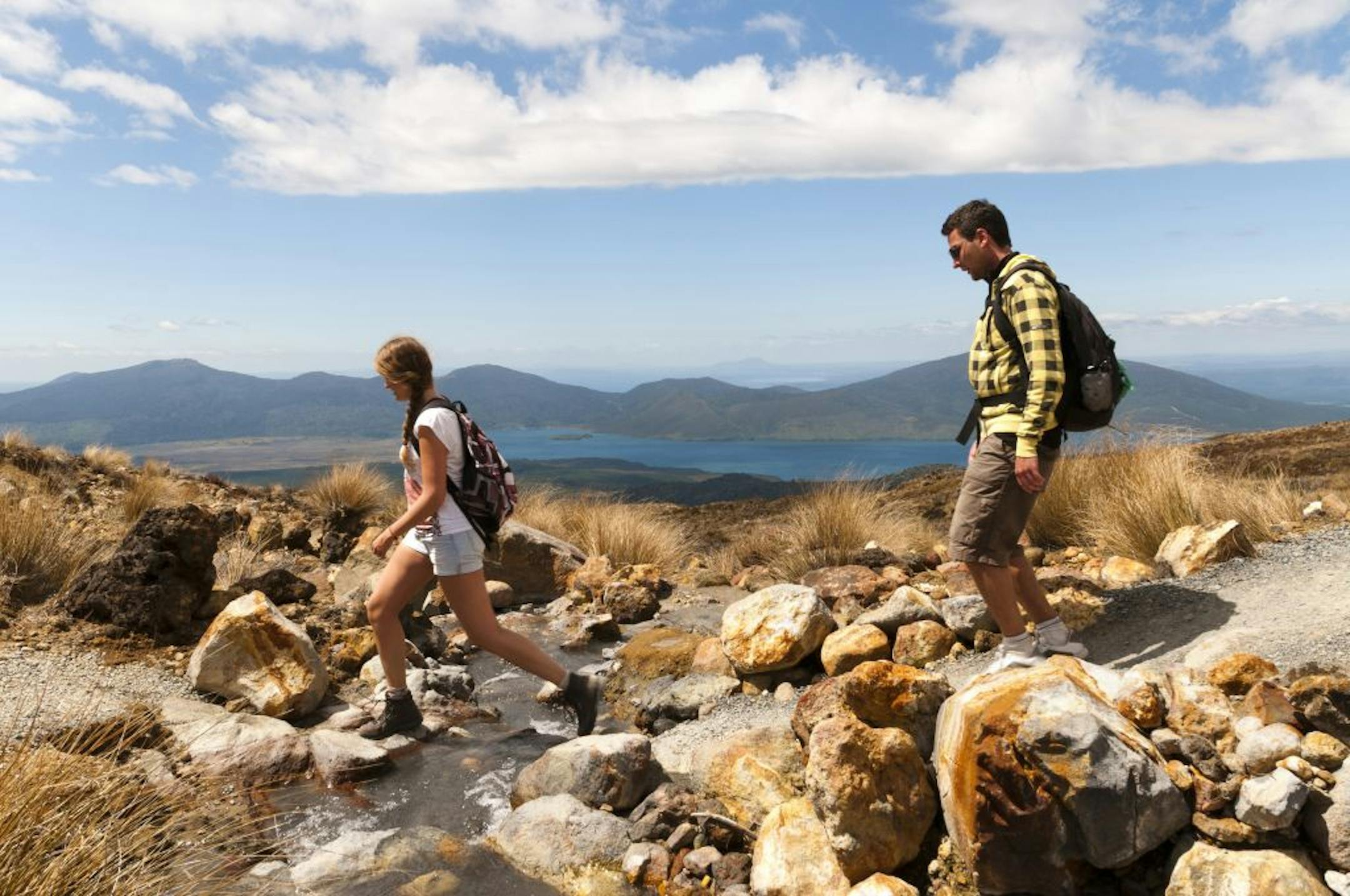
The trail also winds through soft alpine meadows and past burbling mountain springs, curves around tiny emerald lakes and offers some of the most impressive vistas you're likely to see anywhere.
It's partly the pretty, innocuous scenery you pass early on that causes hikers to discount the Crossing's dangers. Add to that that most hikers attempt it during summer, when the pleasant weather results in a 70 percent success rate, and that you can drive right up to a car park (that's a parking lot in Kiwi-speak) and start hiking.
Tony Parker, a former Crossing guide, recounted the story of one fellow who was only two or three miles into the hike when a cold rain began to fall. Casually clad in jeans -- a big no-no, as wet cotton is the worst thing to be wearing on a chilly day -- he quickly succumbed to hypothermia. A woman was hiking around the volcanic vents when she slipped down a rocky incline to her death. "She basically took a 2,000-foot slide on a cheese grater," Parker said.