

Getting young kids tested for autism as soon as they start showing classic signs of the disorder can be vital for long-term development and readiness for school. But getting that message out to parents in all of Minnesota's diverse communities has been a struggle.
Minnesota mom Sheletta Brundidge, a longtime media personality in the Twin Cities, is hoping a new series of videos funded by the state Human Services Department and produced with the U of M's Institute on Community Integration can help to change that.
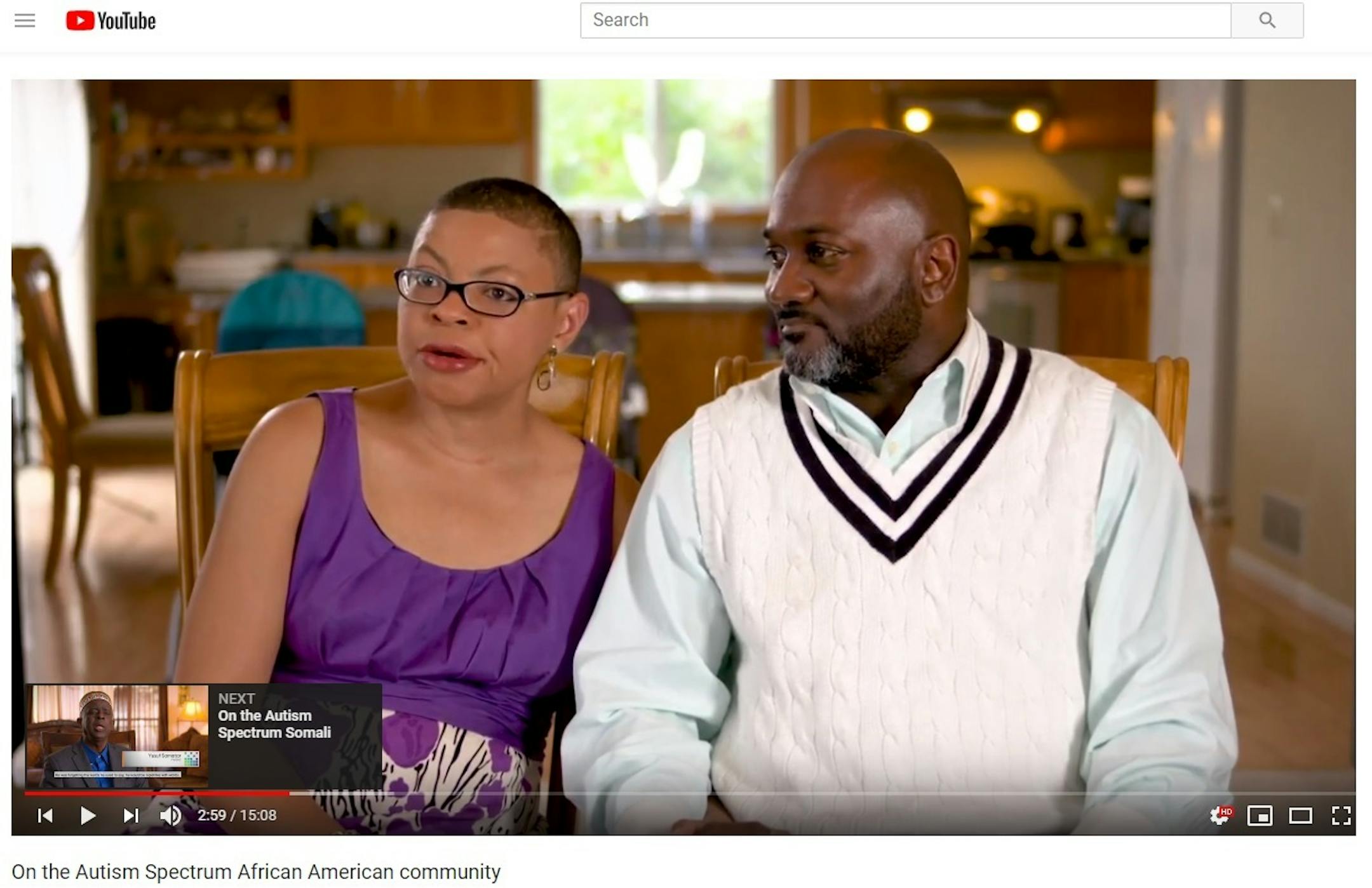
Sheletta and Shawn Brundidge of Cottage Grove talk about recognizing the signs that they needed to get their young children tested for autism spectrum disorders, excerpted from one of several new videos on the state Human Services Department's YouTube channel intended to raise awareness about the importance of early diagnosis.
She's one of the people interviewed in the videos, which are available on the Minnesota Department of Human Services' YouTube page. The page can be found by searching for "MinnesotaDHS" on YouTube.com
"Studies show that parents who are African, African American, Latino, Asian and Native American don't get their children tested for autism as soon as they seen the symptoms," Brundidge said in an email. "This has horrible results for the children, especially when they go to school."
Kids with undiagnosed autism spectrum disorders may end up with communication problems in class that lead to frustration, acting out, fighting and an inability to learn at the same pace as peers. Sometimes whole grades must be repeated, Brundidge said. On other hand, kids who are diagnosed earlier can enroll in therapy and appropriate programs for kids with special needs.
It's not an abstract issue for Brundidge -- she has three children who are diagnosed with conditions on the autism spectrum, including two who are in school. She says the fact that she got them tested before they were 2 has allowed them to get the early help they needed; today both are in normal classrooms with little to no extra support.
There are many red flags for autism that parents can watch for early in life, but they can be hard to spot because they often involve the absence of normal behaviors -- toddlers who don't make eye contact during feedings, 6-month-olds who have never had a big, warm smile, or 12-month-olds who don't respond to their name, according to mental-health group Helpguide.org.


