

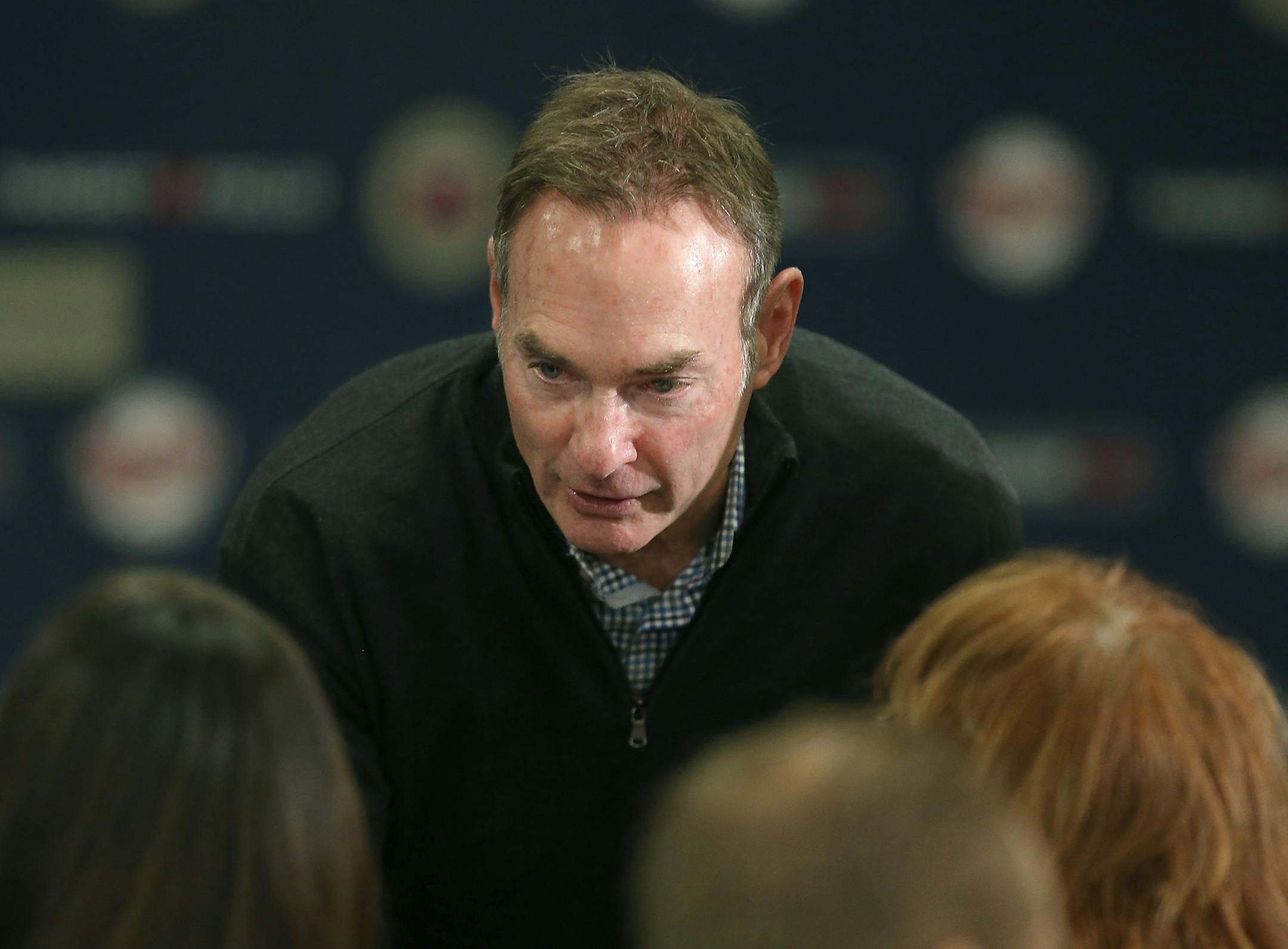
Derek Falvey has such unfettered authority to change anything and everything about the Twins baseball operations, owner Jim Pohlad didn't even meet Thad Levine, the team's new general manager and Falvey's second-in-command, until he arrived in Minneapolis to begin earning a paycheck on Sunday.
But for all the sweeping freedom that Pohlad has granted Falvey, one decision is out of his hands: Paul Molitor, the owner decreed in June, will manage the Twins in 2017.
And for that, the new baseball bosses insisted Monday, they are entirely grateful.
"The healthiest franchises in the game have strong synergies between ownership, front office, business and the clubhouse. So when we walk in the door having inherited a manager the caliber of Paul Molitor, we feel as if we've got a partner in this process, someone we can invest in the future with," Levine said Monday as he and Falvey took over the franchise. "So we viewed it as a significant and prominent positive."
Sure, they have to say that; after all, like a lucky contestant on "Survivor," Molitor has that immunity idol tucked away in his jersey. But both sides swore that this shotgun wedding is one they would have entered into willingly.
Molitor is "an incredibly accomplished baseball man," Falvey told Twins employees Monday morning in an introductory meeting. Pohlad's commitment to the Hall of Fame player, who led the team to 83 victories in 2015 before suffering through a 59-103 disaster last season, "was a non-issue for me," Falvey said. "Paul's going to be one of the first phone calls we make when we decide whether or not to make a trade. We're in this together."
Molitor sounded energized by that partnership, and by the prospect that the new leadership might be able to make some changes that make his job easier. Providing him with more quality pitchers would be a good start, for instance, but Molitor also would like Falvey and his staff to institute a system that better instills fundamentals into minor league prospects.
"There's probably a little bit too much uncomfortable gappage between up here and down there, with pitching and baserunning and defense," Molitor said. "There's still separation. We've got to find ways to bridge that better, so [instruction is] more unified."


