

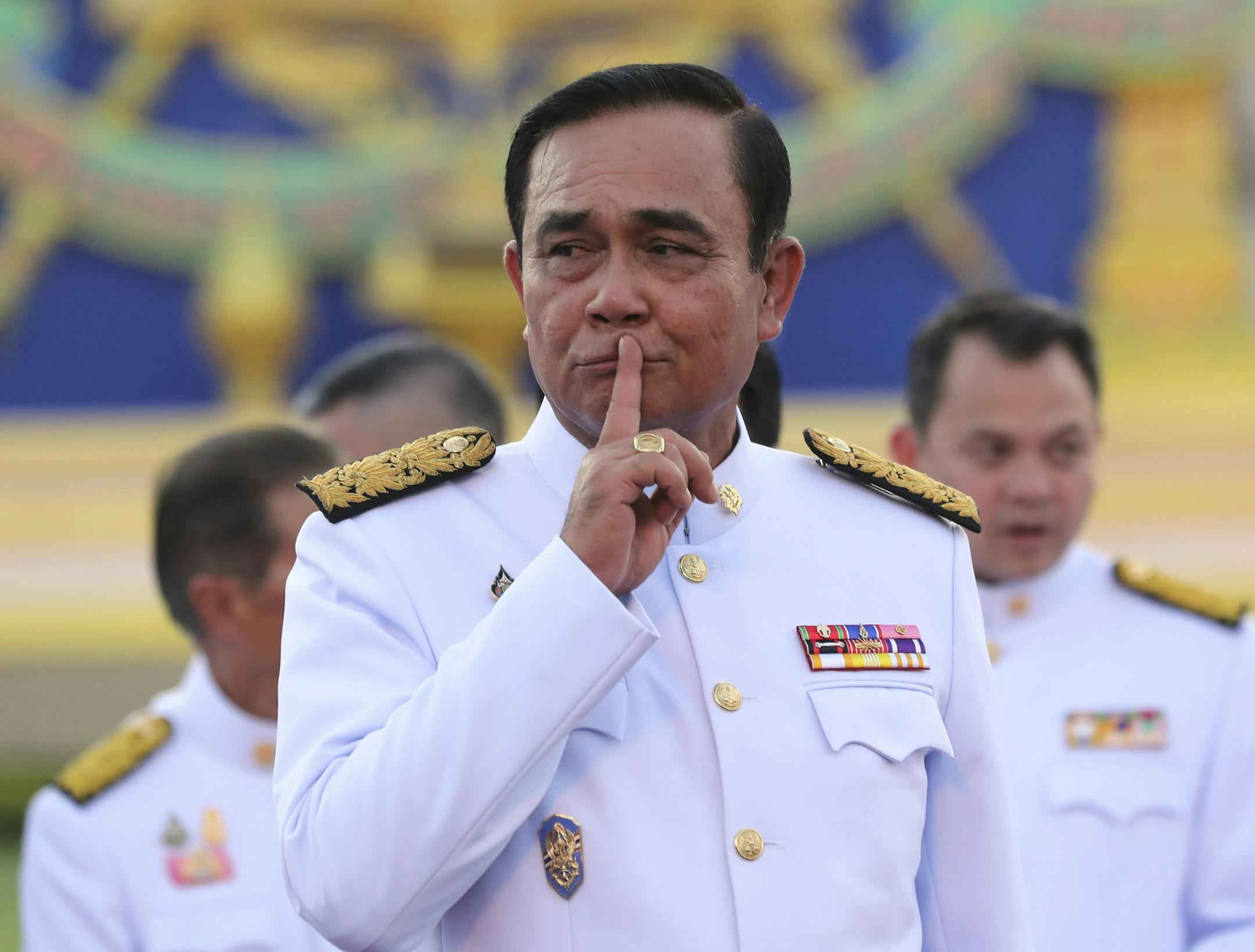
Thailand's new government said it plans to pursue a number of economic policies championed by the previous military administration as officials strive to revive the nation's growth.
Initiatives such as the $55 billion Eastern Economic Corridor project, which seeks to add infrastructure and spur high-technology industries, are among the priorities laid out in a policy statement published Sunday in Bangkok.
"Thailand has continued making progress in many areas of development," according to the statement. "But this government will face challenges from volatility domestically and globally, from issues like an aging society, international trade and technological change."
Other key elements of the agenda include farm subsidies, welfare for people on low incomes, finding new export markets, attracting high-spending tourists and restructuring taxation.
The government expects annual budget spending of 3.3 trillion baht ($107 billion) — about the current level — and said fiscal policy will seek to provide a buffer against global volatility partly by creating domestic macroeconomic stability.
The administration also plans to receive feedback from the public on whether to redraft parts of the military-backed constitution put in place under the junta.
The cabinet sworn in last week faces the task of reviving Southeast Asia's second-largest economy, after a slump in exports amid the U.S.-China trade war contributed to the weakest growth in the first quarter since 2014.
"Big businesses must be pleased with the continuity of key policies, such as infrastructure investment," said Amornthep Chawla, head of research at CIMB Thai Bank PCL in Bangkok. "We'll have to wait and see how this government implements these policies. An economic stimulus package may be needed to boost weak local demand."


