![Minnehaha Creek Watershed District AIS Program Manager Eric Fieldseth, far left, University of Minnesota AIS Research Center's Dr. Michael McCartney, center, and Max Kleinhans, tested a project targeting tiny zebra mussels with low doses of a copper-based pesticide in Robinson Bay on Lake Minnetonka, Wednesday, July 20, 2016 in Wayzata, MN. ] (ELIZABETH FLORES/STAR TRIBUNE) ELIZABETH FLORES • eflores@startribune.com](https://arc.stimg.co/startribunemedia/OXVCAIFNLHBMSKGTYVCSEPXW6I.jpg?&w=1080)
The science lab is moving to Lake Minnetonka.
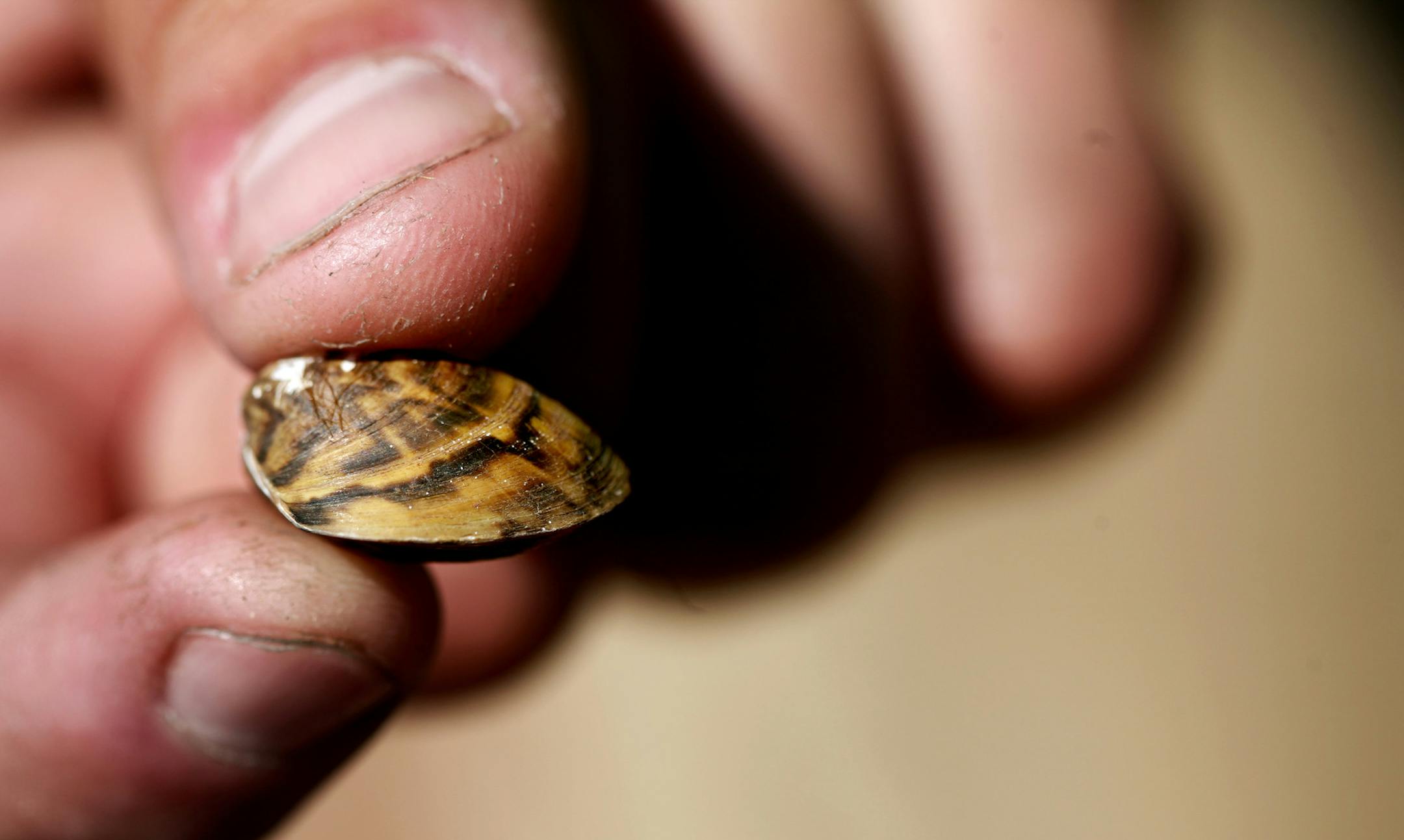
To protect the waters of the Twin Cities' largest and most popular lake from invasive species, researchers are using Minnetonka as the testing ground for a new study. Crews this week started testing low doses of a copper-based pesticide on zebra mussel larvae — called "veligers" — to kill them off and slow their spread.
It's the first study of its kind in Minnesota or nationally, and the latest effort in the battle against the state's proliferating mussels.
The results could help public agencies and lake advocates control the spread of the invasives on other lakes across Minnesota, shifting the focus from killing off all the pests to keeping their numbers at bay.
"People don't even think about it this way — the strategy is new," said Michael McCartney, a researcher and assistant professor at the Minnesota Aquatic Invasive Species Research Center. "You can knock them back a lot."
Researchers from the center and the Minnehaha Creek Watershed District are conducting the experiment, using the pesticide on six test areas. The study is funded by a $24,000 grant from Hennepin County, part of $325,000 in state funding that the county received for aquatic invasive species grants.
This week, crews are doing the first of three tests in Robinson's Bay in Deephaven, taking water samples to see how many of the microscopic veligers died from the copper applied the day before.
They'll repeat the tests next month, looking to see how low a dose is most effective at killing off the veligers.
![University of Minnesota AIS Research Center's Dr. Michael McCartney, right, and Max Kleinhans, left, tested a project targeting tiny zebra mussels with low doses of a copper-based pesticide in Robinson Bay on Lake Minnetonka, Wednesday, July 20, 2016 in Wayzata, MN. ] (ELIZABETH FLORES/STAR TRIBUNE) ELIZABETH FLORES • eflores@startribune.com](https://arc.stimg.co/startribunemedia/BZJK7ZCHEYFGBYTME7ERKL2IIY.jpg?&w=1080)
![University of Minnesota AIS Research Center's Dr. Michael McCartney tested a project targeting tiny zebra mussels with low doses of a copper-based pesticide in Robinson Bay on Lake Minnetonka, Wednesday, July 20, 2016 in Wayzata, MN. ] (ELIZABETH FLORES/STAR TRIBUNE) ELIZABETH FLORES • eflores@startribune.com](https://arc.stimg.co/startribunemedia/6KA7OUCYKZ2V6ZL2VBEJXYNLBQ.jpg?&w=1080)