

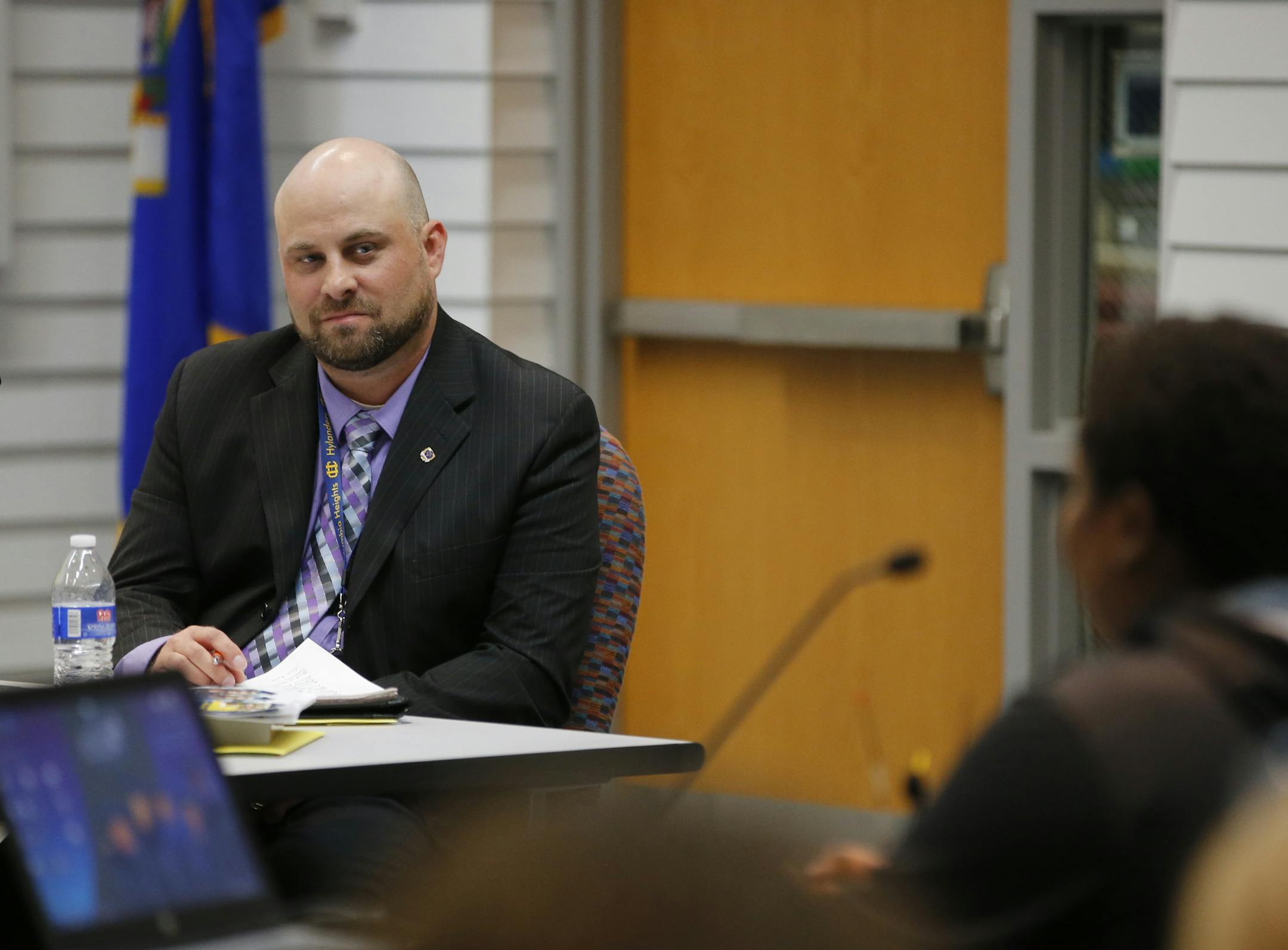
People who were hoping for the resignation of Columbia Heights School Board Member Grant Nichols cheered when he stepped down last month amid allegations that he made an anti-Muslim comment.
But his resignation comes with a cost for the district: $15,000 to hold a special election in April to choose his replacement.
Never mind that Election Day was Tuesday. Some school districts will be asking voters to come to the polls again in the coming months, thanks to a new state law that requires open board seats with more than a year left in a member's term to be filled by special election, not short-term appointment. About 20 school board vacancies statewide need to be filled and will cost districts $10,000 per election, on average, according to Minnesota School Boards Association (MSBA) spokesman Greg Abbott.
The association plans to ask the Legislature to repeal the law, which has been in effect since July, in the coming session.
The costs hit smaller districts like Columbia Heights particularly hard. In addition to the Nichols controversy, Columbia Heights has a second vacant seat, formerly occupied by Lori Meyer, who resigned in July. The special election primary to fill her seat is Dec. 1, and the special election is Jan. 26. All told, the district expects to spend $30,000 on the special elections.
"This is time and energy that's being spent by the district," said John Larkin, chairman of the Columbia Heights school board. "That time could be spent dealing with educational matters."
The Eagle Valley School District in Clarissa, Minn., northwest of St. Cloud, has two vacant board seats and potentially a third coming because of board member resignations, said Superintendent Barry Johnson. The cost, time and energy in conducting these elections is making "kind of a perfect storm," he said.
More elections
The new rules upended the practice of filling empty seats by appointment.


