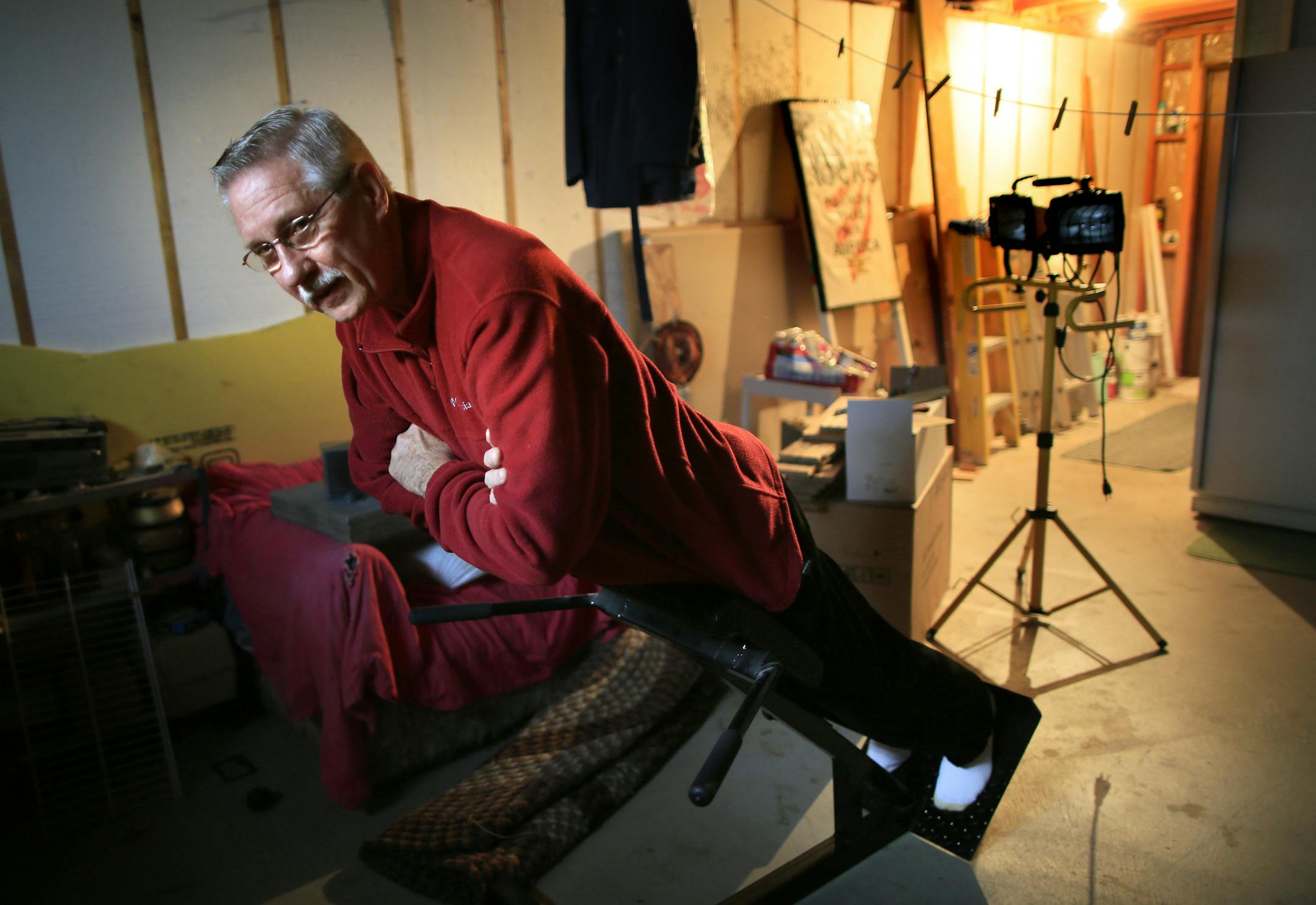
Ken Bueckers loved being a pipe fitter. It took him to the tops of tall buildings and to furnaces below. He yanked valves open and wrestled pipe into crawl spaces.
In a perfect world he would still be doing that. He's 69, but he has a clear mind and 32 years of experience. He and his wife could use the extra income. "I would probably go out and do it if my body would let me," he said.
At a time when financial necessity is forcing many Americans to work longer, some don't have that option. Bueckers is one of millions of blue-collar workers who have grown too old for blue-collar work.
White-collar professionals like consultants, lawyers and accountants are often able to retire gradually, finding ways to keep earning money in fields where they have connections and skills. Almost two-thirds of Americans between 45 and 60 say they plan to delay retirement, according to the Conference Board research group, thanks in large part to a recession that ripped into retirement accounts and home values.
But workers in physically demanding jobs are less likely to keep working, and more likely to enroll early for Social Security, according to the AARP. For most blue-collar workers — pipe fitters, oil workers, roofers and many factory workers — the options are to shift to what will likely be lower-paying work, or to stop working at all.
It's pretty clear, if you're a blue-collar worker and you're physically unable to work, you don't have as many options as a white-collar worker," said Steve Vernon, a scholar at the Stanford Center on Longevity. "That is a problem, and there are no easy answers."
Tom Fossum, 60, of Minneapolis, was a concrete laborer for 32 years.
He poured concrete at the Mall of America and for high-rises in the Twin Cities.