

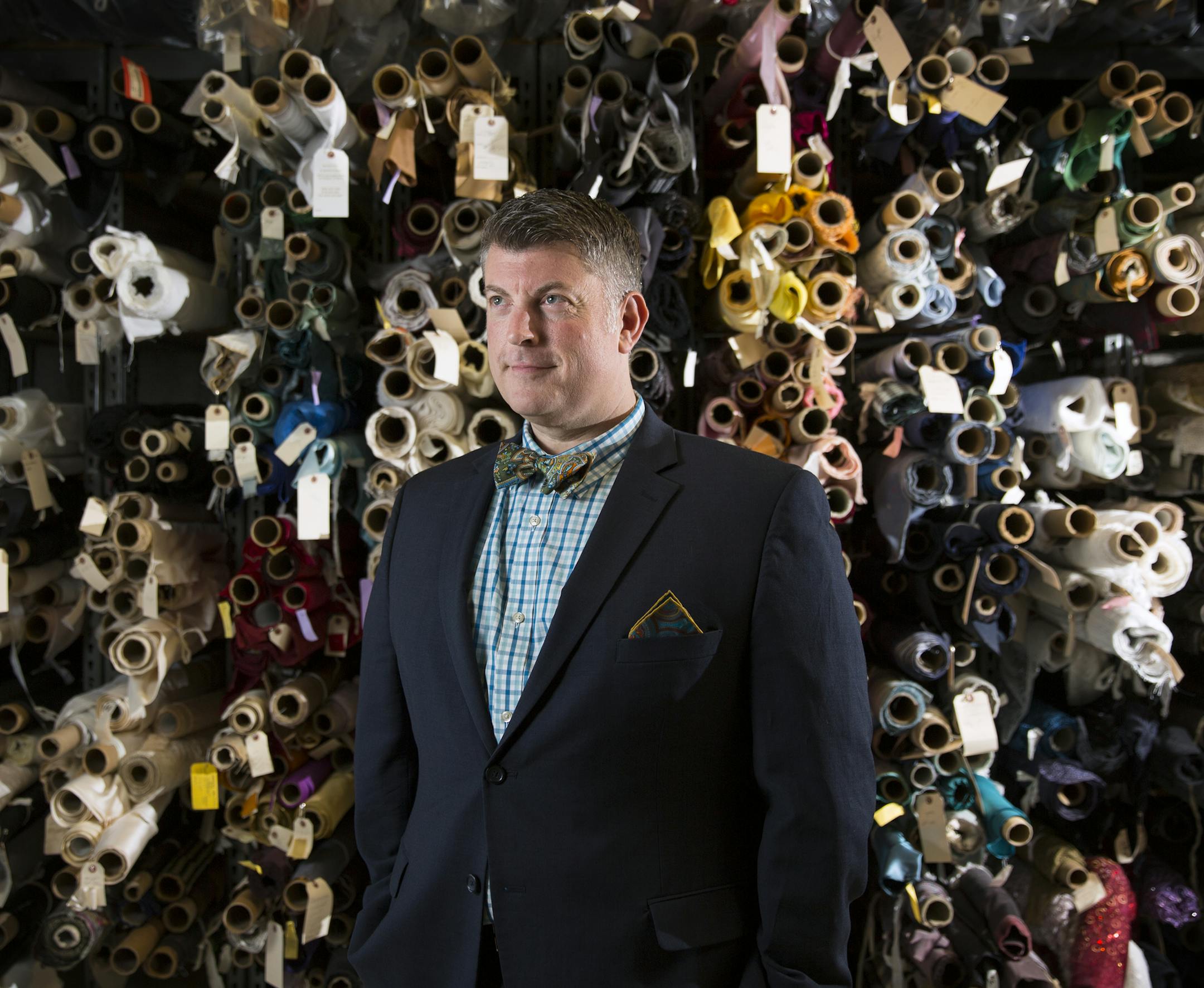
The first time Ryan Taylor walked into Minnesota Opera he was an aspiring baritone, chosen for the company's Resident Artist Program. Last May, he took the elevator to the top floor, where he took up residence in the president/general director's office.
Taylor returned to his roots after three years as general director of Arizona Opera. An Atlanta native, he now runs an $11.2 million company with an audience totaling 42,000 annually. Minnesota Opera has established a national reputation as a developer of new work, with "Silent Night," "Doubt" and "The Manchurian Candidate" as three recent examples of world premieres. This season, Minnesota Opera continues the mission with "Dinner at Eight," based on the George S. Kaufman-Edna Ferber play.
Taylor spent 10 years as a singer, performing more than 30 roles on stage, including a stint as Sharpless in Minnesota Opera's 2004 "Madama Butterfly." He recently sat down in his Minneapolis office for a few questions.
Q: You start the season with "Romeo and Juliet," but then we get "Das Rheingold." Wagner is something we haven't seen here in many years. What's up?
A: They've done a "Flying Dutchman." That's the one people can stick their toe into and figure out what Wagner is. But this is a whole new world. The biggest challenge for us is physical. If all the musicians really like each other, we can squeeze maybe 62 players into the pit at the Ordway. We have upward of 80 to 85 for "Das Rheingold." We felt we could create a road map for other companies, so we constructed a set that puts the orchestra on stage as part of the landscape. There is something about Wagner, how he makes the orchestra a character, and being able to use the musicians to tell the story makes sense, whereas it wouldn't in a bel canto piece.
Q: Anyone we will recognize in the cast?
A: Greer Grimsley ["Macbeth"] is back to sing Wotan. Denyce Graves ["Doubt"] makes her debut as Erda. [Minnesota Opera music director] Michael Christie is conducting. When he talks about Wagner, he does it in a way that's completely different from the way he talks about other operas.
Q: You're now four months into this job. How do you see the chief administrative role in an opera company?


