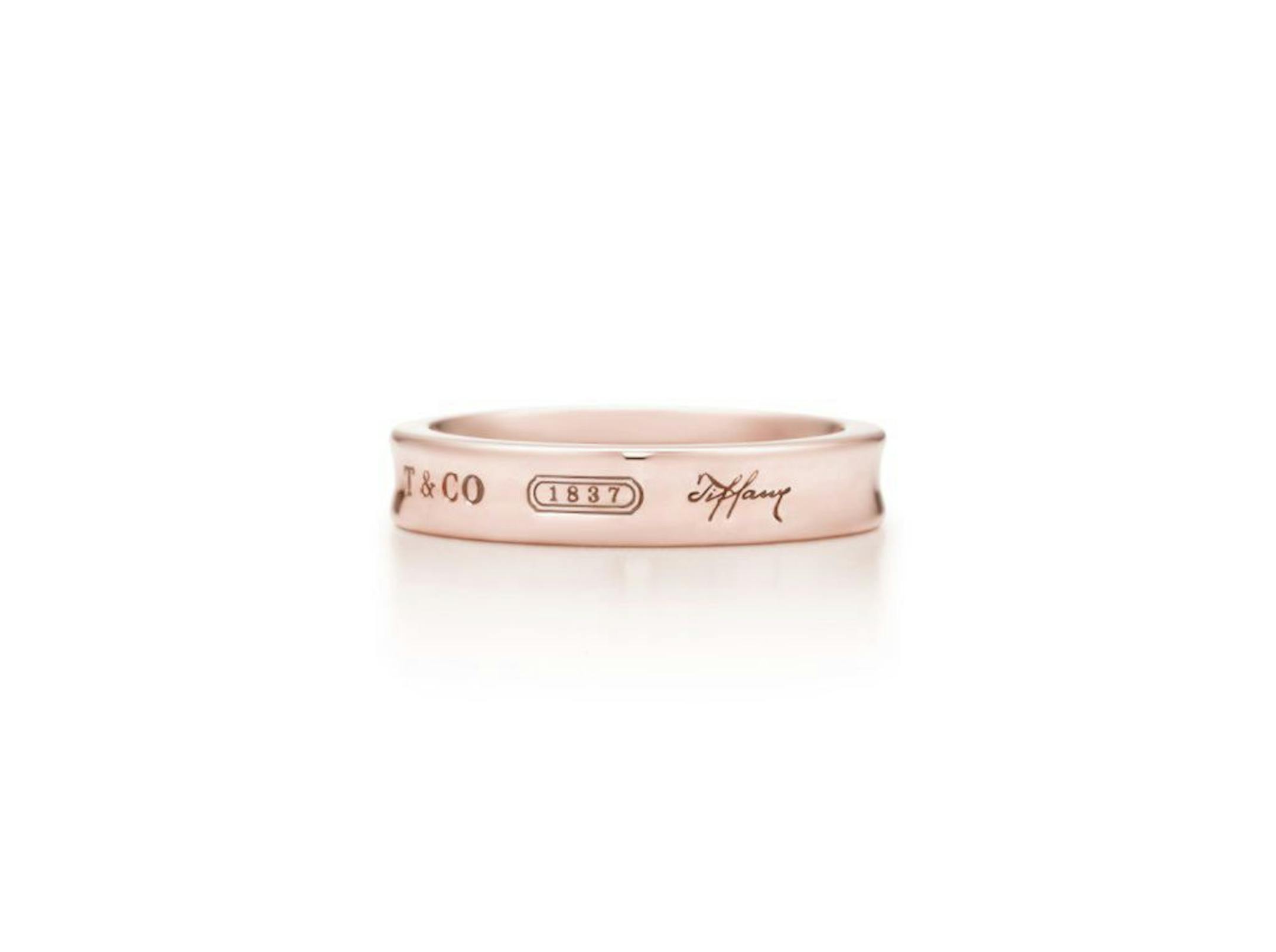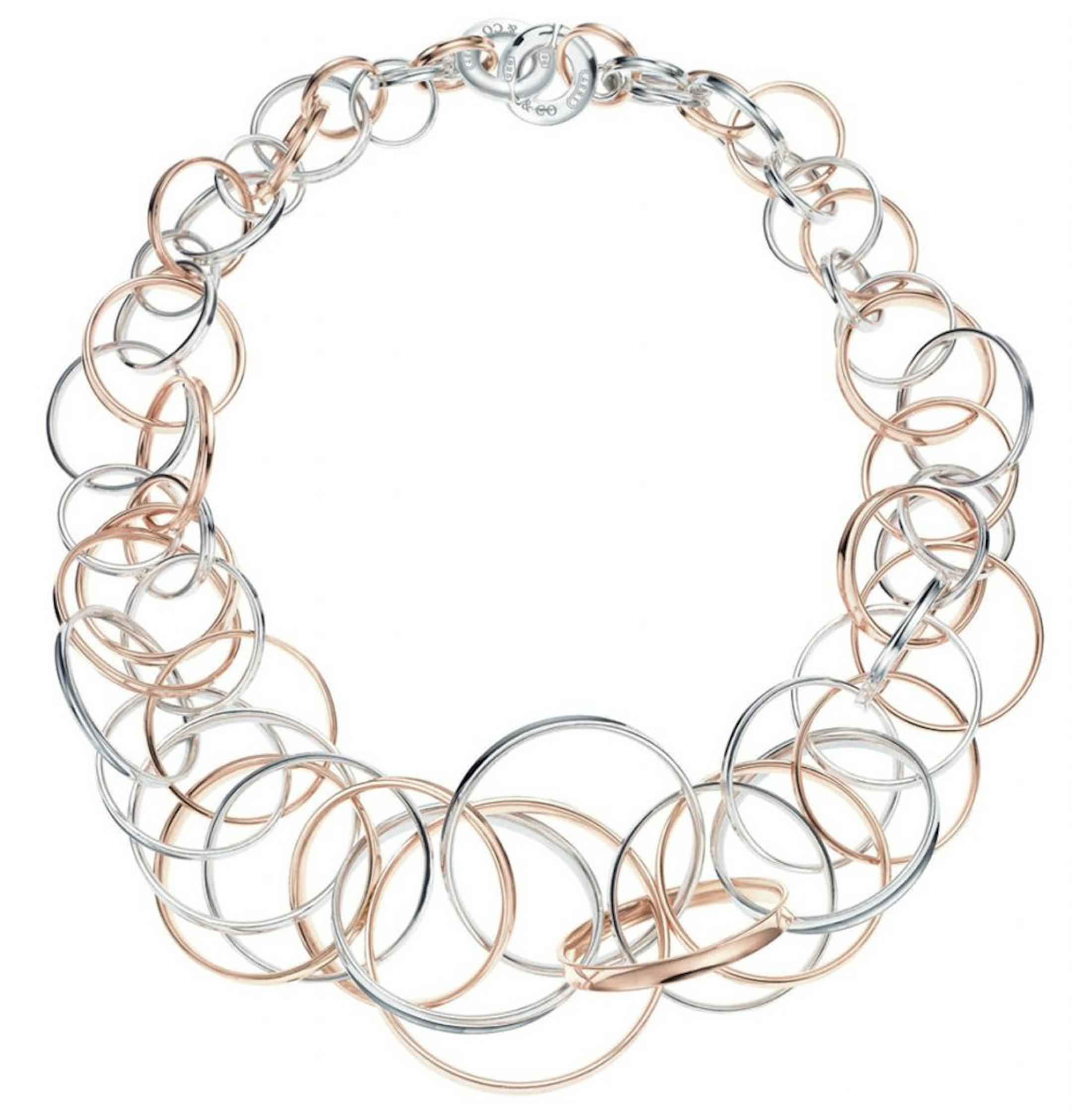
In the Stone Age, Neolithic man prized gold for its luminous color and malleability. By the fifth millennium B.C., the Sumerians mined silver to create ornaments, jewelry and money. Later, the ancient Egyptians wore copper jewelry as a status symbol and to ward off evil spirits.
Now Tiffany & Co. is trumpeting that, in honor of its 175th anniversary, modern-day alchemists have made a new precious metal to adorn the wrists, fingers and necks of its wealthy clientele.
Trademarked as Rubedo (which means "red" in Latin), the pinkish mixture of gold, silver and copper has been fashioned into items priced at $200 for a slim pendant to $7,500 for a wide cuff, less expensive than the gold versions but more than the silver. The collection, Tiffany announced last month, is created from a "new jeweler's metal."
But metallurgists say there are two problems with those claims: Rubedo is not a metal, and it's not all that new.
"I Googled it trying to figure out what the heck it was," said John Barnard, director of the engineering science program at the University of Pittsburgh. "It seemed a little odd to me. I would never call it a new metal."
Rudolph Buchheit, chairman of materials science engineering at Ohio State, explained the difference.
"A new metal would be equivalent to creating a new element in the periodic table," he said. "It's what high-energy physicists do. It's not the thing you do in a jewelry foundry."
Alloys are commonly used by jewelers